BARUTO COAST
Protected Area
Robben island Marine Protected Area
Why dive here
With 269+ marine species recorded in the area - including blue sharks, blue whales, dolphins, dwarf minke whales and great white sharks - BARUTO COAST offers some of Cape Town & Western Cape's richest wreck diving. Water ranges 14-16°C, warmest February, March, April.
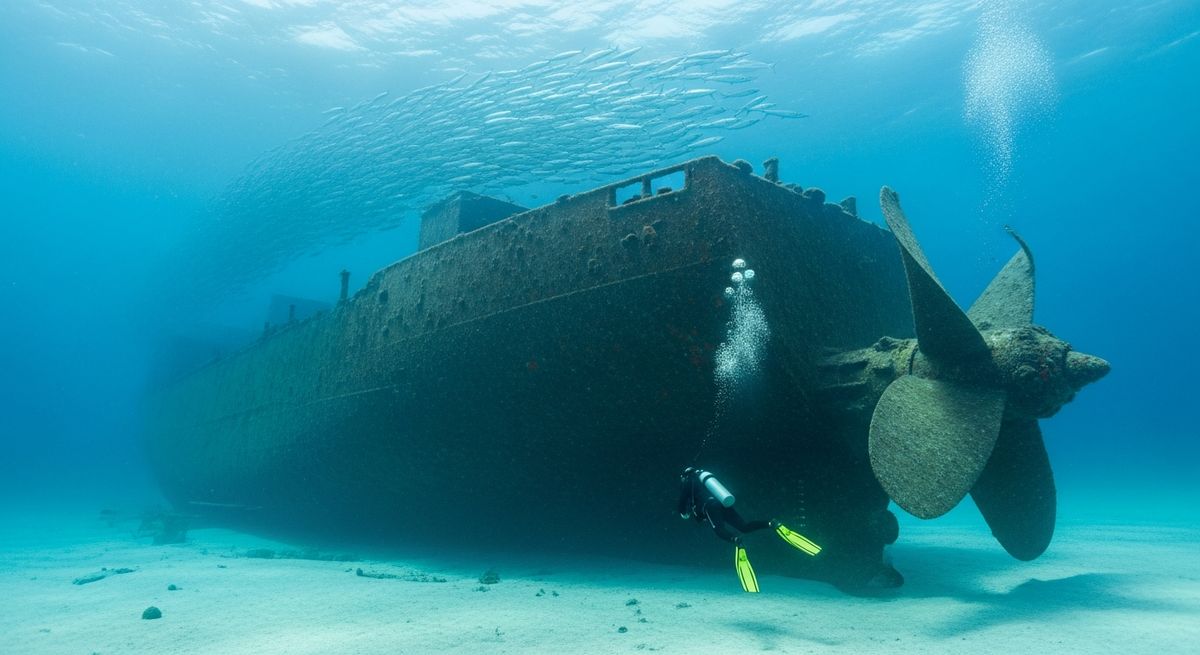
Baruto Coast, off the Cape Peninsula, is a wreck dive that really delivers. It’s shallow, only 13 metres, but don't let that fool you into thinking it's easy pickings. This site is exposed and needs careful planning around the swell. We love it when the ocean is calm, the sun streams down, and you can really appreciate the history. The Baruto herself is a Japanese fishing trawler, sunk in 1987. She sits upright, pretty intact, which is a big part of her charm. You can swim through the wheelhouse, poke around the engine room, and even peer into the old fish holds. The metalwork is completely encrusted with colourful jewel anemones and sponges, a stark contrast to the dark steel. Keep an eye out for shy shy sharks tucked into crevices and the occasional octopus, camouflaged against the rust. This site is a great option for newer wreck divers or those wanting a relaxed second dive, provided you pick your weather window wisely. If the visibility is good, it's a wonderfully atmospheric dive.
Typical BARUTO COAST Dive Profile
Illustrative profile based on site depth and type. Actual dive profiles vary - always follow your dive computer and training.
Safety Notes
Wreck site - avoid penetration without wreck diving certification. Watch for sharp metal and entanglement hazards.
Cold water this month (avg 15°C). Drysuit or thick wetsuit (7mm+) recommended.
Always perform a 3-minute safety stop at 5m before surfacing.
BARUTO COAST Wreck History
Vessel Type
unknown
Cause
unknown
The 'Baruto Coast' is a shallow, unidentified wreck lying in the waters off Cape Town, its name likely a local moniker for a vessel whose true identity has been lost. Its history is a mystery, but its presence is undeniable. Lying at just 13 metres, the wreck is so shallow that portions of its hull and superstructure are visible from the surface, creating a dramatic silhouette against the waves. This accessibility makes it a fantastic site for novice wreck divers, photographers, and even freedivers looking to explore a piece of submerged history.
Diving the Baruto Coast offers a superb introduction to the rich underwater environment of the Western Cape. The broken structure acts as an artificial reef, providing shelter for a host of local marine species. Divers can navigate through the skeletal remains, observing the interplay of light and shadow while searching for the colourful nudibranchs, shy fish, and crustaceans that now call this wreck home. It's a dive that emphasizes exploration and the beauty of nature's reclamation process over a known historical narrative.
Nearest Dive Centres to BARUTO COAST
Dive shops near BARUTO COAST
Into the Blue Scuba
Two Oceans Aquarium
Coral Wetsuits
Dive Action
UCT Underwater Club
University of Cape Town Underwater Club
Reviews for BARUTO COAST
Conditions
Ocean conditions, forecast and tides for BARUTO COAST
BARUTO COAST Ocean Conditions
Monthly averages for BARUTO COAST, sourced from Open-Meteo marine data - nearest station: Open-Meteo marine grid (-33.92, 18.46) (8km away)
October Averages
Sea Temperature
15°C
59°F · Range: 12.4–17.2°C
Air Temperature
17°C
62°F
Wind Speed
7.33 m/s
14.2 knots
Atmospheric Pressure
1018.1 hPa
Based on 4 years of monitoring data · Data sources: Open-Meteo marine data
Plan & book
Ways to dive Cape Town & Western Cape, from day trips to liveaboards.
Day trips & courses
via GetYourGuideGuided dives, courses and snorkel trips with instant booking.
Find dive trips in Cape Town & Western CapePlaces to stay
via Booking.comHotels and dive resorts near Cape Town & Western Cape.
Search stays in Cape Town & Western CapeDive insurance
Most travel insurance excludes or limits scuba. Check what you need before you go.
Dive insurance explainedPartner links: we may earn a commission if you book, at no extra cost to you. How we make money
Where to Stay near BARUTO COAST
Prices from Booking.com. We may earn a commission at no extra cost to you.