BELLE-THERESA
Protected Area
Rocher Pan Marine Protected Area
Why dive here
With 269+ marine species recorded in the area - including blue sharks, blue whales, dolphins, dwarf minke whales and great white sharks - BELLE-THERESA offers some of Cape Town & Western Cape's richest wreck diving. Water ranges 14-16°C, warmest February, March, April.
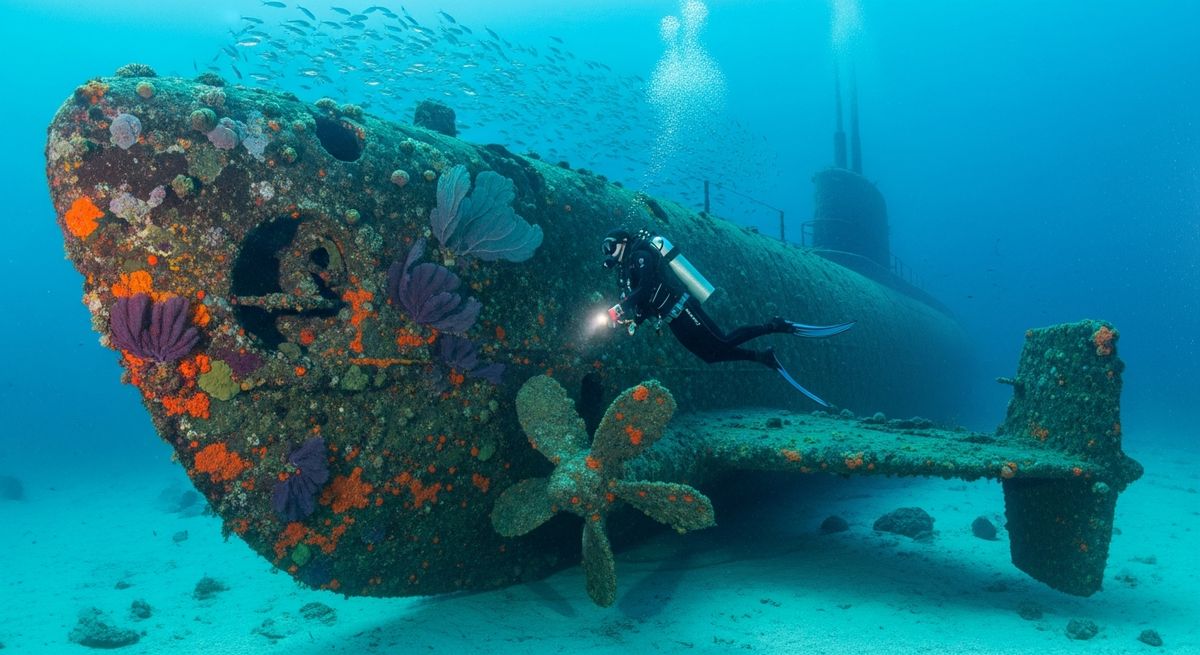
The Belle-Theresa isn't a deep dive, sitting at a maximum of 7m, but it’s a brilliant wreck for a long, relaxed exploration. This 25m fishing vessel caught fire and eventually drifted ashore near St Helena Bay back in '77. What we love about it is how accessible it is; you can spend ages pottering around the remains of the wheelhouse and engine room. It’s pretty broken up in places, but the ribs of the hull still offer plenty of shelter for shy critters. We’ve found schools of hottentot fish hanging around the deeper sections, and if you look closely, there are often juvenile stonefish camouflaged against the rust. Keep an eye out for colourful nudibranchs clinging to the kelp that has started to colonise the metal. The Belle-Theresa is a top pick for newer wreck divers or anyone who just fancies a leisurely, shallow dive with some history. It’s also our favourite spot for photographers looking to capture the interplay of light and shadow through the wreck’s skeleton.
Typical BELLE-THERESA Dive Profile
Illustrative profile based on site depth and type. Actual dive profiles vary - always follow your dive computer and training.
Safety Notes
Wreck site - avoid penetration without wreck diving certification. Watch for sharp metal and entanglement hazards.
Cold water this month (avg 15°C). Drysuit or thick wetsuit (7mm+) recommended.
BELLE-THERESA Wreck History
Year Sunk
1977
Vessel Type
fishing vessel
Cause
fire
The Belle-Theresa was a modern fishing vessel built in 1967. Her working life came to an abrupt end on April 18, 1977, when a fire broke out on board. The crew, unable to control the blaze, were forced to abandon their ship off Elands Bay on South Africa's Western Cape. Now a ghost ship, the burnt-out hull of the Belle-Theresa drifted at the mercy of the currents until it finally ran ashore near St Helena Bay, where it sank in the shallows.
Sitting in just 7 metres of water, the Belle-Theresa is a shallow and engaging dive site. Its position close to shore means it has been subject to years of wave action, leaving the wreck significantly broken up. However, the scattered remains of the steel hull and machinery provide an excellent artificial reef structure in an area known for its rich marine biodiversity. Divers can expect to find a host of local sea life sheltering in the wreckage, from small fish and shy sharks to colourful nudibranchs. Its shallow depth makes it an ideal spot for novice divers, underwater photographers, or a relaxing final dive of the day.
Reviews for BELLE-THERESA
Conditions
Ocean conditions, forecast and tides for BELLE-THERESA
BELLE-THERESA Ocean Conditions
Monthly averages for BELLE-THERESA, sourced from Open-Meteo marine data - nearest station: Open-Meteo marine grid (-33.92, 18.46) (8km away)
October Averages
Sea Temperature
15°C
59°F · Range: 12.4–17.2°C
Air Temperature
17°C
62°F
Wind Speed
7.33 m/s
14.2 knots
Atmospheric Pressure
1018.1 hPa
Based on 4 years of monitoring data · Data sources: Open-Meteo marine data
Plan & book
Ways to dive Cape Town & Western Cape, from day trips to liveaboards.
Day trips & courses
via GetYourGuideGuided dives, courses and snorkel trips with instant booking.
Find dive trips in Cape Town & Western CapePlaces to stay
via Booking.comHotels and dive resorts near Cape Town & Western Cape.
Search stays in Cape Town & Western CapeDive insurance
Most travel insurance excludes or limits scuba. Check what you need before you go.
Dive insurance explainedPartner links: we may earn a commission if you book, at no extra cost to you. How we make money
Where to Stay near BELLE-THERESA
Prices from Booking.com. We may earn a commission at no extra cost to you.