BRITANNIA
Protected Area
Marcus Island Marine Protected Area
Why dive here
With 269+ marine species recorded in the area - including blue sharks, blue whales, dolphins, dwarf minke whales and great white sharks - BRITANNIA offers some of Cape Town & Western Cape's richest wreck diving. Water ranges 14-16°C, warmest February, March, April.
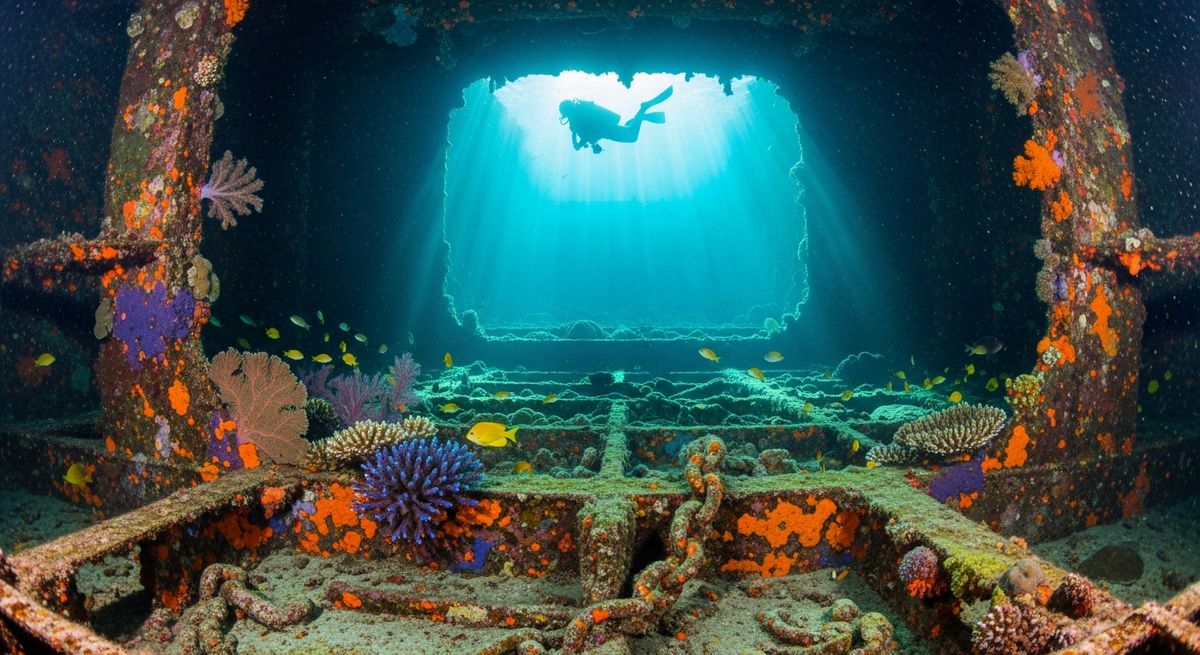
There’s something about diving a wreck in such shallow water. The Britannia, a cutter sunk near the crawfish factory back when the industry was just taking off, is a true shore dive. We usually hit this one on a calm day, just a gentle swell, because it’s only five meters deep. You drop down, and suddenly, you’re face-to-face with history. The wreck itself is pretty broken up, scattered across the sandy bottom, but you can still make out the ribs and some of the hull plating. It’s not a swim-through kind of wreck; instead, it's a treasure hunt for details. We love poking around the remnants, imagining the old fishing days. What makes it special, though, is how completely it’s become part of the reef. Schools of hottentot dart through the structure, and we’ve seen some surprisingly large octopus tucked into the crevices. Look closely, and you’ll spot nudibranchs inching across the encrusted metal. It’s a fantastic spot for photographers who want to take their time getting macro shots. Our favourite time to dive it is first thing in the morning before the wind picks up, when the light filters down, creating these incredible shafts through the water. It’s a relaxed dive, perfect for stretching out a surface interval, or for those days when you just want to get wet without a lot of fuss.
Typical BRITANNIA Dive Profile
Illustrative profile based on site depth and type. Actual dive profiles vary - always follow your dive computer and training.
Safety Notes
Wreck site - avoid penetration without wreck diving certification. Watch for sharp metal and entanglement hazards.
Cold water this month (avg 15°C). Drysuit or thick wetsuit (7mm+) recommended.
BRITANNIA Wreck History
Vessel Type
fishing vessel
Cause
unknown
The wreck of the cutter Britannia is a fascinating piece of local history tied to the early commercial fishing industry of the Western Cape. The vessel was owned by James Kasner, one of the pioneers of the region's first crawfish factories toward the end of the 19th century. The Britannia was likely a workhorse vessel, servicing the factory and fishing grounds before meeting its end in the waters near Cape Town.
At a depth of only 5 meters, the remains of the Britannia are easily accessible to divers of all levels and even snorkelers on a calm day. The wreck is classified as dangerous, meaning it poses a hazard to navigation, so divers should be mindful of boat traffic. Exploring this site offers a direct connection to the area's maritime heritage, imagining the vessel in its heyday as a vital part of a burgeoning local industry.
Nearest Dive Centres to BRITANNIA
Dive shops near BRITANNIA
View all dive centres in Cape Town & Western CapeReviews for BRITANNIA
Conditions
Ocean conditions, forecast and tides for BRITANNIA
BRITANNIA Ocean Conditions
Monthly averages for BRITANNIA, sourced from Open-Meteo marine data - nearest station: Open-Meteo marine grid (-33.92, 18.46) (8km away)
October Averages
Sea Temperature
15°C
59°F · Range: 12.4–17.2°C
Air Temperature
17°C
62°F
Wind Speed
7.33 m/s
14.2 knots
Atmospheric Pressure
1018.1 hPa
Based on 4 years of monitoring data · Data sources: Open-Meteo marine data
Plan & book
Ways to dive Cape Town & Western Cape, from day trips to liveaboards.
Day trips & courses
via GetYourGuideGuided dives, courses and snorkel trips with instant booking.
Find dive trips in Cape Town & Western CapePlaces to stay
via Booking.comHotels and dive resorts near Cape Town & Western Cape.
Search stays in Cape Town & Western CapeDive insurance
Most travel insurance excludes or limits scuba. Check what you need before you go.
Dive insurance explainedPartner links: we may earn a commission if you book, at no extra cost to you. How we make money
Where to Stay near BRITANNIA
Prices from Booking.com. We may earn a commission at no extra cost to you.