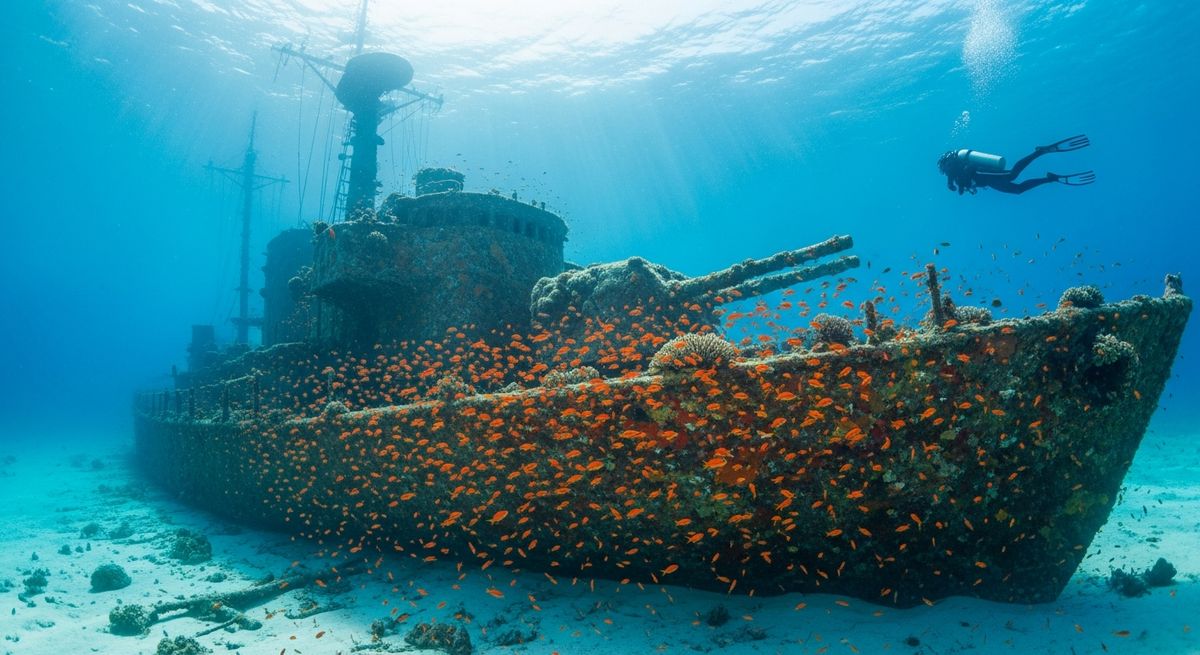
SS Maori, wreck
Protected Area
Duikerklip Provincial Nature Reserve
Why dive here
With 269+ marine species recorded in the area - including blue sharks, blue whales, dolphins, dwarf minke whales and great white sharks - SS Maori, wreck offers some of Cape Town & Western Cape's richest wreck diving. Water ranges 14-16°C, warmest February, March, April.
The SS Maori is one of our favourite dives in False Bay, especially on a calm day. We love the way the wreck lies, broken but still substantial, with its stern sitting around 17m and the bows much shallower. It’s a great site for poking around, dropping down to the prop and rudder, then working your way up into the holds where light filters through the gaps. You’ll find crayfish tucked into every crevice, little shy sharks hiding under ledges, and often massive schools of hottentot and other reef fish swirling around the superstructure. Visibility averages 9m, so it’s not always gin-clear, but we think that adds to the atmospheric vibe of an old cargo ship swallowed by the sea. Just be mindful of the currents, which can pick up, especially further out on the deeper sections.
Safety Notes
Wreck site - avoid penetration without wreck diving certification. Watch for sharp metal and entanglement hazards.
Cold water this month (avg 15°C). Drysuit or thick wetsuit (7mm+) recommended.
Nearest Dive Centres to SS Maori, wreck
Dive shops near SS Maori, wreck
Scuba Shack
Blue Flash
Learn to Dive Today
Orca Diving Academy
False Bay Underwater Club
Into the Blue Scuba
Reviews for SS Maori, wreck
Conditions
Ocean conditions, forecast and tides for SS Maori, wreck
SS Maori, wreck Ocean Conditions
Monthly averages for SS Maori, wreck, sourced from Open-Meteo marine data - nearest station: Open-Meteo marine grid (-33.92, 18.46) (8km away)
October Averages
Sea Temperature
15°C
59°F · Range: 12.4–17.2°C
Air Temperature
17°C
62°F
Wind Speed
7.33 m/s
14.2 knots
Atmospheric Pressure
1018.1 hPa
Based on 4 years of monitoring data · Data sources: Open-Meteo marine data
Plan & book
Ways to dive Cape Town & Western Cape, from day trips to liveaboards.
Day trips & courses
via GetYourGuideGuided dives, courses and snorkel trips with instant booking.
Find dive trips in Cape Town & Western CapePlaces to stay
via Booking.comHotels and dive resorts near Cape Town & Western Cape.
Search stays in Cape Town & Western CapeDive insurance
Most travel insurance excludes or limits scuba. Check what you need before you go.
Dive insurance explainedPartner links: we may earn a commission if you book, at no extra cost to you. How we make money
Where to Stay near SS Maori, wreck
Prices from Booking.com. We may earn a commission at no extra cost to you.