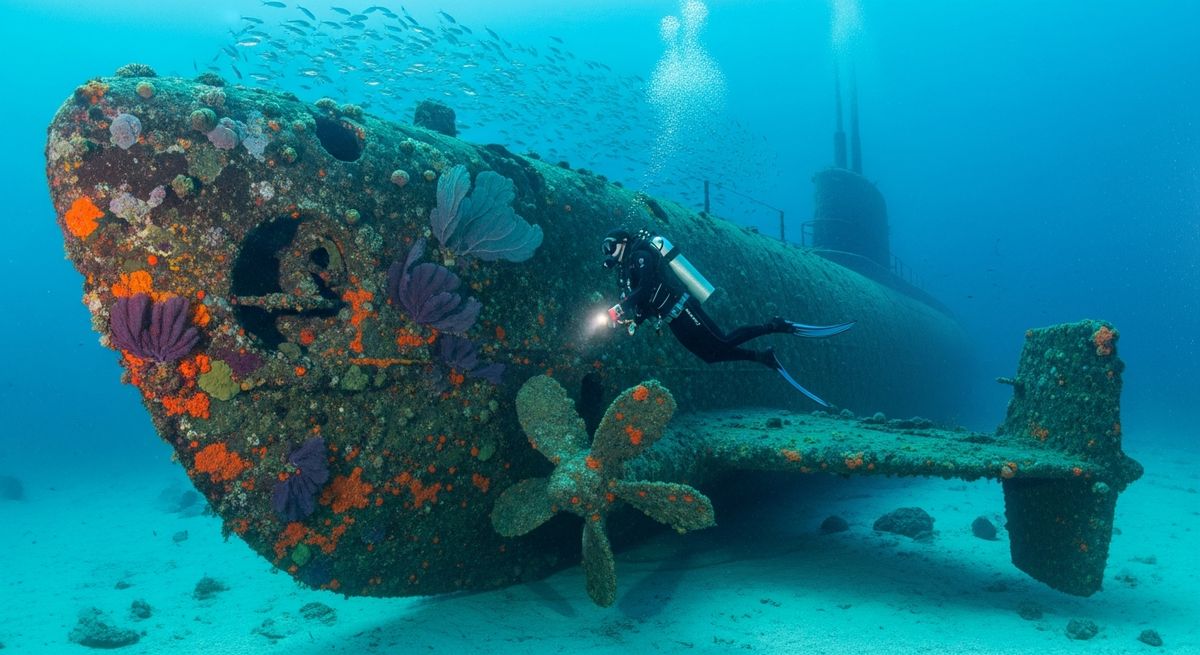
Whittle Rock, Cape Town, South Africa
Protected Area
False Bay Seal Island Provincial Nature Reserve
Why dive here
With 269+ marine species recorded in the area - including blue sharks, blue whales, dolphins, dwarf minke whales and great white sharks - Whittle Rock, Cape Town, South Africa offers some of Cape Town & Western Cape's richest wreck diving. Water ranges 14-16°C, warmest February, March, April.
Whittle Rock is one of those big, wild Cape Town sites that always delivers something unexpected. We love it because it’s massive, a genuine offshore reef system, not just a small pinnacle. You’ll drop onto a rugged rock and coral landscape, often seeing schools of streaky sardines and mackerel streaming by. Keep an eye out for the big stuff – we’ve spotted thresher sharks here, and even orcas have been sighted in the area. Our favourite part is the chance of a common stingray gliding over the sand patches between the reef sections. It’s a dive for those comfortable with deeper water and the occasional current, usually around 20-25m. The visibility can be hit or miss, but when it’s good, the sheer amount of fish life, from bluefin gurnards to dusky groupers, is astounding. It’s a proper expedition, and a dive we always recommend for experienced local divers looking for a true False Bay adventure.
Typical Whittle Rock, Cape Town, South Africa Dive Profile
Illustrative profile based on site depth and type. Actual dive profiles vary - always follow your dive computer and training.
Safety Notes
Wreck site - avoid penetration without wreck diving certification. Watch for sharp metal and entanglement hazards.
Cold water this month (avg 15°C). Drysuit or thick wetsuit (7mm+) recommended.
Always perform a 3-minute safety stop at 5m before surfacing.
Whittle Rock, Cape Town, South Africa Wreck History
Year Sunk
2010
Vessel Type
aircraft
Cause
scuttled
This is not your typical shipwreck. The USCG HU-25 Falcon, tail number 2101, was a high-speed, twin-engine jet used by the United States Coast Guard for decades. These versatile aircraft were the backbone of airborne search and rescue, maritime law enforcement, and environmental patrol missions. After a distinguished service life flying from Air Station Cape Cod, Falcon 2101 was retired, becoming the first-ever HU-25 to be prepared for a second life beneath the waves.
On August 11, 2010, the decommissioned jet was carefully lowered to the seabed at a depth of about 65 feet, joining the ADVANCE II on the AR-145 artificial reef. For divers, the Falcon offers a truly unique experience. The aircraft rests intact on the sand, providing an incredible photo opportunity. You can peer into the cockpit where pilots once scanned the horizon, swim the length of its sleek fuselage, and observe how the ocean is slowly transforming this piece of aviation history into a living reef, attracting triggerfish, sea bass, and other colorful residents.
Nearest Dive Centres to Whittle Rock, Cape Town, South Africa
Dive shops near Whittle Rock, Cape Town, South Africa
Ollava
Pisces Divers
Cape Town Dive Centre
Learn to Dive Today
Scuba Shack
Blue Flash
Reviews for Whittle Rock, Cape Town, South Africa
Conditions
Ocean conditions, forecast and tides for Whittle Rock, Cape Town, South Africa
Whittle Rock, Cape Town, South Africa Ocean Conditions
Monthly averages for Whittle Rock, Cape Town, South Africa, sourced from Open-Meteo marine data - nearest station: Open-Meteo marine grid (-33.92, 18.46) (8km away)
October Averages
Sea Temperature
15°C
59°F · Range: 12.4–17.2°C
Air Temperature
17°C
62°F
Wind Speed
7.33 m/s
14.2 knots
Atmospheric Pressure
1018.1 hPa
Based on 4 years of monitoring data · Data sources: Open-Meteo marine data
Plan & book
Ways to dive Cape Town & Western Cape, from day trips to liveaboards.
Day trips & courses
via GetYourGuideGuided dives, courses and snorkel trips with instant booking.
Find dive trips in Cape Town & Western CapePlaces to stay
via Booking.comHotels and dive resorts near Cape Town & Western Cape.
Search stays in Cape Town & Western CapeDive insurance
Most travel insurance excludes or limits scuba. Check what you need before you go.
Dive insurance explainedPartner links: we may earn a commission if you book, at no extra cost to you. How we make money
Where to Stay near Whittle Rock, Cape Town, South Africa
Prices from Booking.com. We may earn a commission at no extra cost to you.