ASTILLEROS GONDON II
Protected Area
Sebadales de Corralejo
Why dive here
With 76+ marine species recorded in the area - including dolphins, octopuses, sea turtles, sperm whales and cuttlefish - ASTILLEROS GONDON II offers some of Canary Islands's richest wreck diving. Water ranges 20-24°C, warmest August, September, October.
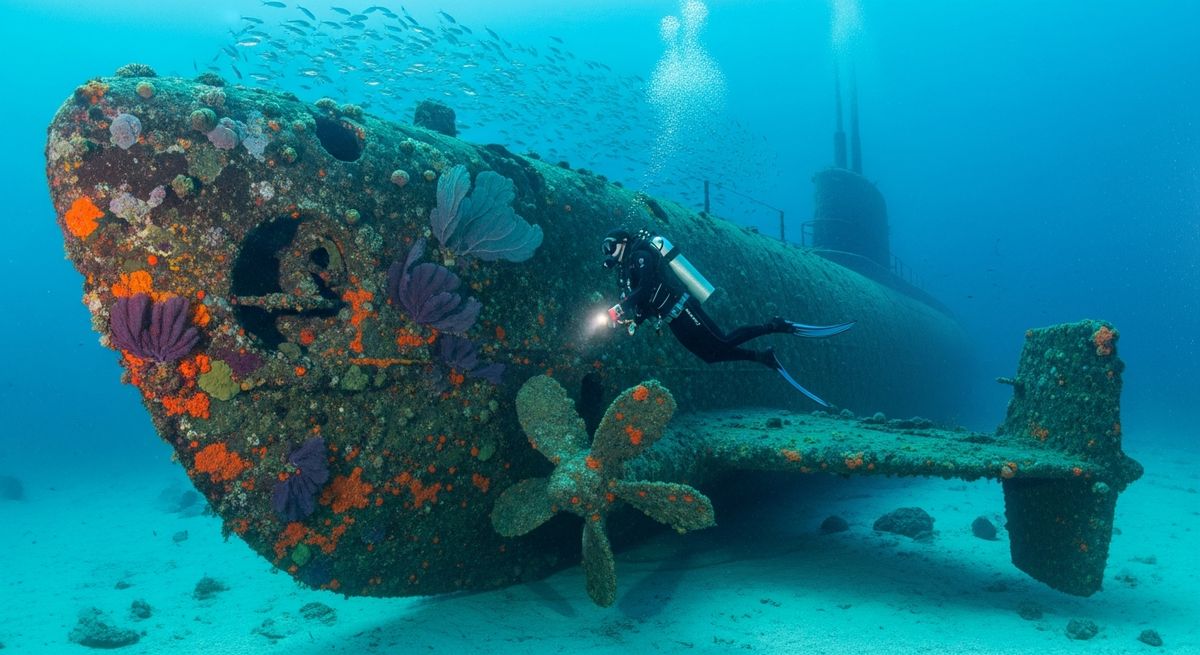
Astillero Gondon II, just off Isla Lobos, is one of our favourite wreck dives in the Canaries. The 60-meter carrier vessel went down in 1975 during heavy weather, and the way it settled makes for some fantastic exploration. You’ll find it mostly intact, lying on its side at a max depth of 20 meters, which means plenty of ambient light filters down, creating these shifting patterns on the deck plates. We love finning through the cargo holds, where schools of amberjacks often swirl, sometimes so thick you almost swim through them. Keep an eye out for the resident moray eels peeking from crevices, and the nudibranchs that cling to the superstructure – there’s always something new to spot if you take it slow. This site really suits divers who enjoy a good penetration or just appreciate the quiet dignity of a well-preserved wreck, watching marine life reclaim it over decades.
Typical ASTILLEROS GONDON II Dive Profile
Illustrative profile based on site depth and type. Actual dive profiles vary - always follow your dive computer and training.
Safety Notes
Depth of 20m - Advanced Open Water certification recommended.
Wreck site - avoid penetration without wreck diving certification. Watch for sharp metal and entanglement hazards.
Always perform a 3-minute safety stop at 5m before surfacing.
ASTILLEROS GONDON II Wreck History
Year Sunk
1975
Vessel Type
cargo ship
Cause
storm
The Astilleros Gondon II was a relatively new vessel, built in Valencia just five years before her demise. In the spring of 1975, the carrier was on a short inter-island voyage between Arrecife and Puerto del Rosario in the Canary Islands. On April 8th, the ship was caught in severe weather, a common peril in the Atlantic. The powerful storm proved too much for the vessel, and she was lost to the waves, sinking to the seabed.
Today, the Astilleros Gondon II rests in just 20 meters of water, making it a fantastic and accessible wreck dive for certified divers. The clear, warm waters of the Canary Islands provide excellent visibility, revealing a vessel that has transformed into a vibrant artificial reef. Divers can explore the ship's superstructure and cargo holds, which are now patrolled by schools of barracuda, damselfish, and moray eels peeking from crevices. It serves as a perfect example of how nature reclaims a maritime tragedy, turning it into a thriving underwater ecosystem.
Nearest Dive Centres to ASTILLEROS GONDON II
Dive shops near ASTILLEROS GONDON II
Punta Amanay SL
Pura Vida Lanzarote Diving
Rubicon Diving Lanzarote
Windblue Lanzarote
PAPAGAYO WATERSPORTS
Dive College Lanzarote
Reviews for ASTILLEROS GONDON II
Conditions
Ocean conditions, forecast and tides for ASTILLEROS GONDON II
ASTILLEROS GONDON II Ocean Conditions
Monthly averages for ASTILLEROS GONDON II, sourced from Open-Meteo marine data + Copernicus Marine (EU) - nearest station: Open-Meteo marine grid (28.18, -15.41) (10km away)
October Averages
Sea Temperature
24°C
74°F · Range: 22.2–25.4°C
Current Speed
10 cm/s
Direction: SE (126.9°)
Chlorophyll-a
0.081 mg/m³
Very clear (oligotrophic)
Salinity
36.89 PSU
Based on 4 years of monitoring data · Data sources: Open-Meteo marine data + Copernicus Marine (EU)
Plan & book
Ways to dive Canary Islands, from day trips to liveaboards.
Day trips & courses
via GetYourGuideGuided dives, courses and snorkel trips with instant booking.
Find dive trips in Canary IslandsPlaces to stay
via Booking.comHotels and dive resorts near Canary Islands.
Search stays in Canary IslandsDive insurance
Most travel insurance excludes or limits scuba. Check what you need before you go.
Dive insurance explainedPartner links: we may earn a commission if you book, at no extra cost to you. How we make money
Where to Stay near ASTILLEROS GONDON II
Prices from Booking.com. We may earn a commission at no extra cost to you.