BAILEN
Why dive here
With 76+ marine species recorded in the area - including dolphins, octopuses, sea turtles, sperm whales and cuttlefish - BAILEN offers some of Canary Islands's richest wreck diving. Water ranges 20-24°C, warmest August, September, October.
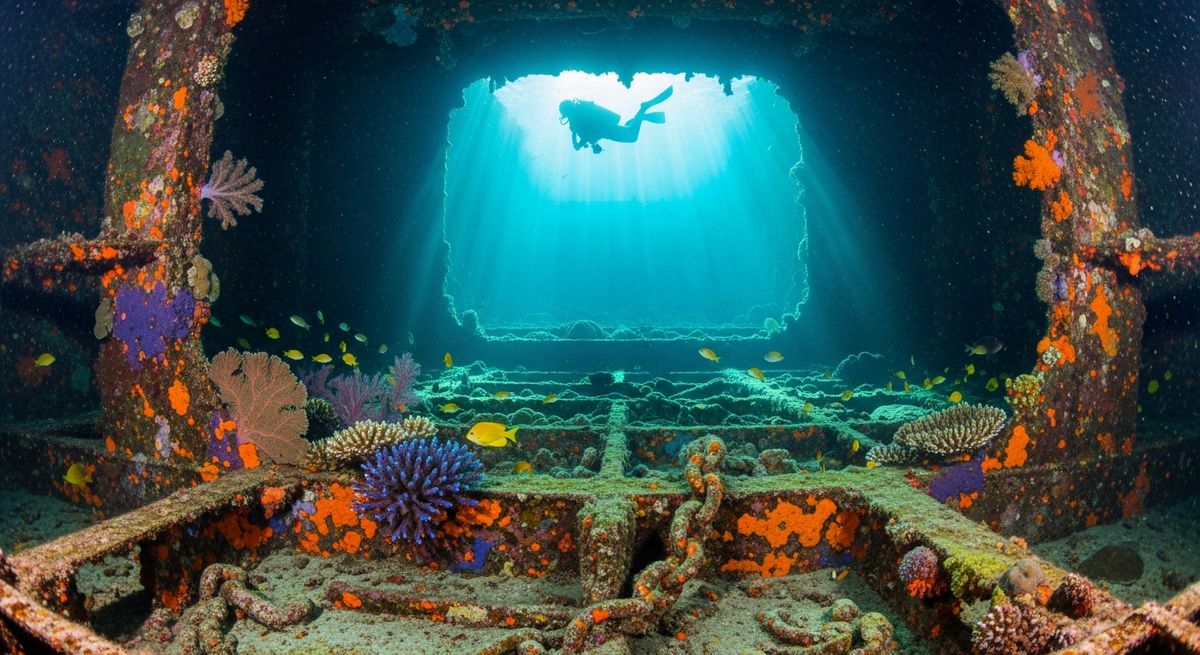
The Bailen wreck is a funny old thing, sitting shallow off Las Palmas. We love it because it’s a proper piece of history, a tanker that came to grief back in '56. It’s a dangerous wreck, officially, but that’s mostly because it’s so broken up, spread out in about five metres of water. You're not going deep here, obviously. What you get is a field of metal, twisted plates, and huge sections of hull. It feels like an archaeological dig, tracing the outline of something massive that’s been consumed by the ocean. Shoals of barracuda often hang around the bigger pieces, glinting in the shafts of sunlight that cut through the water. We’ve seen massive Atlantic groupers hiding out in the deeper crevices, almost blending in with the rusted steel. Look closely at the smaller fragments; the nudibranchs here are surprisingly vibrant, little splashes of colour against the dull metal. It’s an easy, relaxed dive, perfect for photographers who want to spend time finding those intricate details, or for anyone who just enjoys the quiet reverence of a historical site. Our favourite time to go is late morning, before the sun gets too high, when the light plays just right on the scattered remains.
Typical BAILEN Dive Profile
Illustrative profile based on site depth and type. Actual dive profiles vary - always follow your dive computer and training.
Safety Notes
Wreck site - avoid penetration without wreck diving certification. Watch for sharp metal and entanglement hazards.
BAILEN Wreck History
Year Sunk
1956
Vessel Type
tanker
Cause
unknown
The tanker Bailen met its fate off the Canary Islands on October 11, 1956. The specific cause of its sinking is lost to time, but its remains now lie in an extremely shallow grave at just 5 meters deep. This makes the Bailen one of the most accessible wrecks in the region, perfect for novice divers, snorkelers, and even glass-bottom boat tours on a clear day.
Having been subject to the surge and power of the ocean for decades, the wreck is significantly broken up, with its steel plates and framework scattered across the sandy seabed. Despite its 'dangerous wreck' classification, which likely refers to sharp metal edges, a careful exploration reveals a lively ecosystem. Small fish dart between the wreckage, and colorful invertebrates have colonized nearly every surface, turning this mid-century industrial vessel into a shallow underwater garden.
Reviews for BAILEN
Conditions
Ocean conditions, forecast and tides for BAILEN
BAILEN Ocean Conditions
Monthly averages for BAILEN, sourced from Open-Meteo marine data + Copernicus Marine (EU) - nearest station: Open-Meteo marine grid (28.18, -15.41) (10km away)
October Averages
Sea Temperature
24°C
74°F · Range: 22.2–25.4°C
Current Speed
10 cm/s
Direction: SE (126.9°)
Chlorophyll-a
0.081 mg/m³
Very clear (oligotrophic)
Salinity
36.89 PSU
Based on 4 years of monitoring data · Data sources: Open-Meteo marine data + Copernicus Marine (EU)
Plan & book
Ways to dive Canary Islands, from day trips to liveaboards.
Day trips & courses
via GetYourGuideGuided dives, courses and snorkel trips with instant booking.
Find dive trips in Canary IslandsPlaces to stay
via Booking.comHotels and dive resorts near Canary Islands.
Search stays in Canary IslandsDive insurance
Most travel insurance excludes or limits scuba. Check what you need before you go.
Dive insurance explainedPartner links: we may earn a commission if you book, at no extra cost to you. How we make money
Where to Stay near BAILEN
Prices from Booking.com. We may earn a commission at no extra cost to you.