CHRIS CHRISTENSON
Protected Area
Farne Islands
Why dive here
With 112+ marine species recorded in the area - including dolphins, dwarf minke whales, humpback whales, ocean sunfish (mola mola) and orcas - CHRIS CHRISTENSON offers some of Scottish East Coast & Borders's richest wreck diving.
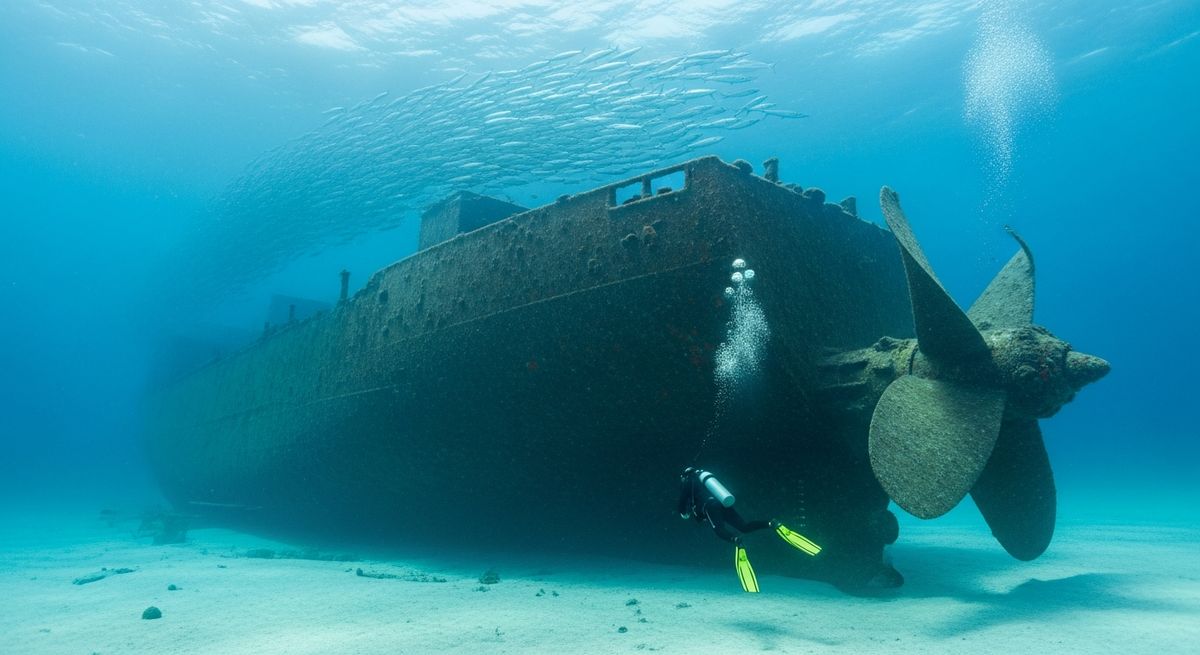
The *Chris Christenson* is a proper North Sea wreck, and honestly, one of our favourite dives off the Scottish East Coast. She's a Danish steamer, ran aground in 1915, and now sits in a manageable 20m. You drop onto a scattering of her parts, but the real star is the engine room. We love poking around her triple expansion engine, the crankshaft still visible, and that single boiler. It’s got a real sense of history, not just a pile of metal. It’s not a site for spotting megafauna, but the life here is about the details. Schools of small fish dart in and out of the plating. You'll find blennies tucked into crevices and often see a curious wrasse or two nosing around the growth on the metal. The wreck itself is quite broken up, but that just means more nooks and crannies to explore. It’s a dive that rewards slow exploration rather than just swimming past. If you’re into wreck photography, the light filtering through the North Sea murk can create some genuinely moody shots. It's a fantastic spot for divers comfortable with a bit of current and who appreciate the stories a century-old wreck can tell.
Typical CHRIS CHRISTENSON Dive Profile
Illustrative profile based on site depth and type. Actual dive profiles vary - always follow your dive computer and training.
Safety Notes
Depth of 20m - Advanced Open Water certification recommended.
Wreck site - avoid penetration without wreck diving certification. Watch for sharp metal and entanglement hazards.
Always perform a 3-minute safety stop at 5m before surfacing.
Nearest Dive Centres to CHRIS CHRISTENSON
Dive shops near CHRIS CHRISTENSON
View all dive centres in Scottish East Coast & BordersReviews for CHRIS CHRISTENSON
Conditions
Ocean conditions, forecast and tides for CHRIS CHRISTENSON
Plan & book
Ways to dive Scottish East Coast & Borders, from day trips to liveaboards.
Day trips & courses
via GetYourGuideGuided dives, courses and snorkel trips with instant booking.
Find dive trips in Scottish East Coast & BordersPlaces to stay
via Booking.comHotels and dive resorts near Scottish East Coast & Borders.
Search stays in Scottish East Coast & BordersDive insurance
Most travel insurance excludes or limits scuba. Check what you need before you go.
Dive insurance explainedPartner links: we may earn a commission if you book, at no extra cost to you. How we make money
Where to Stay near CHRIS CHRISTENSON
Prices from Booking.com. We may earn a commission at no extra cost to you.