CORYTON
Protected Area
Bamburgh Coast and Hills
Why dive here
With 112+ marine species recorded in the area - including dolphins, dwarf minke whales, humpback whales, ocean sunfish (mola mola) and orcas - CORYTON offers some of Scottish East Coast & Borders's richest wreck diving.
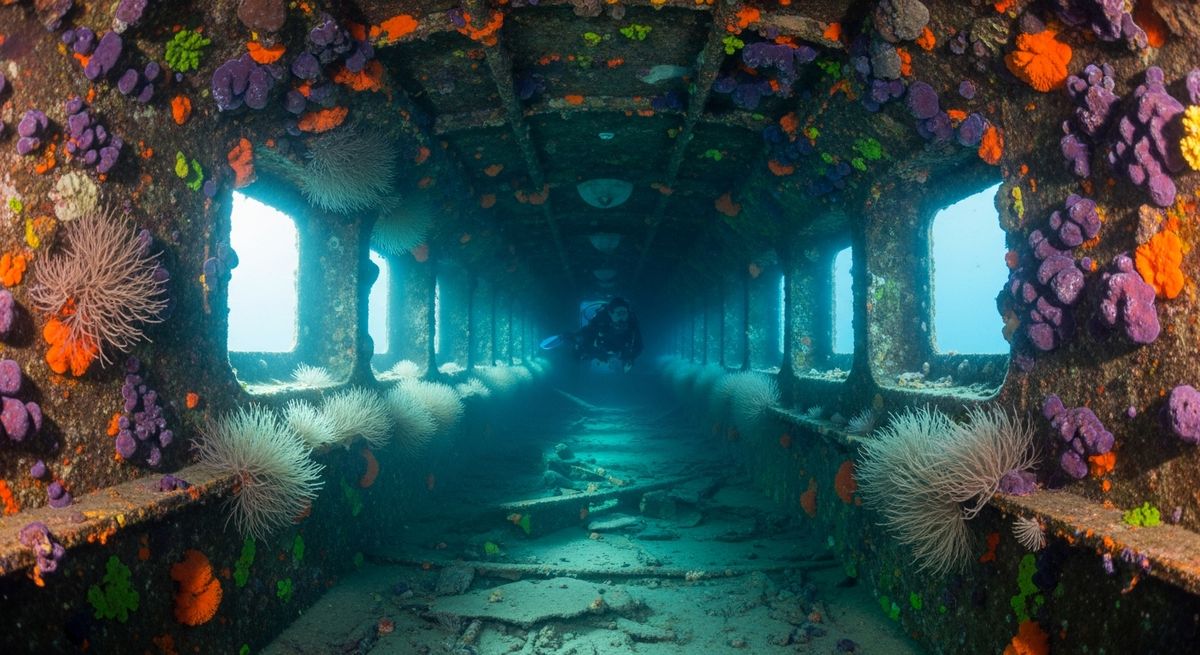
The Coryton, oh, she’s a beast. Not in a scary way, but in her sheer scale, even at just 4m. We love this wreck for its accessibility, sitting upright and broken, but still offering so much to poke around in. You’ll find her just off the shore, often with a slight chill in the water even in summer, but the visibility can be surprisingly good if you hit it right – slack water is key, obviously. Our favourite thing is nosing through the engine room. It’s pretty open, and you can see the triple expansion engine still largely intact, barnacles crusting over the metalwork. Shoals of tiny pollack often dart between the girders, flashing silver in the diffuse light. The stern section, especially, is a honeycomb of twisted steel, perfect for spotting crabs tucked into crevices or a grumpy blenny peering out. It’s a fantastic site for anyone keen on wreck exploration without the depth, offering that real sense of history just a few kicks from the surface.
Typical CORYTON Dive Profile
Illustrative profile based on site depth and type. Actual dive profiles vary - always follow your dive computer and training.
Safety Notes
Wreck site - avoid penetration without wreck diving certification. Watch for sharp metal and entanglement hazards.
Nearest Dive Centres to CORYTON
Dive shops near CORYTON
View all dive centres in Scottish East Coast & BordersReviews for CORYTON
Conditions
Ocean conditions, forecast and tides for CORYTON
Plan & book
Ways to dive Scottish East Coast & Borders, from day trips to liveaboards.
Day trips & courses
via GetYourGuideGuided dives, courses and snorkel trips with instant booking.
Find dive trips in Scottish East Coast & BordersPlaces to stay
via Booking.comHotels and dive resorts near Scottish East Coast & Borders.
Search stays in Scottish East Coast & BordersDive insurance
Most travel insurance excludes or limits scuba. Check what you need before you go.
Dive insurance explainedPartner links: we may earn a commission if you book, at no extra cost to you. How we make money
Where to Stay near CORYTON
Prices from Booking.com. We may earn a commission at no extra cost to you.