FESTING GRINDALL
Protected Area
Fife Ness Coast
Why dive here
With 112+ marine species recorded in the area - including dolphins, dwarf minke whales, humpback whales, ocean sunfish (mola mola) and orcas - FESTING GRINDALL offers some of Scottish East Coast & Borders's richest wreck diving.
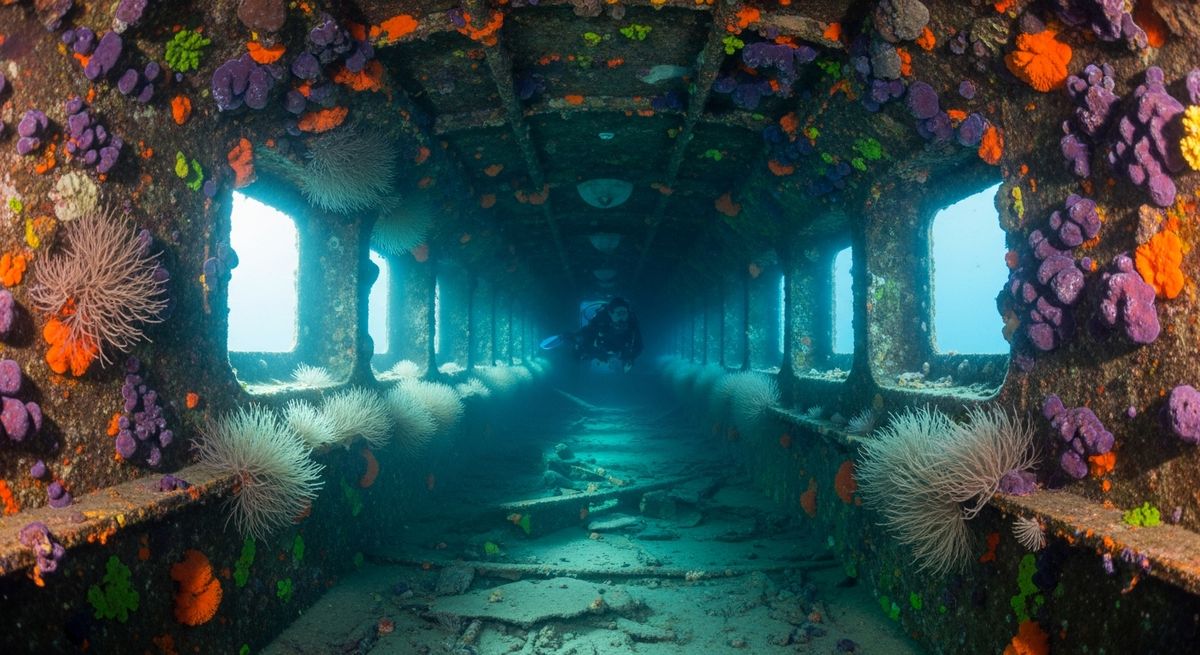
The Festing Grindall is one of those wrecks that just delivers. We’ve always had a soft spot for trawlers, and this one, sitting upright in a modest 10 metres, is just lovely. You drop onto the main deck, often surrounded by curious wrasse, and from there, it’s a gentle exploration. The stern is our favourite, where you can still make out the large prop shaft stretching back towards the absent propeller. The engine room area is the main event, with the impressive triple-expansion engine standing proud, practically begging for a closer look. Schools of coalfish often hang around the superstructure, darting in and out of the skeletal remains. We’ve found plenty of lobsters tucked into crevices here, and the light penetration at this depth really brings out the colours of the anemones clinging to the metalwork. It’s a comfortable dive, perfect for photographers or anyone who just wants to spend some quality time pottering around a piece of history. Visibility can vary, but even on an average day, the sheer scale of the engine makes it worthwhile.
Typical FESTING GRINDALL Dive Profile
Illustrative profile based on site depth and type. Actual dive profiles vary - always follow your dive computer and training.
Safety Notes
Wreck site - avoid penetration without wreck diving certification. Watch for sharp metal and entanglement hazards.
Reviews for FESTING GRINDALL
Conditions
Ocean conditions, forecast and tides for FESTING GRINDALL
Plan & book
Ways to dive Scottish East Coast & Borders, from day trips to liveaboards.
Day trips & courses
via GetYourGuideGuided dives, courses and snorkel trips with instant booking.
Find dive trips in Scottish East Coast & BordersPlaces to stay
via Booking.comHotels and dive resorts near Scottish East Coast & Borders.
Search stays in Scottish East Coast & BordersDive insurance
Most travel insurance excludes or limits scuba. Check what you need before you go.
Dive insurance explainedPartner links: we may earn a commission if you book, at no extra cost to you. How we make money
Where to Stay near FESTING GRINDALL
Prices from Booking.com. We may earn a commission at no extra cost to you.