FOREMOST GUIDE
Protected Area
Long Craig Island
Why dive here
With 112+ marine species recorded in the area - including dolphins, dwarf minke whales, humpback whales, ocean sunfish (mola mola) and orcas - FOREMOST GUIDE offers some of Scottish East Coast & Borders's richest wreck diving.
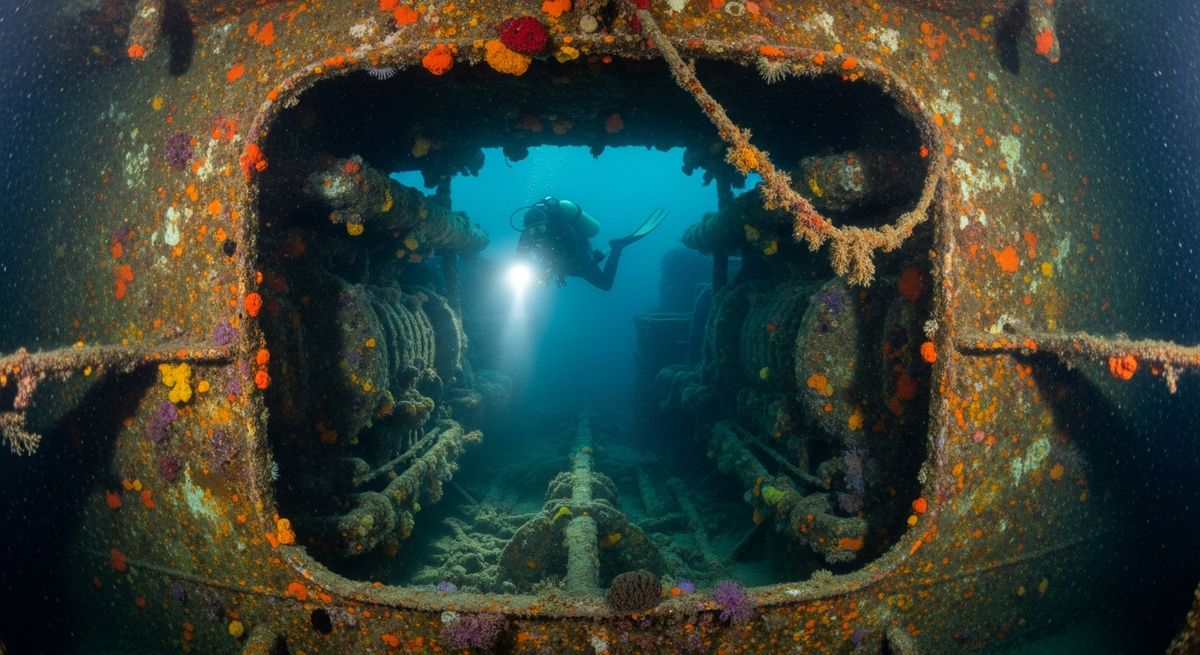
The Foremost Guide, sitting in the shallows off Rosyth, isn’t some grand deep-water expedition. It’s an intimate wreck dive, perfect for those days when you just want to get wet without the faff. We love it because it’s so accessible, an ideal spot for extended bottom times and honing your wreck skills. She was a dredger, sunk back in ‘39 after an unfortunate run-in with a large metal object – imagine the thud – and then moved to her current resting place. Now, at just 8 meters, she’s become a home for all sorts of local characters. We’ve found plenty of crabs scuttling over the plates, their claws waving from beneath the corroded steel. Look for the small conger eels tucked into any crevice, usually just their heads peeking out, watching you pass. The visibility here can be… *variable*, let’s say, especially after a good storm, so we always suggest checking local conditions before you head out. When it's calm though, the green light filters down beautifully, highlighting the curves of the hull. It’s a proper piece of history right there, just waiting for a slow exploration.
Typical FOREMOST GUIDE Dive Profile
Illustrative profile based on site depth and type. Actual dive profiles vary - always follow your dive computer and training.
Safety Notes
Wreck site - avoid penetration without wreck diving certification. Watch for sharp metal and entanglement hazards.
Nearest Dive Centres to FOREMOST GUIDE
Dive shops near FOREMOST GUIDE
Deep Sea World Aquarium
Deep Blue Scuba
Libertas Scuba Stirling
Reviews for FOREMOST GUIDE
Conditions
Ocean conditions, forecast and tides for FOREMOST GUIDE
Plan & book
Ways to dive Scottish East Coast & Borders, from day trips to liveaboards.
Day trips & courses
via GetYourGuideGuided dives, courses and snorkel trips with instant booking.
Find dive trips in Scottish East Coast & BordersPlaces to stay
via Booking.comHotels and dive resorts near Scottish East Coast & Borders.
Search stays in Scottish East Coast & BordersDive insurance
Most travel insurance excludes or limits scuba. Check what you need before you go.
Dive insurance explainedPartner links: we may earn a commission if you book, at no extra cost to you. How we make money
Where to Stay near FOREMOST GUIDE
Prices from Booking.com. We may earn a commission at no extra cost to you.