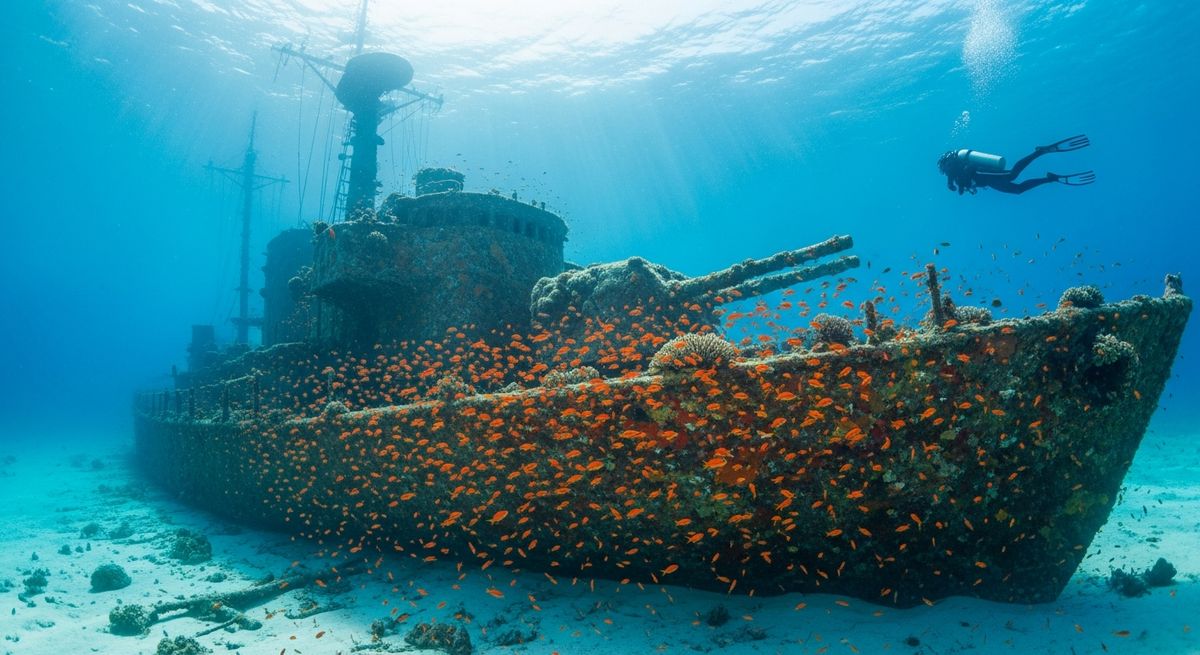
GLEN TANAR
Protected Area
Donmouth
Why dive here
With 112+ marine species recorded in the area - including dolphins, dwarf minke whales, humpback whales, ocean sunfish (mola mola) and orcas - GLEN TANAR offers some of Scottish East Coast & Borders's richest wreck diving.
Glen Tanar is a proper Scottish wreck, sitting upright and mostly intact on a silty seabed. She’s not one of those scatter-over-the-sand jobs. We love how much of her structure remains, making for a genuinely explorable dive. You can trace her length from bow to stern, spotting the main mast lying forward, and her huge boiler is a focal point midships, home to some seriously chunky wrasse and cod. The visibility here can swing wildly; one day it's a dreamy 10 metres, the next you're navigating by touch and hope, which adds to the adventure, we think. Descent lines are crucial. Our favourite part is nosing around her stern, where the prop shaft leads down to the rudder – there are always crabs tucked into the nooks and crannies there. This wreck suits divers who appreciate history and don't mind a bit of a low-viz challenge. It's not a shallow coral reef, it's a piece of maritime heritage, cold and moody, and absolutely brilliant for it. Just be mindful of fishing line; it’s a working coast.
Typical GLEN TANAR Dive Profile
Illustrative profile based on site depth and type. Actual dive profiles vary - always follow your dive computer and training.
Safety Notes
Depth of 22m - Advanced Open Water certification recommended.
Wreck site - avoid penetration without wreck diving certification. Watch for sharp metal and entanglement hazards.
Always perform a 3-minute safety stop at 5m before surfacing.
Reviews for GLEN TANAR
Conditions
Ocean conditions, forecast and tides for GLEN TANAR
Plan & book
Ways to dive Scottish East Coast & Borders, from day trips to liveaboards.
Day trips & courses
via GetYourGuideGuided dives, courses and snorkel trips with instant booking.
Find dive trips in Scottish East Coast & BordersPlaces to stay
via Booking.comHotels and dive resorts near Scottish East Coast & Borders.
Search stays in Scottish East Coast & BordersDive insurance
Most travel insurance excludes or limits scuba. Check what you need before you go.
Dive insurance explainedPartner links: we may earn a commission if you book, at no extra cost to you. How we make money
Where to Stay near GLEN TANAR
Prices from Booking.com. We may earn a commission at no extra cost to you.