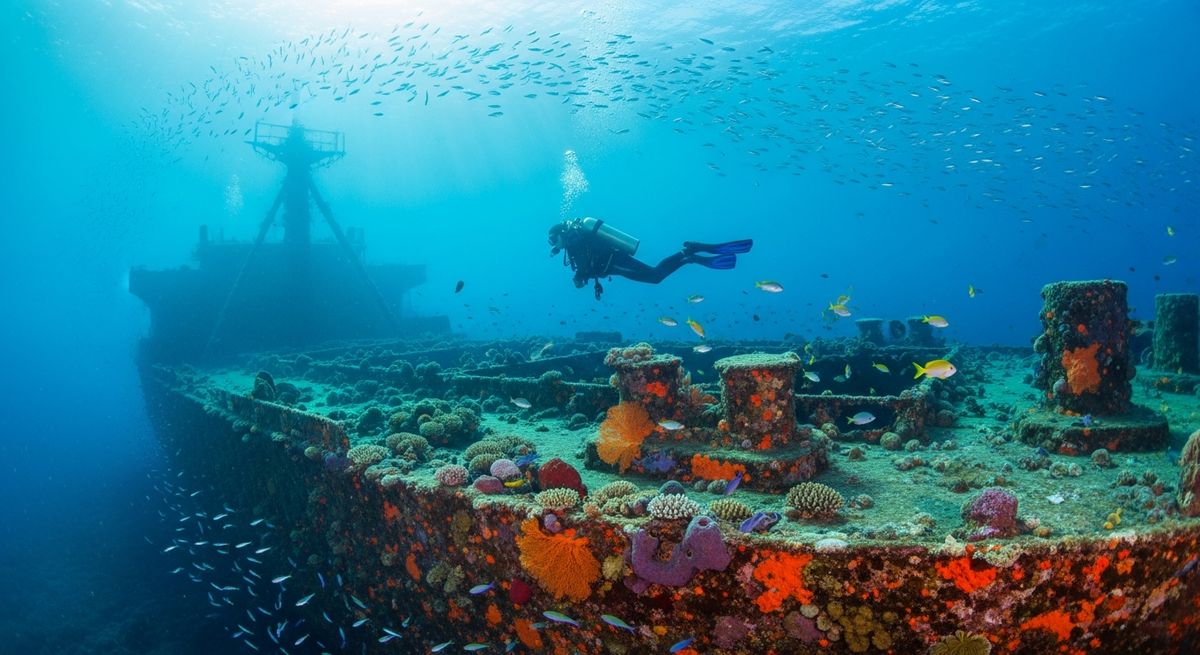
HMS CHESTER
Protected Area
Forth Islands
Why dive here
With 112+ marine species recorded in the area - including dolphins, dwarf minke whales, humpback whales, ocean sunfish (mola mola) and orcas - HMS CHESTER offers some of Scottish East Coast & Borders's richest wreck diving.
Forget your tropical dreams for a moment, because the HMS Chester offers a different kind of magic. This isn't some pristine, colourful reef, it’s a tangible piece of history sitting upright at 20m. We love the way she’s mostly intact, the bow pointing north, a ghostly silhouette emerging from the green. It feels less like a wreck and more like a time capsule, a snapshot from 1916 when she went down after a collision. As you descend, the stern section reveals itself first, leading you towards the midships where the most interesting bits are. We always spend time exploring the winch gear, which is still largely in place, draped in dead man's fingers and anemones. Look closely, and you’ll spot wrasse darting between the plates, and often, a hefty conger eel peering out from a dark corner. Visibility can be a bit hit or miss, typical for the East Coast, but when it’s good, the light penetrating the mast structure is really something. It’s a dive that rewards slow exploration and a keen eye for detail, perfect for divers who appreciate maritime heritage and don't mind a bit of a chill.
Typical HMS CHESTER Dive Profile
Illustrative profile based on site depth and type. Actual dive profiles vary - always follow your dive computer and training.
Safety Notes
Depth of 20m - Advanced Open Water certification recommended.
Wreck site - avoid penetration without wreck diving certification. Watch for sharp metal and entanglement hazards.
Always perform a 3-minute safety stop at 5m before surfacing.
Nearest Dive Centres to HMS CHESTER
Dive shops near HMS CHESTER
Deep Blue Scuba
Deep Sea World Aquarium
Rock House Diving
Reviews for HMS CHESTER
Conditions
Ocean conditions, forecast and tides for HMS CHESTER
Plan & book
Ways to dive Scottish East Coast & Borders, from day trips to liveaboards.
Day trips & courses
via GetYourGuideGuided dives, courses and snorkel trips with instant booking.
Find dive trips in Scottish East Coast & BordersPlaces to stay
via Booking.comHotels and dive resorts near Scottish East Coast & Borders.
Search stays in Scottish East Coast & BordersDive insurance
Most travel insurance excludes or limits scuba. Check what you need before you go.
Dive insurance explainedPartner links: we may earn a commission if you book, at no extra cost to you. How we make money
Where to Stay near HMS CHESTER
Prices from Booking.com. We may earn a commission at no extra cost to you.