LINGBANK
Protected Area
Kilminning Coast
Why dive here
With 112+ marine species recorded in the area - including dolphins, dwarf minke whales, humpback whales, ocean sunfish (mola mola) and orcas - LINGBANK offers some of Scottish East Coast & Borders's richest wreck diving.
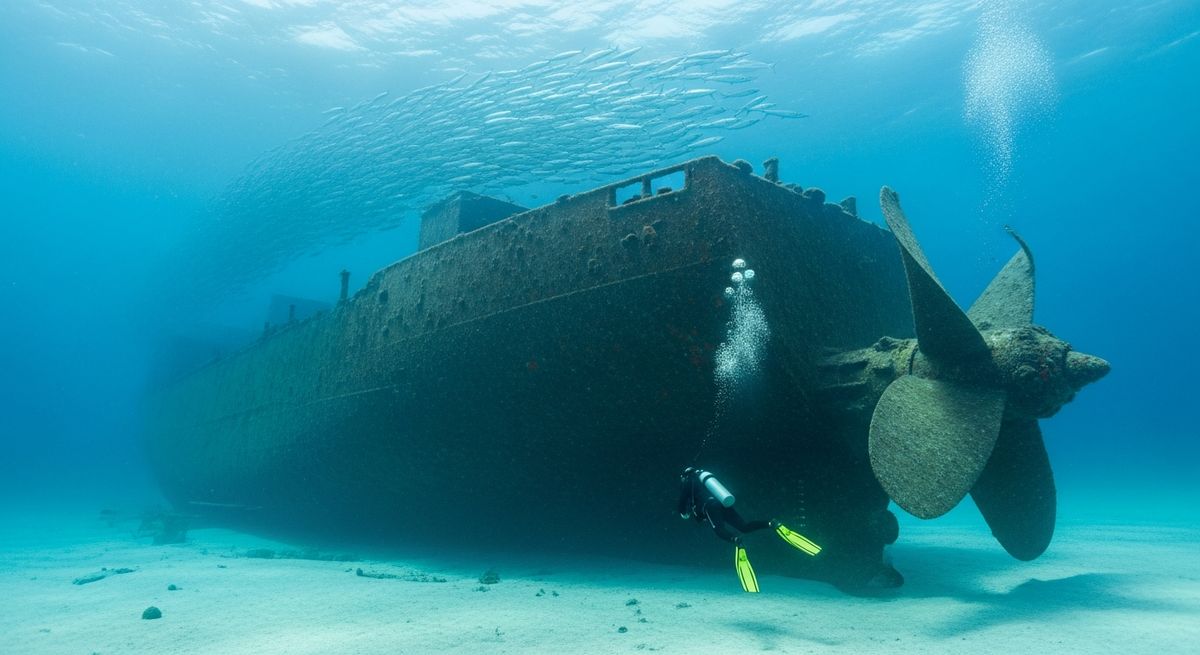
Lingbank isn't your average trawler wreck. We think she's special because of the way she’s come to rest, sitting upright and surprisingly intact at 30 metres. Dropping down, you’ll first make out the dark silhouette, then the detail emerges – the deck winches, the sturdy hull, and that prominent boiler, still defiant after nearly a century on the seabed. It’s a proper dive into history. The real joy here is exploring the superstructure. We’ve had some fantastic dives nosing around the holds, imagining the fishing gear that once filled them. Conger eels are almost guaranteed, peering out from cracks, and the sheer number of squat lobsters clinging to the metalwork never fails to impress. You'll often find a decent sized wrasse or two hanging about, too. Visibility can be a bit variable, so we always check the tides – slack water is definitely best for a relaxed potter. If you appreciate a wreck with real character and enough nooks to keep you busy, Lingbank is a solid choice.
Typical LINGBANK Dive Profile
Illustrative profile based on site depth and type. Actual dive profiles vary - always follow your dive computer and training.
Safety Notes
Depth of 30m - Advanced Open Water certification recommended.
Wreck site - avoid penetration without wreck diving certification. Watch for sharp metal and entanglement hazards.
Always perform a 3-minute safety stop at 5m before surfacing.
Nearest Dive Centres to LINGBANK
Dive shops near LINGBANK
View all dive centres in Scottish East Coast & BordersReviews for LINGBANK
Conditions
Ocean conditions, forecast and tides for LINGBANK
Plan & book
Ways to dive Scottish East Coast & Borders, from day trips to liveaboards.
Day trips & courses
via GetYourGuideGuided dives, courses and snorkel trips with instant booking.
Find dive trips in Scottish East Coast & BordersPlaces to stay
via Booking.comHotels and dive resorts near Scottish East Coast & Borders.
Search stays in Scottish East Coast & BordersDive insurance
Most travel insurance excludes or limits scuba. Check what you need before you go.
Dive insurance explainedPartner links: we may earn a commission if you book, at no extra cost to you. How we make money
Where to Stay near LINGBANK
Prices from Booking.com. We may earn a commission at no extra cost to you.