PROTECOR
Protected Area
Barry Links
Why dive here
With 112+ marine species recorded in the area - including dolphins, dwarf minke whales, humpback whales, ocean sunfish (mola mola) and orcas - PROTECOR offers some of Scottish East Coast & Borders's richest wreck diving.
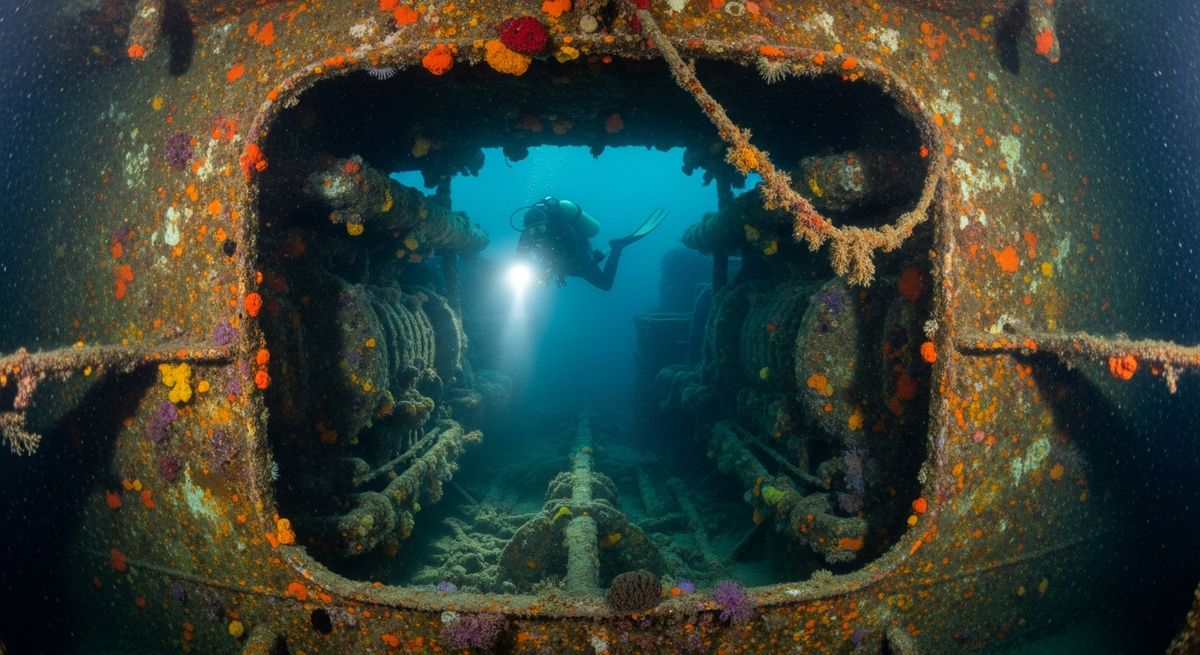
The PROTECOR. Now there’s a proper bit of history, sitting in a relatively shallow spot just off the Scottish coast. She went down after a smack with another tug in 1889, on her way to Dundee. We love a wreck with a story, and you can practically feel the echoes of that collision here. At only 10 metres, this is a wreck that’s accessible to most divers, and it’s a brilliant introduction to cold water wreck diving. You won't be penetrating much, if at all, given her "dangerous wreck" classification and age, but the structure itself is pretty spread out and makes for an atmospheric dive. We’ve always found a surprising amount of life hunkered down on her frames; crabs scuttling over the plates, decent sized cod lurking in the shadows, and a good coating of anemones on the more intact sections. Visibility can swing wildly with the North Sea, but on a good day, the low light filtering through the green water gives it a real eerie beauty. Our top tip? Pick your slack tide, otherwise, you'll be working hard. The currents here can be a serious wake-up call.
Typical PROTECOR Dive Profile
Illustrative profile based on site depth and type. Actual dive profiles vary - always follow your dive computer and training.
Safety Notes
Wreck site - avoid penetration without wreck diving certification. Watch for sharp metal and entanglement hazards.
Reviews for PROTECOR
Conditions
Ocean conditions, forecast and tides for PROTECOR
Plan & book
Ways to dive Scottish East Coast & Borders, from day trips to liveaboards.
Day trips & courses
via GetYourGuideGuided dives, courses and snorkel trips with instant booking.
Find dive trips in Scottish East Coast & BordersPlaces to stay
via Booking.comHotels and dive resorts near Scottish East Coast & Borders.
Search stays in Scottish East Coast & BordersDive insurance
Most travel insurance excludes or limits scuba. Check what you need before you go.
Dive insurance explainedPartner links: we may earn a commission if you book, at no extra cost to you. How we make money
Where to Stay near PROTECOR
Prices from Booking.com. We may earn a commission at no extra cost to you.