Diving in Great Lakes
Why dive here
Great Lakes is a species-rich diving destination in United States, with 30+ marine species recorded in the area.
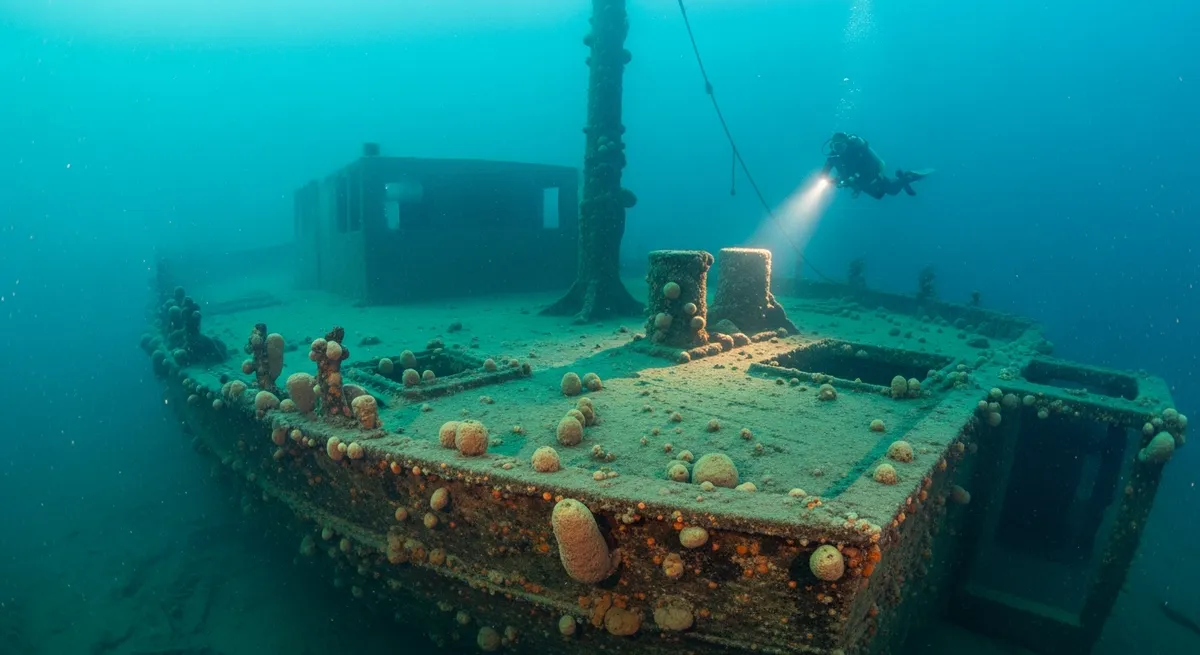
Forget everything you think you know about diving in North America. The Great Lakes are not about swaying corals or colourful reef fish, they’re about history, frozen in time. We’re talking freshwater wreck diving, and the cold, fresh water here means many of these shipwrecks are incredibly well-preserved. You might find a mast still standing, deck machinery intact, or even bottles and crockery scattered on the deck, especially around Thunder Bay National Marine Sanctuary. It’s a completely different kind of dive, often surprisingly clear, and for history buffs, it’s absolutely captivating.
Great Lakes Dive Site Map
Dive sites and dive centres in Great Lakes
Great Lakes Dive Sites
42 dive sites in Great Lakes
Alexander Reef
Alexander Reef, sitting out in the Great Lakes, offers a dive that feels more like an exploration than a typical reef hop. While we haven't pinpointed its exact depth, divers here are often treated to a cool, clear water experience that really highlights the unique freshwater ecosystem. Keep an eye out for species like the Slimy Sculpin tucked into the crevices, or even a Burbot cruising by. It's a site that rewards those who appreciate the subtle beauty of freshwater diving, a nice change of pace from the usual salt. If you're looking for something different, a quiet dive with a chance to spot species you won't see anywhere else, Alexander Reef is worth the trip.
A. R. Colborn and Crane (Wrack)
Diving the A.R. Colborn and the Crane, or what most of us just call the Wrack, isn’t about big pelagics or colourful reef fish. It’s a proper Great Lakes wreck dive, perfect for those who appreciate history and the quiet, often overlooked, beauty of freshwater ecosystems. We love how the two wrecks are tangled together, making for a fascinating explore. You’ll find the Colborn, a steam barge, and then the crane lying across it, like it just collapsed mid-operation. Our favourite part is the way the light filters through the green-blue water, catching the outlines of the machinery. Visibility can be a bit variable, so we'd suggest picking a calm, sunny day to get the best experience. Look closely in the nooks and crannies of the hull and the crane's structure. You’ll spot plenty of Yellow Perch and Cisco darting in and out, and if you’re lucky, a big Walleye lurking in the deeper shadows. It’s a calm, contemplative dive, excellent for wreck enthusiasts who enjoy taking their time and soaking in the atmosphere.
Bermuda Wreck
The Bermuda Wreck, sitting somewhere in the Great Lakes, holds a quiet charm for those who appreciate history over coral. We’ve always been drawn to these freshwater wrecks. There’s something eerie about the cold, dark freshwater preserving them so well, often with the ship’s cargo still scattered on the lakebed. What makes the Bermuda stand out for us is the sense of true exploration it offers. You’re not just looking at a wreck, you’re diving into a moment frozen in time. Visibility here can be a bit of a gamble, but when it’s good, the structure is surprisingly intact, allowing for some decent penetration if you’re properly trained and equipped. We've seen schools of perch flitting through the holds, their scales glinting in the beam of a dive light, and burbot often lurk in the deeper, darker sections. It’s a dive for those who enjoy the thrill of discovery and don't mind the chill of the lakes. Bring a good torch and take your time; the details reveal themselves slowly here.
Blue Water Lake
Blue Water Lake offers a different kind of dive in the Great Lakes. You'll find yourself exploring a freshwater environment, keeping an eye out for Threadfin Shad and Western Mosquitofish darting through the silty bottom. It’s a quiet dive, perfect for those interested in freshwater ecology or just looking for a calm, easy day underwater away from the usual crowds.
Boulton Reef
Boulton Reef is a spot we often suggest when someone asks about diving in the Great Lakes, particularly around Thunder Bay. It's not a vibrant coral garden, obviously, but what you lose in colour you gain in the chance to see some really robust freshwater species. We've spent dives here just watching Lake Sturgeon glide by, or spotting burbot tucked into the rocky crevices. Keep an eye out for the smaller stuff too, like the Nine-spined Stickleback darting between rocks, or even a Mottled Sculpin. It’s a good dive for those who appreciate the unique beauty of these cold, clear waters and want a different kind of critter encounter.
Car Bodies
So, the "Car Bodies" site, right? Sounds a bit grim, but trust us, it’s got a weird charm. It's essentially an underwater junkyard, a pile of old cars dumped decades ago, and it makes for a genuinely unusual dive. We love that it's a departure from your typical reef; the structure here is entirely man-made, and nature has just taken over. You'll weave through rusted chassis, past steering wheels long since fused with the lakebed, and peer into empty engine blocks now home to crayfish. It’s a great spot for macro photographers, honestly, because every surface is encrusted with sponges and hydroids, drawing in smaller fish like gobies. Our favourite part is spotting the pike lurking amongst the seats, camouflaged and still. This isn't a deep dive, making it accessible for newer divers wanting to try something a bit different, a bit eerie, but undeniably cool. Just watch your buoyancy; kicking up silt here is easily done and ruins the visibility for everyone.
Cedarville (Wrack)
Diving the Cedarville isn't just a dip, it’s a cold water history lesson. We're talking about a former limestone carrier, split in two after a collision in 1965, and now resting in the Straits of Mackinac. We love this site for the sheer scale of the wreckage. You descend into a deep gloom, often with visibility that forces you to hug the steel, and then the bow or stern loom out of the murk. It’s a sensory experience – the chill of the water, the creak of your gear, and the way the light filters down, painting the wreck in shades of grey and deep blue. Exploring the Cedarville means navigating massive cargo holds and broken superstructures. It’s not a wreck for the faint of heart; currents can be tricky, and that cold water demands good drysuit skills. But for those who embrace it, there are rewards. Look for the mottled sculpin tucked into crevices, and we’ve seen some surprisingly large Chinook salmon cruise past, using the wreck as shelter. The Alewife and Rainbow Smelt flit around the edges, adding a darting movement to the somber scene. Our favorite part is the sheer sense of history, touching steel that’s been down there for decades, slowly being reclaimed by the lake. It's a deep, challenging dive, perfect for experienced wreck enthusiasts who appreciate a significant piece of maritime history.
Depot beach
Depot Beach in the Great Lakes offers a straightforward shore dive. You'll find a mix of rocky substrate and sandy patches, home to various small fish and crayfish. It's a solid choice for an easy afternoon outing or a gear test, particularly suiting divers who prefer a relaxed entry and exit.
Ebar Ward
Ebar Ward in the Great Lakes offers a unique freshwater diving experience. We've found the visibility can vary significantly, often depending on recent weather and boat traffic. Divers here typically explore submerged structures and the occasional artifact, though we haven't encountered any significant wrecks. It's a spot best suited for divers keen on exploring local history and conditions rather than abundant marine life.
Elmwood Wreck
The Elmwood Wreck in the Great Lakes isn't just a sunken ship, it's a window into maritime history, a proper time capsule. We love the way the cold freshwater has preserved so much detail; you can still make out the ship’s structure clearly, almost as if it settled down yesterday. Dropping down, you're immediately struck by the sheer scale of it, and the ghostly silence only broken by your own bubbles. Our favourite part is navigating the collapsed deck, where light filters through in eerie shafts, illuminating resident burbot hunkering down in the shadows. It suits divers who appreciate historical sites and don't mind the chill, offering a unique chance to touch a piece of the past rather than just observe it.
Glenlyon
The Glenlyon is a shallow wreck, making it an accessible dive for those new to wreck exploration in the Great Lakes. We’ve found the stern section mostly intact, with machinery and some cargo still visible. Visibility here can vary, but on a good day, you get a decent sense of the ship’s structure. It’s a solid pick for divers looking for a straightforward, interesting freshwater wreck.
Grand Reef
Diving Grand Reef in the Great Lakes is a different kind of experience, a freshwater immersion that shows you the surprising life beneath the surface. Forget the usual coral and tropical fish; here, it’s about a rugged, rocky landscape shaped by ice and time. We've seen fat burbot cruising the bottom, schools of yellow perch darting through the clearer patches, and the occasional pike watching from the shadows. It’s a dive for those who appreciate the unique beauty of temperate waters and want to tick off some North American endemic species.
Show all 42 dive sites in Great Lakes
- Higgins lake
- Ironsides Reef
- Ironsides Wreck
- LifeWaters World Headquarters
- Lucinda Van Valkenburg
- Marquette Upper Harbor
- Monarch (Wreck)
- Monrovia
- Myron Wreck
- Mystic wreck
- New Orleans
- Nordmeer
- Redgranite Quarry
- Sadie Thompson Wreck
- Sandusky Wreck
- Shepherd Reef
- Smith Moore Wreck
- Spar Reef
- Spider Reef
- SS Etruria
- Straits of Mackinaw
- Three Brothers
- Vienna
- William Barnum
- William H. Wolf (Wrack)
- William Young
- Wreck of Big Bay sloop
- Wreck of Chester A. Congdon
- Wreck of Frank O'Connor
- Wreck of Niagara
Great Lakes Dive Centres
35 dive shops and operators in Great Lakes
Aqua Center
Aqua Diving School
Azimuth Scuba
Below H2O
Diventures
DiVentures
Divepoint Scuba Paddle and Adventure Center
Diver City Scuba
Show all 35 dive centres in Great Lakes
- Diversion's Scuba
- DJ's Scuba Locker
- Eagan Scuba Center
- Great Lakes Divers
- Green Bay Scuba
- Haigh Quarry
- Indy Dive Center
- Into the Blue Dive Shop
- Leaird's Underwater Service
- Learn Scuba Chicago
- LifeWaters World Headquarters
- Marineland
- Midwest School of Diving
- Natural Springs
- Nautical North Family Adventures
- Poseidon Adventure
- Pro Dive Shop
- Scuba Adventures QCA Inc.
- Scuba Center
- Scuba Diving Training Shop
- Seaquatics Scuba
- The Great American Diving Company
- Thunder Bay Scuba
- Underworld Scuba
- West End Diving
- Y-Kiki Divers
- Y-Kiki Divers
Ocean Wildlife in Great Lakes
30 species recorded in Great Lakes
Great Lakes Daylight & Sunrise/Sunset
Sunrise and sunset times for Great Lakes, calculated from coordinates
Today - Sunday 11 October
Sunrise
05:54
Sunset
17:09
Daylight
11h 15m
Golden Hour
16:29
First light (dawn) at 05:24 · Last light (dusk) at 17:39
Monthly Averages
| Month | Sunrise | Sunset | Daylight |
|---|---|---|---|
| Jan | 07:21 | 16:26 | 9h 5m |
| Feb | 06:48 | 17:10 | 10h 22m |
| Mar | 05:59 | 17:49 | 11h 49m |
| Apr | 05:01 | 18:29 | 13h 28m |
| May | 04:16 | 19:07 | 14h 51m |
| JunLongest | 03:56 | 19:34 | 15h 39m |
| Jul | 04:10 | 19:31 | 15h 22m |
| Aug | 04:44 | 18:55 | 14h 11m |
| Sep | 05:22 | 17:59 | 12h 37m |
| OctNow | 05:59 | 17:02 | 11h 3m |
| Nov | 06:42 | 16:16 | 9h 34m |
| DecShortest | 07:17 | 16:02 | 8h 45m |
Times are approximate local times based on longitude. Actual times may vary slightly depending on the exact timezone observed in Great Lakes.
Where to Stay near Great Lakes
Prices from Booking.com. We may earn a commission at no extra cost to you.
Marine Protected Areas near Great Lakes
1161 protected areas near Great Lakes - please respect local regulations when diving
Papahanaumokuakea Marine
Papahanaumokuakea Marine National Monument
Papahanaumokuakea Marine National Monument Particularly Sensitive Sea Area National Monument
Papahānaumokuākea
Monterey Bay National Marine Sanctuary
Northeast Canyons and Seamounts Marine National Monument
Northeast Canyons And Seamounts Marine
Yukon Delta
Yukon Delta National Wildlife Refuge
Florida Keys
Florida Keys National Marine Sanctuary
Greater Farallones National Marine Sanctuary
Showing 12 largest of 1161
Getting to Great Lakes
Escanaba
Grand Rapids
Milwaukee
Plan & book
Ways to dive Great Lakes, from day trips to liveaboards.
Day trips & courses
via GetYourGuideGuided dives, courses and snorkel trips with instant booking.
Find dive trips in Great LakesPlaces to stay
via Booking.comHotels and dive resorts near Great Lakes.
Search stays in Great LakesDive insurance
Most travel insurance excludes or limits scuba. Check what you need before you go.
Dive insurance explainedPartner links: we may earn a commission if you book, at no extra cost to you. How we make money