Blue Flame Pinnacles - Cape Town & Western Cape

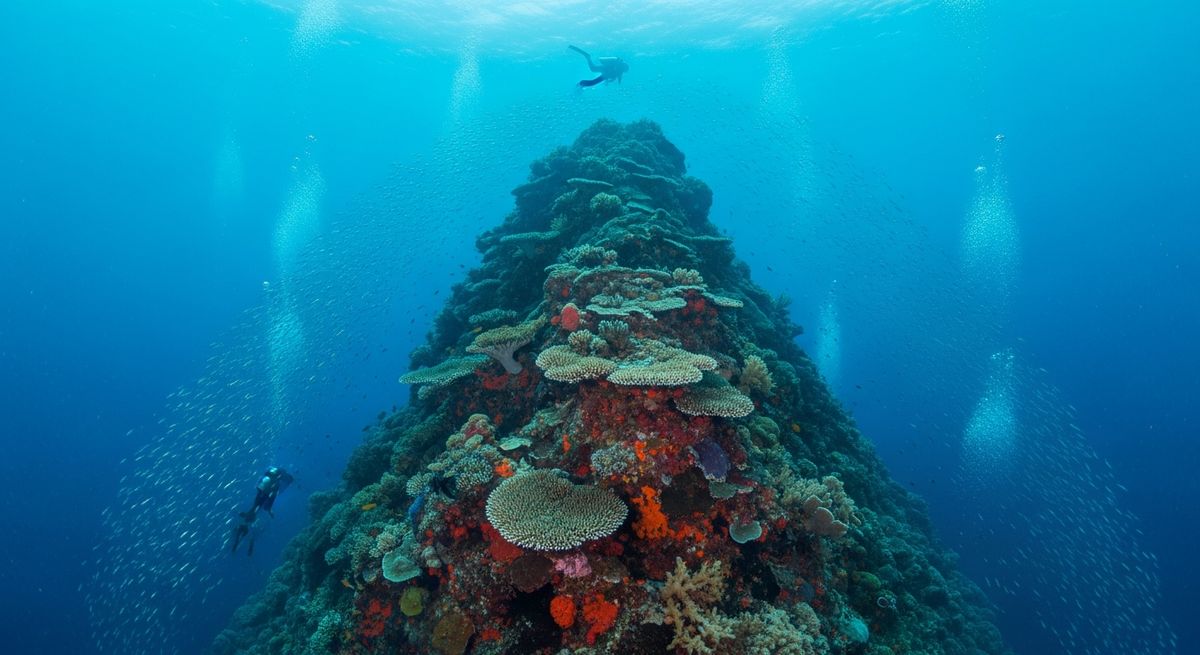
Blue Flame Pinnacles offers a deep dive experience off Cape Town, best suited for those comfortable with deeper profiles. The site is split, with a larger northern reef presenting massive outcrops that peak at around 25 metres from a 33-metre base. To the south, a striking line of three steep granite pinnacles cuts a dramatic profile. Visibility can vary, but on a good day, you'll find these granite structures covered in colourful invertebrates, with schools of fish often circling the higher points. We find this site usually delivers a solid dive for its unique geology.

Location
Cape Town & Western Cape, South Africa, Indian Ocean & East Africa
Coordinates
-34.211666, 18.554167
Type
pinnacle
Maximum Depth
10-25m

Marine Protected Area: False Bay Seal Island Provincial Nature Reserve

Best Time to Dive in Cape Town & Western Cape

The warmest water temperatures in Cape Town & Western Cape occur in January, averaging 18.9°C. The coolest conditions are in December at 18.9°C.

Monthly Water Temperatures

  • January: 18.9°C (air: 20.8°C)
  • February: 18.9°C (air: 20.7°C)
  • March: 18.9°C (air: 19.5°C)
  • April: 18.9°C (air: 17.3°C)
  • May: 18.9°C (air: 15.8°C)
  • June: 18.9°C (air: 15.0°C)
  • July: 18.9°C (air: 13.2°C)
  • August: 18.9°C (air: 13.2°C)
  • September: 18.9°C (air: 13.9°C)
  • October: 18.9°C (air: 16.5°C)
  • November: 18.9°C (air: 17.8°C)
  • December: 18.9°C (air: 19.3°C)

Nearby Dive Sites in Cape Town & Western Cape

Nearest Dive Centres to Blue Flame Pinnacles

Marine Life in Cape Town & Western Cape

Home to 271 recorded species including 176 reef fish, 45 sharks & rays, 28 whales & dolphins, 5 hard corals, 4 other, 4 octopus & squid.

Notable Species

Recommended Packing List for Blue Flame Pinnacles

Based on average water temperature of 18.9°C.

  • Wetsuit (3-5mm) - comfortable for 19°C water
  • Mask - essential for every dive
  • Fins
  • BCD - buoyancy compensator
  • Regulator - your most safety-critical piece of gear
  • Dive Computer - tracks depth, time, and NDL
  • Surface Marker Buoy (SMB) - essential for boat pickups
  • Dive Torch - useful for crevices and colour at depth
  • Underwater Camera - capture your diving memories

Frequently Asked Questions

What is the typical depth range for diving at Blue Flame Pinnacles?
The typical depth range for diving at Blue Flame Pinnacles is between 10 and 25 meters. The northern reef section features massive outcrops that rise from approximately 33 meters to a shallower point of 25 meters on the central ridge. Divers can explore these depths, with lower reef extending in various directions amidst strips of sand.
What kind of marine life and underwater features can divers expect to see at Blue Flame Pinnacles?
At Blue Flame Pinnacles, divers can expect to encounter impressive underwater features, primarily consisting of granite formations. The site is characterized by a northern reef section with massive outcrops and a central ridge, as well as a southern area dominated by a line of three very steep granite pinnacles. These pinnacles rest on a base of relatively low and flat granite outcrop, often surrounded by sand. While specific marine life is not detailed, these rocky structures provide an excellent habitat for various species.
How challenging is diving at Blue Flame Pinnacles, and what skill level is recommended?
Diving at Blue Flame Pinnacles is considered to be of intermediate difficulty. This suggests that divers should have some experience beyond entry-level certifications to comfortably navigate the site's conditions and features. It's always recommended to dive within your training and experience level, especially when exploring sites with varied depths and geological structures like these pinnacles.
What is the best time of year to dive Blue Flame Pinnacles for optimal conditions?
The provided data does not specify the best time of year for optimal diving conditions at Blue Flame Pinnacles. For general information on seasonal diving conditions in the region, you might consult our When to Dive guide. We recommend checking local dive operator reports for current conditions before planning your trip to Cape Town & Western Cape.
What scuba diving certifications are typically required or recommended for Blue Flame Pinnacles?
Given that Blue Flame Pinnacles is rated as an intermediate dive site, divers are typically recommended to hold certifications beyond entry-level, such as Advanced Open Water Diver or equivalent. This ensures you have the necessary skills and experience for deeper dives and potentially more challenging conditions. Always consult with a local dive center in Cape Town & Western Cape for their specific recommendations and requirements.
What are the typical current and water conditions like at Blue Flame Pinnacles?
The provided data does not include specific details regarding the typical current or water conditions at Blue Flame Pinnacles. As an intermediate dive site, it's prudent to anticipate varied conditions, which may include currents. Divers should always check with local dive operators in Cape Town & Western Cape for the most up-to-date information on currents, visibility, and water temperature before planning their dive.