CLAN STUART
Protected Area
Table Mountain National Park Marine Protected Area
Why dive here
With 269+ marine species recorded in the area - including blue sharks, blue whales, dolphins, dwarf minke whales and great white sharks - CLAN STUART offers some of Cape Town & Western Cape's richest wreck diving. Water ranges 14-16°C, warmest February, March, April.
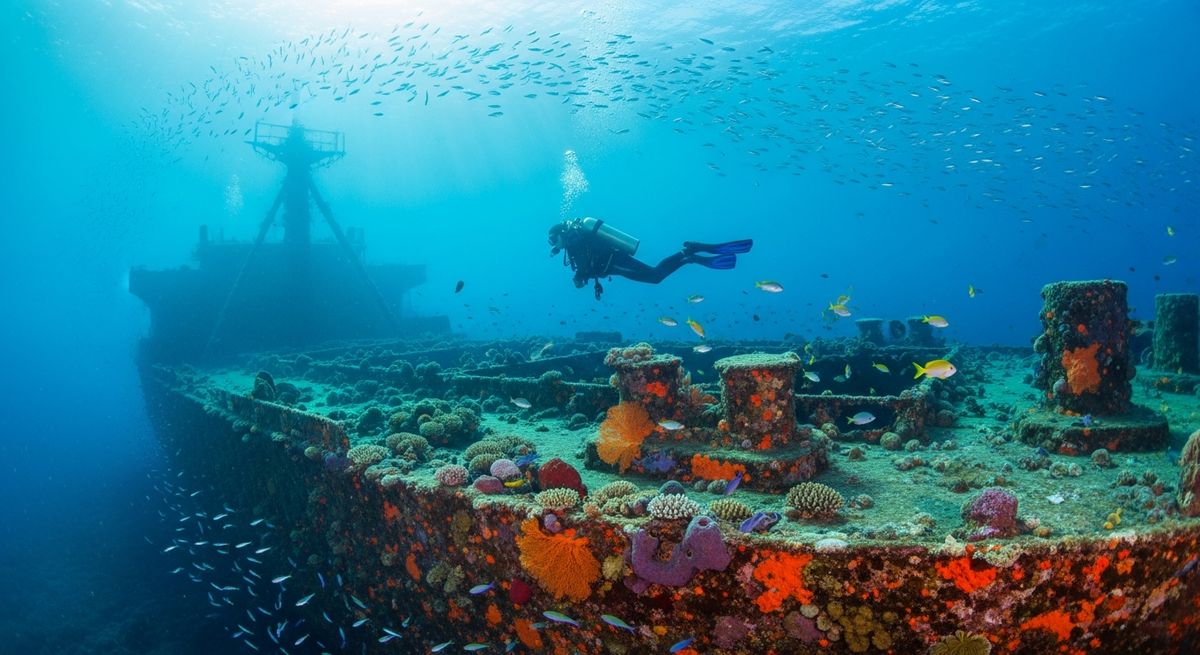
The Clan Stuart wreck is one of our favourite shore dives in Simon's Town, especially on a calm day. She’s an old steamship, almost completely broken up, but that’s precisely her charm. You’ll find her bones scattered across the sandy bottom at a shallow 6 metres, often less depending on the tide. We love kicking out to see the bow section, still quite intact and draped in the frilly white blooms of dead man’s fingers. It's a fantastic site for new divers and macro enthusiasts. You’ll spend most of your time exploring the nooks and crannies where shy pajama sharks often hide, or spotting tiny nudibranchs inching across the rusty plating. Visibility can range from a murky 3 metres to a sparkling 10 metres, so we always check the forecast for a southerly wind, which usually brings clearer water. Look for the engine block, a big, hulking mass now a busy apartment block for countless colourful sea anemones. Even if the visibility isn’t perfect, the sheer amount of life packed into this shallow wreck makes it a truly engaging dive.
Typical CLAN STUART Dive Profile
Illustrative profile based on site depth and type. Actual dive profiles vary - always follow your dive computer and training.
Safety Notes
Wreck site - avoid penetration without wreck diving certification. Watch for sharp metal and entanglement hazards.
Cold water this month (avg 15°C). Drysuit or thick wetsuit (7mm+) recommended.
Nearest Dive Centres to CLAN STUART
Dive shops near CLAN STUART
Cape Town Dive Centre
Pisces Divers
Ollava
Learn to Dive Today
Scuba Shack
Blue Flash
Reviews for CLAN STUART
Conditions
Ocean conditions, forecast and tides for CLAN STUART
CLAN STUART Ocean Conditions
Monthly averages for CLAN STUART, sourced from Open-Meteo marine data - nearest station: Open-Meteo marine grid (-33.92, 18.46) (8km away)
October Averages
Sea Temperature
15°C
59°F · Range: 12.4–17.2°C
Air Temperature
17°C
62°F
Wind Speed
7.33 m/s
14.2 knots
Atmospheric Pressure
1018.1 hPa
Based on 4 years of monitoring data · Data sources: Open-Meteo marine data
Plan & book
Ways to dive Cape Town & Western Cape, from day trips to liveaboards.
Day trips & courses
via GetYourGuideGuided dives, courses and snorkel trips with instant booking.
Find dive trips in Cape Town & Western CapePlaces to stay
via Booking.comHotels and dive resorts near Cape Town & Western Cape.
Search stays in Cape Town & Western CapeDive insurance
Most travel insurance excludes or limits scuba. Check what you need before you go.
Dive insurance explainedPartner links: we may earn a commission if you book, at no extra cost to you. How we make money
Where to Stay near CLAN STUART
Prices from Booking.com. We may earn a commission at no extra cost to you.