Die Perd
Protected Area
Duikerklip Provincial Nature Reserve
Why dive here
With 269+ marine species recorded in the area - including blue sharks, blue whales, dolphins, dwarf minke whales and great white sharks - Die Perd offers some of Cape Town & Western Cape's richest cave diving. Water ranges 14-16°C, warmest February, March, April.
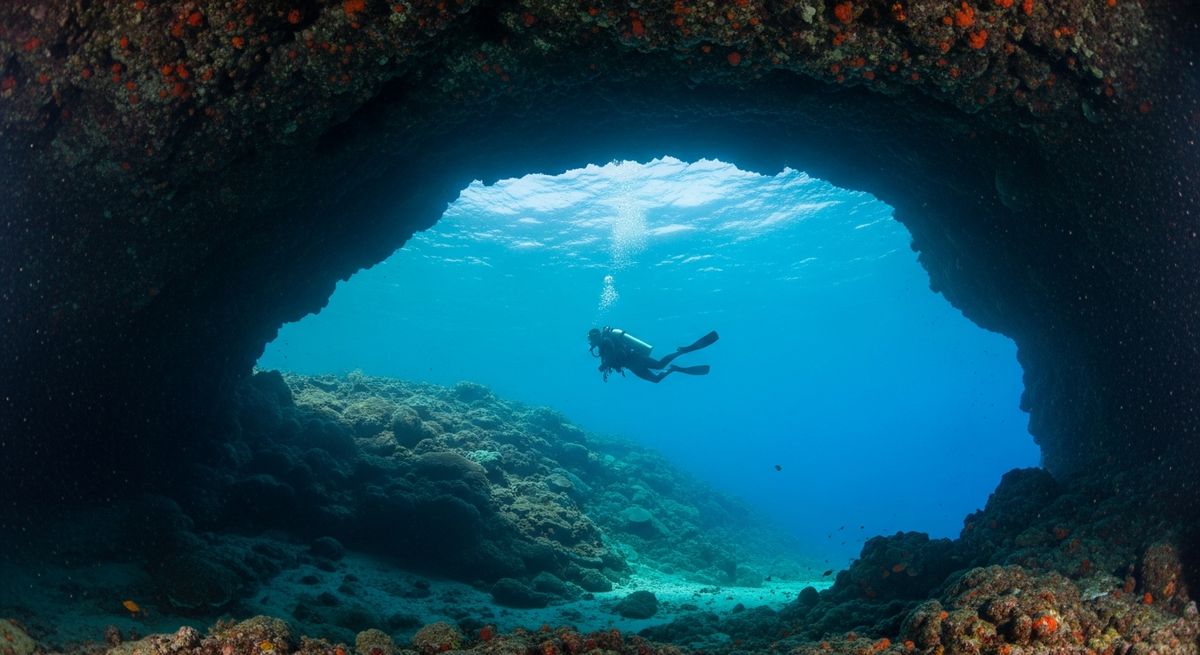
Die Perd, named for the granite outcrop that pokes above the waves, is one of those sites we always enjoy for its rugged character. Descending onto a low granite corestone reef, you'll find an interesting mix of boulders and deep gullies, especially in the shallower sections. The real draw, for us, is exploring the northern reaches, where the reef transforms into some nice walls, particularly between 10 and 15 metres. There are a few small swim-throughs and overhangs to duck into, adding a bit of adventure. It’s a great spot if you appreciate dramatic underwater topography and the quiet hunt for smaller critters tucked into crevices.
Typical Die Perd Dive Profile
Illustrative profile based on site depth and type. Actual dive profiles vary - always follow your dive computer and training.
Safety Notes
Overhead environment - never enter without proper cave/cavern training, redundant equipment, and a guideline.
Cold water this month (avg 15°C). Drysuit or thick wetsuit (7mm+) recommended.
Nearest Dive Centres to Die Perd
Dive shops near Die Perd
Scuba Shack
Blue Flash
Learn to Dive Today
Orca Diving Academy
False Bay Underwater Club
DiveInn Cape Town
Reviews for Die Perd
Conditions
Ocean conditions, forecast and tides for Die Perd
Die Perd Ocean Conditions
Monthly averages for Die Perd, sourced from Open-Meteo marine data - nearest station: Open-Meteo marine grid (-33.92, 18.46) (8km away)
October Averages
Sea Temperature
15°C
59°F · Range: 12.4–17.2°C
Air Temperature
17°C
62°F
Wind Speed
7.33 m/s
14.2 knots
Atmospheric Pressure
1018.1 hPa
Based on 4 years of monitoring data · Data sources: Open-Meteo marine data
Plan & book
Ways to dive Cape Town & Western Cape, from day trips to liveaboards.
Day trips & courses
via GetYourGuideGuided dives, courses and snorkel trips with instant booking.
Find dive trips in Cape Town & Western CapePlaces to stay
via Booking.comHotels and dive resorts near Cape Town & Western Cape.
Search stays in Cape Town & Western CapeDive insurance
Most travel insurance excludes or limits scuba. Check what you need before you go.
Dive insurance explainedPartner links: we may earn a commission if you book, at no extra cost to you. How we make money
Where to Stay near Die Perd
Prices from Booking.com. We may earn a commission at no extra cost to you.