HALERIC
Protected Area
Paternoster Rocks Provincial Nature Reserve
Why dive here
With 269+ marine species recorded in the area - including blue sharks, blue whales, dolphins, dwarf minke whales and great white sharks - HALERIC offers some of Cape Town & Western Cape's richest wreck diving. Water ranges 14-16°C, warmest February, March, April.
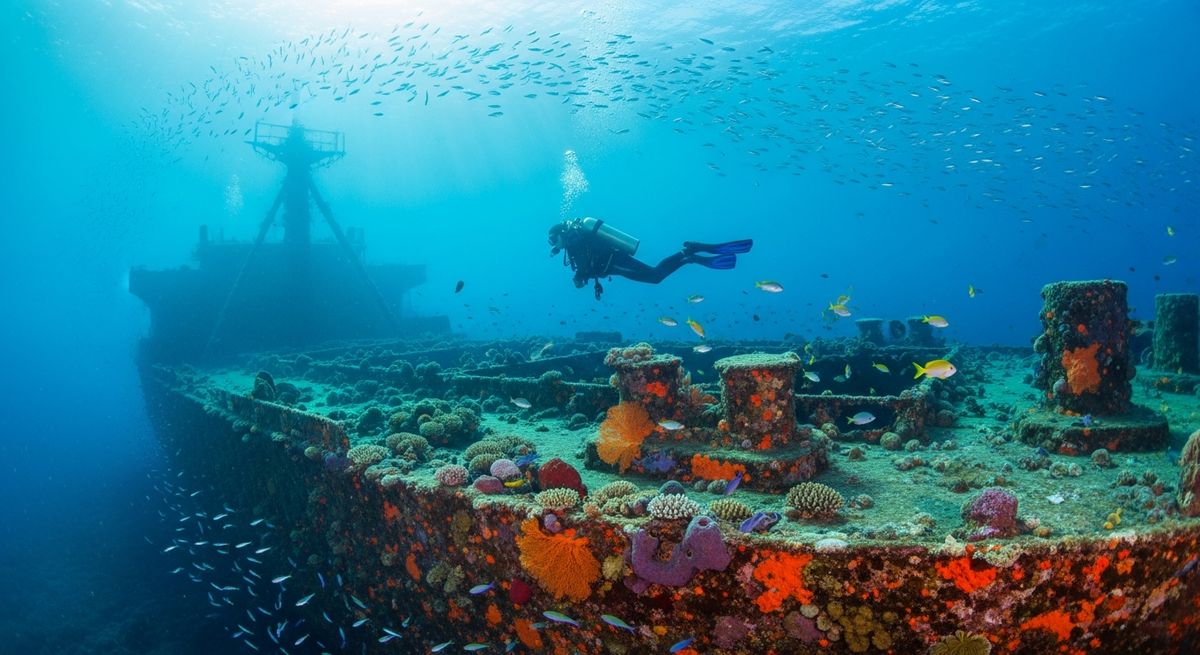
The Halerica. Even the name sounds like a rumble in the deep. This isn't one of those polite, broken-up wrecks, it’s a proper behemoth, 125 metres of steamship sprawled across the seabed off Paternoster Point. We love a wreck that still feels like a ship, and the Halerica delivers. She’s definitely dangerous, as the official classification warns, but that just adds to the thrill, doesn't it? You get a real sense of her sheer scale here, the bow section still rising defiantly, the stern completely broken. We’d suggest heading down early morning, before any wind picks up, because it can get choppy out here. Dropping onto the wreck, you’ll first notice the incredible growth, a colourful carpet of soft corals and anemones that have completely claimed the steel plates. Look closely, and you’ll spot a resident octopus or a shy catshark tucked into a crevice. The holds are still somewhat intact, offering swim-throughs if you're comfortable and properly trained. It’s a site for experienced divers, no doubt, but the sheer size and historical weight of the Halerica make it a truly memorable dive.
Typical HALERIC Dive Profile
Illustrative profile based on site depth and type. Actual dive profiles vary - always follow your dive computer and training.
Safety Notes
Depth of 25m - Advanced Open Water certification recommended.
Wreck site - avoid penetration without wreck diving certification. Watch for sharp metal and entanglement hazards.
Cold water this month (avg 15°C). Drysuit or thick wetsuit (7mm+) recommended.
Always perform a 3-minute safety stop at 5m before surfacing.
Nearest Dive Centres to HALERIC
Dive shops near HALERIC
View all dive centres in Cape Town & Western CapeReviews for HALERIC
Conditions
Ocean conditions, forecast and tides for HALERIC
HALERIC Ocean Conditions
Monthly averages for HALERIC, sourced from Open-Meteo marine data - nearest station: Open-Meteo marine grid (-33.92, 18.46) (8km away)
October Averages
Sea Temperature
15°C
59°F · Range: 12.4–17.2°C
Air Temperature
17°C
62°F
Wind Speed
7.33 m/s
14.2 knots
Atmospheric Pressure
1018.1 hPa
Based on 4 years of monitoring data · Data sources: Open-Meteo marine data
Plan & book
Ways to dive Cape Town & Western Cape, from day trips to liveaboards.
Day trips & courses
via GetYourGuideGuided dives, courses and snorkel trips with instant booking.
Find dive trips in Cape Town & Western CapePlaces to stay
via Booking.comHotels and dive resorts near Cape Town & Western Cape.
Search stays in Cape Town & Western CapeDive insurance
Most travel insurance excludes or limits scuba. Check what you need before you go.
Dive insurance explainedPartner links: we may earn a commission if you book, at no extra cost to you. How we make money
Where to Stay near HALERIC
Prices from Booking.com. We may earn a commission at no extra cost to you.