langebaan divers wall
Protected Area
Marcus Island Marine Protected Area
Why dive here
With 269+ marine species recorded in the area - including blue sharks, blue whales, dolphins, dwarf minke whales and great white sharks - langebaan divers wall offers some of Cape Town & Western Cape's richest reef diving. Water ranges 14-16°C, warmest February, March, April.
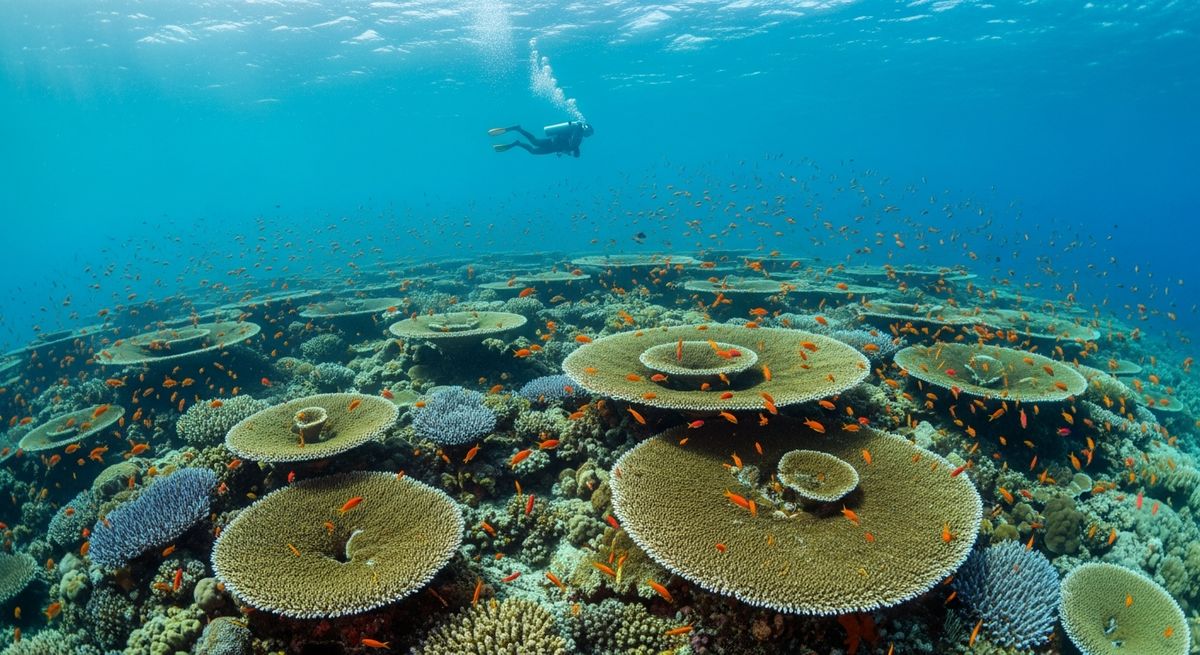
Langebaan Divers Wall is one of those spots we reserve for celebrations, usually a 100th dive. It’s barely a dive in terms of depth, maxing out at 5 metres, but it offers something truly unique for the Western Cape. You drop in by boat just outside the Mykonos marina, and it’s a site that really makes you feel the ocean’s pulse. We love the sheer amount of life packed into this shallow zone. The wall itself, flanked by dense kelp and rugged rocks, often has the current sweeping past, bringing in all sorts of pelagic action. We’ve seen dwarf sperm whales here, even the occasional Bryde’s whale breaching further out. Down among the kelp, you’ll spot giant guitarfish camouflaged against the sand, and we’ve had common cuttlefish jetting past. Visibility averages a modest three metres, but that just adds to the intimate feel, pushing you to look closer. It’s definitely one for divers who appreciate the subtle drama of a shallow reef and aren't put off by a bit of swell. Watch the conditions, though; if the swell is up, it can be a bumpy ride.
Safety Notes
Cold water this month (avg 15°C). Drysuit or thick wetsuit (7mm+) recommended.
Nearest Dive Centres to langebaan divers wall
Dive shops near langebaan divers wall
View all dive centres in Cape Town & Western CapeReviews for langebaan divers wall
Conditions
Ocean conditions, forecast and tides for langebaan divers wall
langebaan divers wall Ocean Conditions
Monthly averages for langebaan divers wall, sourced from Open-Meteo marine data - nearest station: Open-Meteo marine grid (-33.92, 18.46) (8km away)
October Averages
Sea Temperature
15°C
59°F · Range: 12.4–17.2°C
Air Temperature
17°C
62°F
Wind Speed
7.33 m/s
14.2 knots
Atmospheric Pressure
1018.1 hPa
Based on 4 years of monitoring data · Data sources: Open-Meteo marine data
Plan & book
Ways to dive Cape Town & Western Cape, from day trips to liveaboards.
Day trips & courses
via GetYourGuideGuided dives, courses and snorkel trips with instant booking.
Find dive trips in Cape Town & Western CapePlaces to stay
via Booking.comHotels and dive resorts near Cape Town & Western Cape.
Search stays in Cape Town & Western CapeDive insurance
Most travel insurance excludes or limits scuba. Check what you need before you go.
Dive insurance explainedPartner links: we may earn a commission if you book, at no extra cost to you. How we make money
Where to Stay near langebaan divers wall
Prices from Booking.com. We may earn a commission at no extra cost to you.