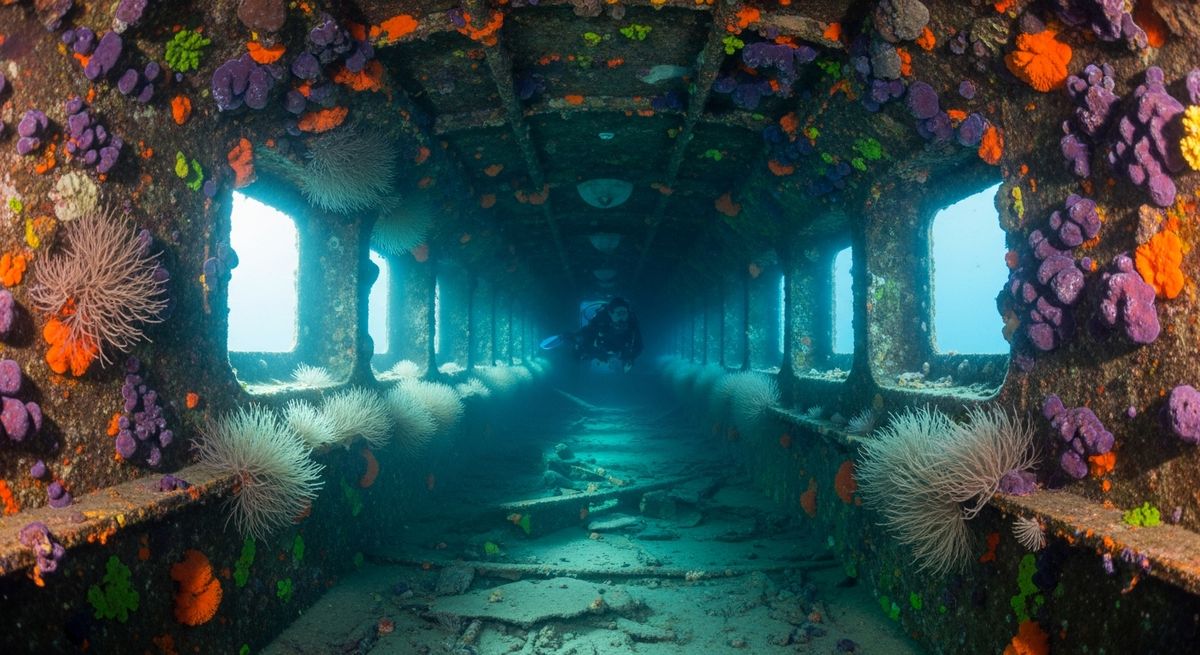
MV Antipolis, wreck
Protected Area
Duikerklip Provincial Nature Reserve
Why dive here
With 269+ marine species recorded in the area - including blue sharks, blue whales, dolphins, dwarf minke whales and great white sharks - MV Antipolis, wreck offers some of Cape Town & Western Cape's richest wreck diving. Water ranges 14-16°C, warmest February, March, April.
The MV Antipolis is one of those wrecks we keep coming back to, mainly because it's so accessible and always delivers a good time. You kick out about 60 metres from shore, then drop down onto the main deck around 7 metres. What we love about the Antipolis is how much of it you can still explore. The hull is largely intact, with big, open sections that let you swim right inside. Sunlight filters through gaps, illuminating schools of strepies and hottentot darting between the beams. As you follow the wreck deeper, it slopes to 20 metres at high tide, offering more to see. The kelp surrounding the wreck isn't just scenery, it's a bustling neighbourhood. Look for puffadder sharks and shy pajama sharks tucked away in the fronds. We’ve found crayfish tucked into every crack and crevice, too. This isn't a deep, technical dive, which is why we think it’s perfect for divers wanting a relaxed wreck experience without the faff of a boat trip. Visibility averages around 8 metres, which is plenty for appreciating the scale of the wreck and the life it now supports.
Typical MV Antipolis, wreck Dive Profile
Illustrative profile based on site depth and type. Actual dive profiles vary - always follow your dive computer and training.
Safety Notes
Wreck site - avoid penetration without wreck diving certification. Watch for sharp metal and entanglement hazards.
Cold water this month (avg 15°C). Drysuit or thick wetsuit (7mm+) recommended.
Nearest Dive Centres to MV Antipolis, wreck
Dive shops near MV Antipolis, wreck
Into the Blue Scuba
Orca Diving Academy
UCT Underwater Club
Two Oceans Aquarium
University of Cape Town Underwater Club
Coral Wetsuits
Reviews for MV Antipolis, wreck
Conditions
Ocean conditions, forecast and tides for MV Antipolis, wreck
MV Antipolis, wreck Ocean Conditions
Monthly averages for MV Antipolis, wreck, sourced from Open-Meteo marine data - nearest station: Open-Meteo marine grid (-33.92, 18.46) (8km away)
October Averages
Sea Temperature
15°C
59°F · Range: 12.4–17.2°C
Air Temperature
17°C
62°F
Wind Speed
7.33 m/s
14.2 knots
Atmospheric Pressure
1018.1 hPa
Based on 4 years of monitoring data · Data sources: Open-Meteo marine data
Plan & book
Ways to dive Cape Town & Western Cape, from day trips to liveaboards.
Day trips & courses
via GetYourGuideGuided dives, courses and snorkel trips with instant booking.
Find dive trips in Cape Town & Western CapePlaces to stay
via Booking.comHotels and dive resorts near Cape Town & Western Cape.
Search stays in Cape Town & Western CapeDive insurance
Most travel insurance excludes or limits scuba. Check what you need before you go.
Dive insurance explainedPartner links: we may earn a commission if you book, at no extra cost to you. How we make money
Where to Stay near MV Antipolis, wreck
Prices from Booking.com. We may earn a commission at no extra cost to you.