RAINFROST
Protected Area
Costa de Sardina del Norte
Why dive here
With 76+ marine species recorded in the area - including dolphins, octopuses, sea turtles, sperm whales and cuttlefish - RAINFROST offers some of Canary Islands's richest wreck diving. Water ranges 20-24°C, warmest August, September, October.
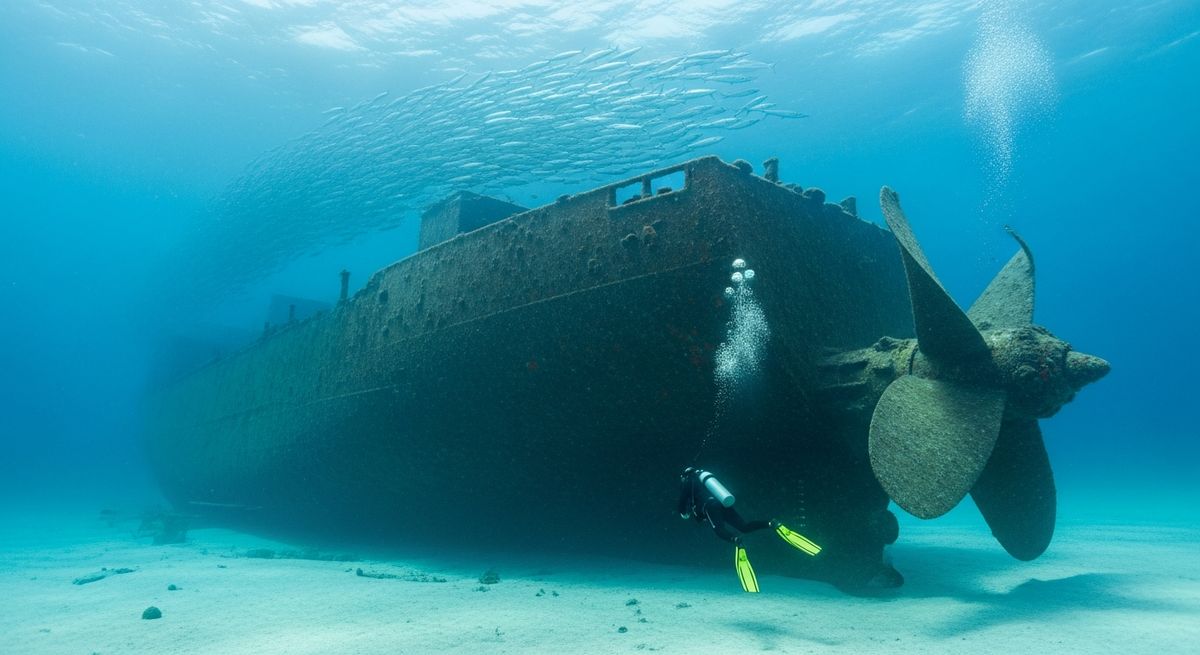
The Rainfrost is a different kind of wreck dive, and we love it for its sheer scale and the way it’s become a home. This isn't a delicate penetration dive; it’s more of an exploratory swim-through experience, ideal for divers who enjoy big structures and the fish that flock to them. The carrier vessel, sunk back in ‘89 after a fire, lies shallow, its massive hull broken open in places. We’d suggest going at slack tide if you can; it really lets you soak in the atmosphere. Descend onto the deck at just two metres, and you’ll find the entire structure draped in a shimmering curtain of sardines and anchovies, especially in late summer. It's an incredible sight, so thick you can barely see the wreck itself sometimes. Swim along the upper sections, past the vast holds where light shafts pierce the gloom, illuminating schools of amberjacks that dart in and out of the shadows. The sheer size of this vessel, 120 metres long, gives it a grand, almost cathedral-like feel, even in such shallow water. We think it’s a brilliant spot for photographers, especially when those huge bait balls are swirling. While it’s listed as dangerous, the accessible areas are generally open and well-lit by the surface, making it feel less intimidating than many wrecks its size.
Typical RAINFROST Dive Profile
Illustrative profile based on site depth and type. Actual dive profiles vary - always follow your dive computer and training.
Safety Notes
Wreck site - avoid penetration without wreck diving certification. Watch for sharp metal and entanglement hazards.
Nearest Dive Centres to RAINFROST
Dive shops near RAINFROST
Buceo Norte
DSDivers Gran Canaria
Buceo La Vieja
El Azul Gran Canaria Dive Center
Mirafondos, Centro de Buceo
BUCEO CANARIAS BY MEDUSA
Reviews for RAINFROST
Conditions
Ocean conditions, forecast and tides for RAINFROST
RAINFROST Ocean Conditions
Monthly averages for RAINFROST, sourced from Open-Meteo marine data + Copernicus Marine (EU) - nearest station: Open-Meteo marine grid (28.18, -15.41) (10km away)
October Averages
Sea Temperature
24°C
74°F · Range: 22.2–25.4°C
Current Speed
10 cm/s
Direction: SE (126.9°)
Chlorophyll-a
0.081 mg/m³
Very clear (oligotrophic)
Salinity
36.89 PSU
Based on 4 years of monitoring data · Data sources: Open-Meteo marine data + Copernicus Marine (EU)
Plan & book
Ways to dive Canary Islands, from day trips to liveaboards.
Day trips & courses
via GetYourGuideGuided dives, courses and snorkel trips with instant booking.
Find dive trips in Canary IslandsPlaces to stay
via Booking.comHotels and dive resorts near Canary Islands.
Search stays in Canary IslandsDive insurance
Most travel insurance excludes or limits scuba. Check what you need before you go.
Dive insurance explainedPartner links: we may earn a commission if you book, at no extra cost to you. How we make money
Where to Stay near RAINFROST
Prices from Booking.com. We may earn a commission at no extra cost to you.