SAVVAS L
Protected Area
Bahía del Confital
Why dive here
With 76+ marine species recorded in the area - including dolphins, octopuses, sea turtles, sperm whales and cuttlefish - SAVVAS L offers some of Canary Islands's richest wreck diving. Water ranges 20-24°C, warmest August, September, October.
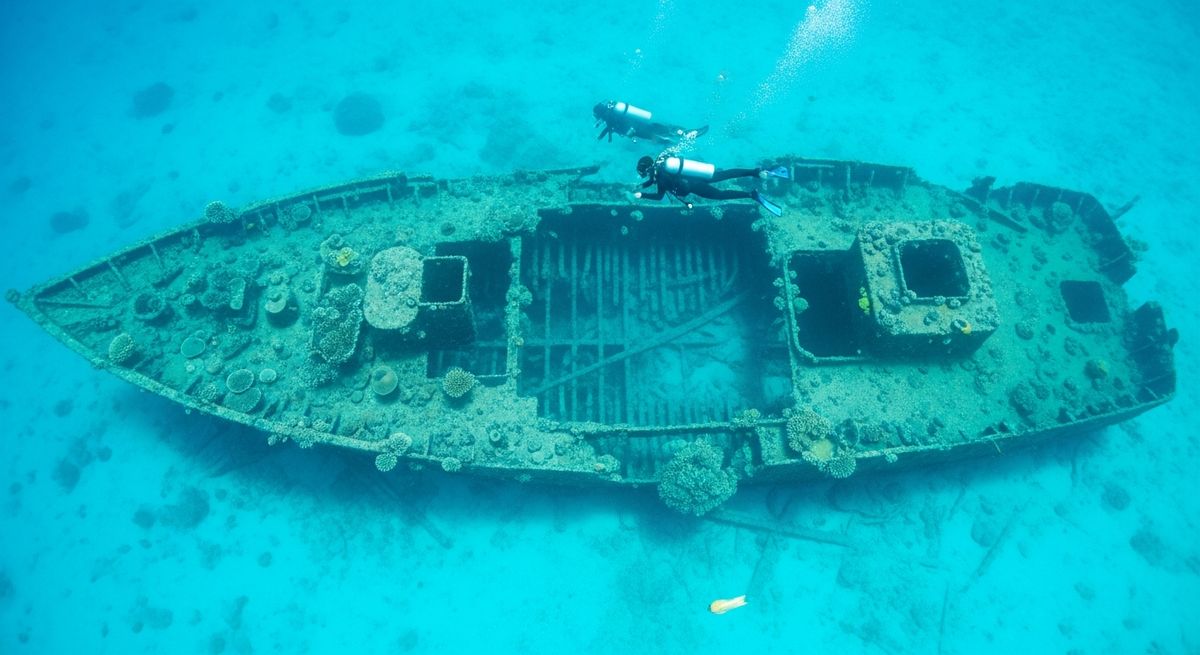
The Savvas L sits upright, a trawler sunk back in 1974. We found the stern section, with its big prop and rudder, the most intact part, offering some interesting swim-throughs as it’s open to the elements. The mid-section is more broken up, but it’s still easy to trace the deck line and imagine it as a working vessel. We’ve seen barracuda hanging out here, and the resident groupers often eye you from within the darker holds. It’s a shallow dive, maxing out at two metres, so it’s perfect for extended bottom times and a good spot for newer divers to experience a wreck without the added depth challenges.
Typical SAVVAS L Dive Profile
Illustrative profile based on site depth and type. Actual dive profiles vary - always follow your dive computer and training.
Safety Notes
Wreck site - avoid penetration without wreck diving certification. Watch for sharp metal and entanglement hazards.
Nearest Dive Centres to SAVVAS L
Dive shops near SAVVAS L
BUCEO CANARIAS BY MEDUSA
Mirafondos, Centro de Buceo
Buceo La Vieja
El Azul Gran Canaria Dive Center
KARAPAT DIVE
BUCEO PANDORA
Reviews for SAVVAS L
Conditions
Ocean conditions, forecast and tides for SAVVAS L
SAVVAS L Ocean Conditions
Monthly averages for SAVVAS L, sourced from Open-Meteo marine data + Copernicus Marine (EU) - nearest station: Open-Meteo marine grid (28.18, -15.41) (10km away)
October Averages
Sea Temperature
24°C
74°F · Range: 22.2–25.4°C
Current Speed
10 cm/s
Direction: SE (126.9°)
Chlorophyll-a
0.081 mg/m³
Very clear (oligotrophic)
Salinity
36.89 PSU
Based on 4 years of monitoring data · Data sources: Open-Meteo marine data + Copernicus Marine (EU)
Plan & book
Ways to dive Canary Islands, from day trips to liveaboards.
Day trips & courses
via GetYourGuideGuided dives, courses and snorkel trips with instant booking.
Find dive trips in Canary IslandsPlaces to stay
via Booking.comHotels and dive resorts near Canary Islands.
Search stays in Canary IslandsDive insurance
Most travel insurance excludes or limits scuba. Check what you need before you go.
Dive insurance explainedPartner links: we may earn a commission if you book, at no extra cost to you. How we make money
Where to Stay near SAVVAS L
Prices from Booking.com. We may earn a commission at no extra cost to you.