ABERDEEN CITY
Protected Area
Northwall
Why dive here
With 140+ marine species recorded in the area - including blue whales, dolphins, dwarf minke whales, humpback whales and ocean sunfish (mola mola) - ABERDEEN CITY offers some of Scapa Flow, Orkney's richest wreck diving. Water ranges 8-14°C, warmest July, August, September.
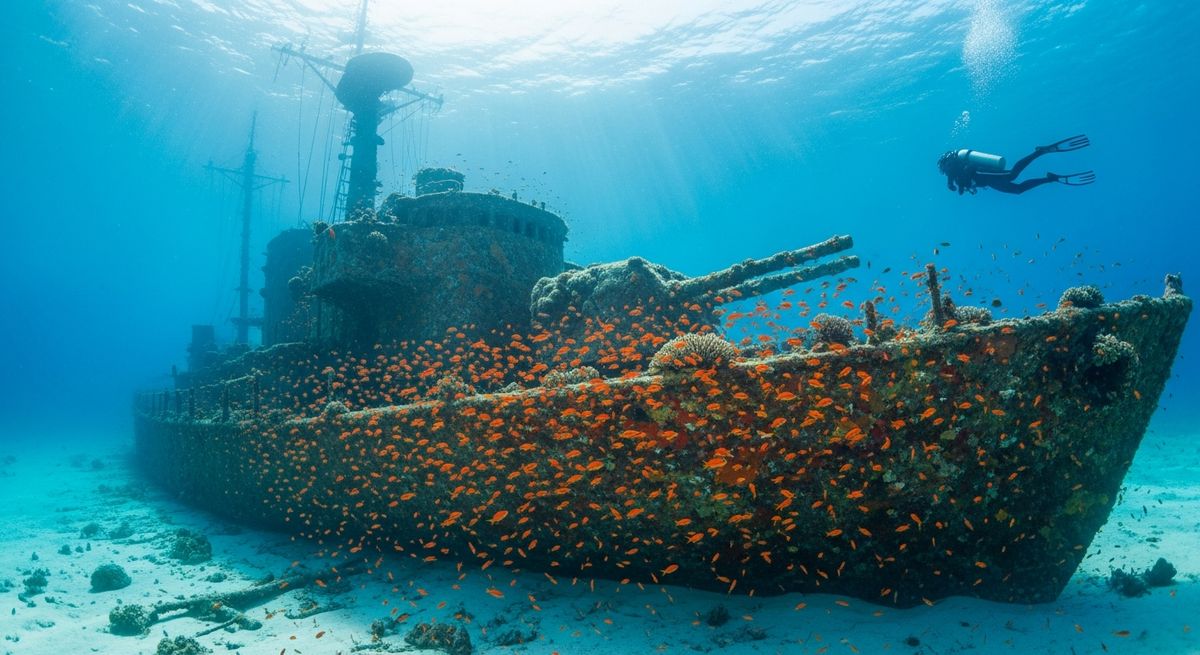
The Aberdeen City isn't about depth, it's about sheer accessibility and atmosphere. At just five metres, this trawler wreck is practically begging for a long, leisurely dive, perfect for any skill level or if you just fancy stretching a cylinder. We love how the shallow depth paints the wreck in natural light, often a murky green, giving it a wonderfully eerie feel as you descend onto the main deck. Her wheelhouse is our favourite feature, still mostly intact, inviting you to peer inside and imagine the last moments before she settled in 1963. You can swim the length of her, picking out the winch gear, feeling the cool metal under your fingertips. The superstructure is now home to a surprising amount of life, little crabs scuttling over corroded plates, and we’ve often seen inquisitive ballan wrasse darting in and out of the open holds. It’s a proper Scapa Flow wreck experience, just without the decompression obligations. A great afternoon dive after a deeper morning run, or simply an ideal spot for practicing your wreck penetration skills in well-lit, shallow conditions.
Typical ABERDEEN CITY Dive Profile
Illustrative profile based on site depth and type. Actual dive profiles vary - always follow your dive computer and training.
Safety Notes
Wreck site - avoid penetration without wreck diving certification. Watch for sharp metal and entanglement hazards.
Cold water this month (avg 13°C). Drysuit or thick wetsuit (7mm+) recommended.
ABERDEEN CITY Wreck History
Year Sunk
1963
Vessel Type
fishing vessel
Cause
grounding
While Scapa Flow is world-renowned for the scuttled warships of the German High Seas Fleet, its waters hold the stories of many other vessels, including the humble trawler Aberdeen City. Built in 1957, this motor trawler had a relatively short career working the fishing grounds of the North Sea. In September 1963, only six years after its launch, the vessel ran into trouble and stranded within the protective confines of the Flow, eventually sinking.
Lying at a depth of only 5 meters, the Aberdeen City is one of the most accessible wrecks in this historic body of water. Its shallow position makes it a perfect second dive after exploring one of the deeper German warships, or an ideal site for less experienced divers. The wreck is broken up, but its remains offer a fascinating glimpse into the mid-20th century fishing industry. Divers can explore the scattered machinery and hull plates, now colonized by marine life, providing a peaceful contrast to the dramatic history of its more famous neighbors.
Reviews for ABERDEEN CITY
Conditions
Ocean conditions, forecast and tides for ABERDEEN CITY
ABERDEEN CITY Ocean Conditions
Monthly averages for ABERDEEN CITY, sourced from Open-Meteo marine data - nearest station: Open-Meteo marine grid (58.64, -3.16) (8km away)
October Averages
Sea Temperature
13°C
55°F · Range: 11.4–13.8°C
Air Temperature
10°C
50°F
Wind Speed
9.26 m/s
18.0 knots
Atmospheric Pressure
1005.3 hPa
Based on 4 years of monitoring data · Data sources: Open-Meteo marine data
Plan & book
Ways to dive Scapa Flow, Orkney, from day trips to liveaboards.
Day trips & courses
via GetYourGuideGuided dives, courses and snorkel trips with instant booking.
Find dive trips in Scapa Flow, OrkneyPlaces to stay
via Booking.comHotels and dive resorts near Scapa Flow, Orkney.
Search stays in Scapa Flow, OrkneyDive insurance
Most travel insurance excludes or limits scuba. Check what you need before you go.
Dive insurance explainedPartner links: we may earn a commission if you book, at no extra cost to you. How we make money
Where to Stay near ABERDEEN CITY
Prices from Booking.com. We may earn a commission at no extra cost to you.