AORANGI
Protected Area
Copinsay
Why dive here
With 140+ marine species recorded in the area - including blue whales, dolphins, dwarf minke whales, humpback whales and ocean sunfish (mola mola) - AORANGI offers some of Scapa Flow, Orkney's richest wreck diving. Water ranges 8-14°C, warmest July, August, September.
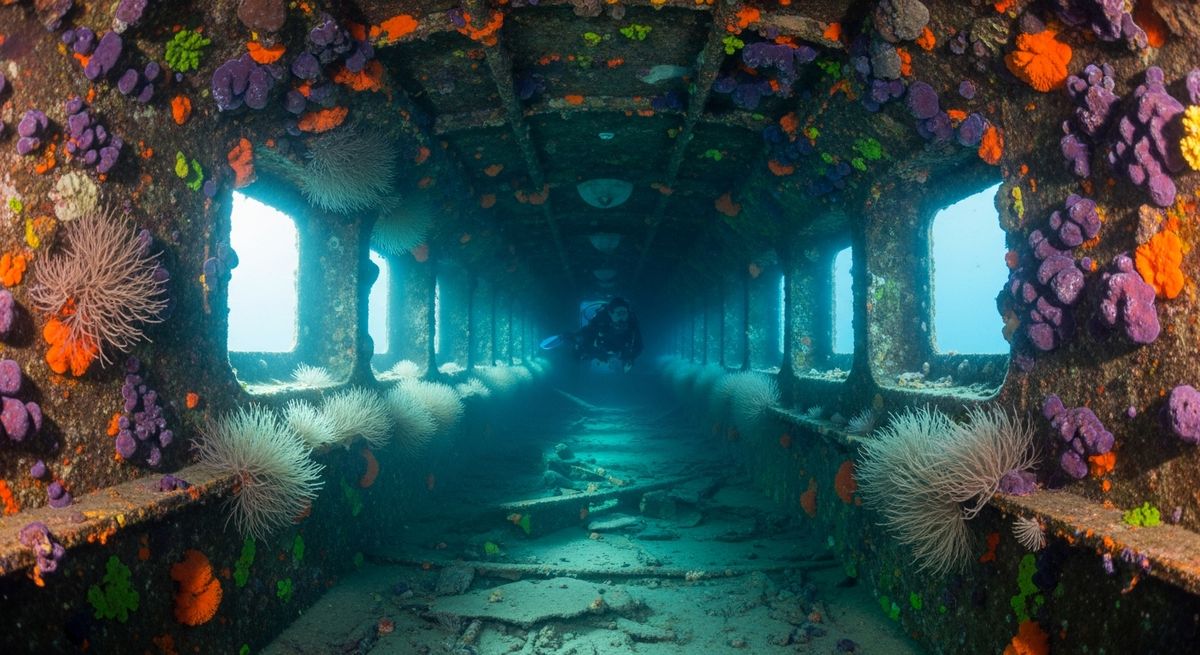
The Aorangi isn't your deep, imposing Scapa Flow wreck; it's something different, a shallow, accessible piece of history that we absolutely adore. She’s a blockship, deliberately sunk in 1915, though not quite where they intended – she drifted a bit before settling. What you get now is a jumble of hull and superstructure, all at a maximum of five metres. We love how the shallow depth transforms this site. Sunlight filters through, illuminating the metalwork and the incredible growth of anemones and kelp. You’ll weave through beams and plates, feeling the gentle surge, spotting blennies and tiny crabs tucked into every crevice. It's a fantastic spot for photographers looking for interesting light and texture, or for anyone wanting a relaxed dive with a real sense of history without the deco obligations. Our favourite time to visit is on a slack tide, when the water is at its calmest and you can really take your time exploring the nooks. It’s a great introduction to Scapa’s wrecks, or a lovely way to end a day of deeper diving.
Typical AORANGI Dive Profile
Illustrative profile based on site depth and type. Actual dive profiles vary - always follow your dive computer and training.
Safety Notes
Wreck site - avoid penetration without wreck diving certification. Watch for sharp metal and entanglement hazards.
Cold water this month (avg 13°C). Drysuit or thick wetsuit (7mm+) recommended.
AORANGI Wreck History
Year Sunk
1915
Vessel Type
passenger ship
Cause
scuttled
Tonnage
4,268 GRT
The RMS Aorangi had a storied career long before she reached Scapa Flow. Built in 1883, she was a pioneering passenger and refrigerated cargo liner, one of the first ships to be fitted with refrigeration, serving routes between Britain, Australia, and New Zealand. By the time of the First World War, the aging liner was purchased by the Admiralty for a very specific and final purpose: to be scuttled as a blockship to protect the eastern entrances to the naval anchorage of Scapa Flow.
In September 1915, the scuttling charges were set, but the Aorangi refused to go quietly. The attempt to sink her in place was botched; she stubbornly stayed afloat, drifting on the tide before finally grounding and sinking in shallow water in the wrong position. This failure, however, created one of Scapa Flow's most popular and accessible dive sites. Lying in just 5 metres of water, her hull often breaks the surface at low tide. She is a perfect wreck for novice divers and snorkelers, offering a fantastic introduction to the history of the Flow, with abundant light and marine life now covering her weathered plates.
Nearest Dive Centres to AORANGI
Dive shops near AORANGI
View all dive centres in Scapa Flow, OrkneyReviews for AORANGI
Conditions
Ocean conditions, forecast and tides for AORANGI
AORANGI Ocean Conditions
Monthly averages for AORANGI, sourced from Open-Meteo marine data - nearest station: Open-Meteo marine grid (58.64, -3.16) (8km away)
October Averages
Sea Temperature
13°C
55°F · Range: 11.4–13.8°C
Air Temperature
10°C
50°F
Wind Speed
9.26 m/s
18.0 knots
Atmospheric Pressure
1005.3 hPa
Based on 4 years of monitoring data · Data sources: Open-Meteo marine data
Plan & book
Ways to dive Scapa Flow, Orkney, from day trips to liveaboards.
Day trips & courses
via GetYourGuideGuided dives, courses and snorkel trips with instant booking.
Find dive trips in Scapa Flow, OrkneyPlaces to stay
via Booking.comHotels and dive resorts near Scapa Flow, Orkney.
Search stays in Scapa Flow, OrkneyDive insurance
Most travel insurance excludes or limits scuba. Check what you need before you go.
Dive insurance explainedPartner links: we may earn a commission if you book, at no extra cost to you. How we make money
Where to Stay near AORANGI
Prices from Booking.com. We may earn a commission at no extra cost to you.