ALCORA (POSSIBLY)
Protected Area
Loch of Strathbeg
Why dive here
With 140+ marine species recorded in the area - including blue whales, dolphins, dwarf minke whales, humpback whales and ocean sunfish (mola mola) - ALCORA (POSSIBLY) offers some of Scapa Flow, Orkney's richest wreck diving. Water ranges 8-14°C, warmest July, August, September.
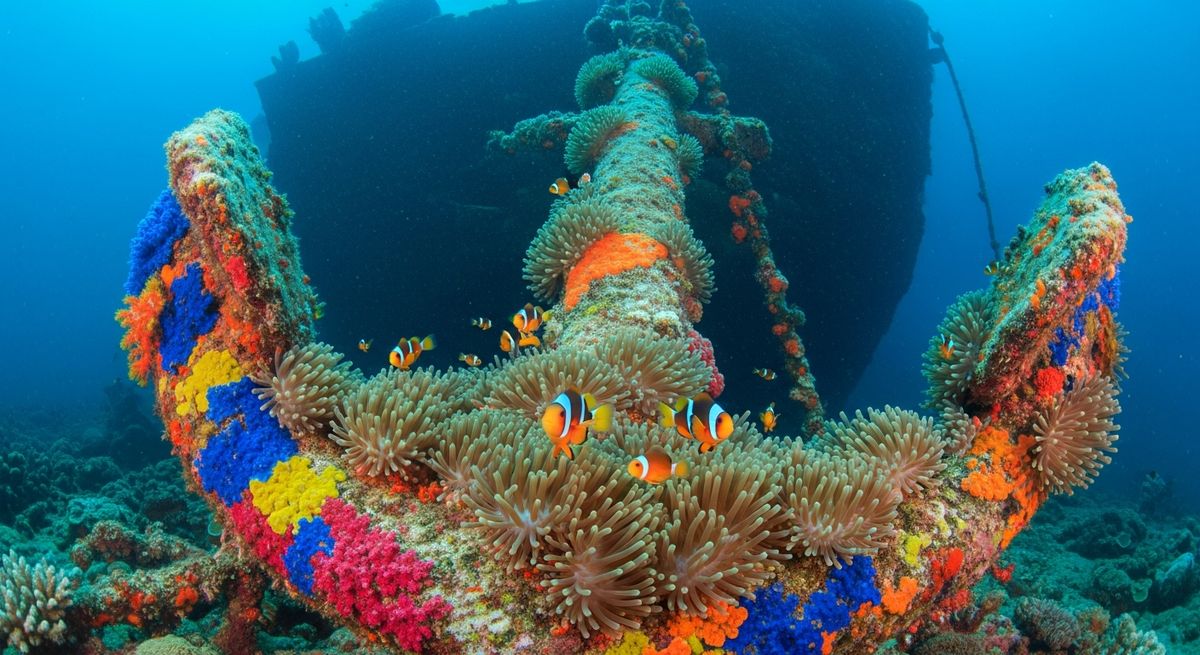
The Alcora, or what we believe to be the Alcora, holds a spot for us in Scapa Flow. It’s a good 40-metre dive, sitting upright and mostly intact on the seabed. Dropping down, you’ll find three massive boilers, still very much where they should be, and the triple-expansion engine. It’s a proper steamship, built in 1919, and the sheer scale of the engineering still impresses. We love the penetration opportunities here, if you’ve got the right training and experience. The holds are fairly open, revealing crates and bottles, hinting at its cargo. Visibility can be a bit variable, but on a good day, with the light filtering through the gloom, the wreck takes on a ghostly presence. Look out for the resident conger eels, they’re hefty here, and the soft corals that have started to bloom on the metalwork. It’s a dive for those who appreciate history and don’t mind a bit of a deeper challenge.
Typical ALCORA (POSSIBLY) Dive Profile
Illustrative profile based on site depth and type. Actual dive profiles vary - always follow your dive computer and training.
Safety Notes
Deep dive (40m) - monitor air consumption closely. Advanced certification recommended.
Wreck site - avoid penetration without wreck diving certification. Watch for sharp metal and entanglement hazards.
Cold water this month (avg 13°C). Drysuit or thick wetsuit (7mm+) recommended.
Always perform a 3-minute safety stop at 5m before surfacing.
ALCORA (POSSIBLY) Wreck History
Year Sunk
1940
Vessel Type
cargo ship
Cause
storm
Tonnage
1,479 GRT
Lying in the historic waters of Scapa Flow, the SS Alcora tells a story not of combat, but of the immense logistical effort behind World War II. Built in 1919, the steamship was requisitioned by the Admiralty to serve as a blockship, one of many vessels intentionally sunk to protect the vital naval anchorage from U-boat attacks. However, the Alcora never fulfilled its intended mission. In a fierce gale on October 30, 1940, she broke from her moorings before she could be properly positioned and foundered, sinking to the seabed.
Today, the Alcora rests at a depth of 40 meters, making her a challenging dive reserved for experienced wreck explorers. The vessel lies on its side, largely intact, with its triple-expansion engine and large boilers providing a focal point for any dive plan. Visibility can be variable, adding to the atmospheric and sometimes eerie nature of the site. Exploring the Alcora is a journey back in time, offering a tangible connection to the wartime history of Scapa Flow.
Reviews for ALCORA (POSSIBLY)
Conditions
Ocean conditions, forecast and tides for ALCORA (POSSIBLY)
ALCORA (POSSIBLY) Ocean Conditions
Monthly averages for ALCORA (POSSIBLY), sourced from Open-Meteo marine data - nearest station: Open-Meteo marine grid (58.64, -3.16) (8km away)
October Averages
Sea Temperature
13°C
55°F · Range: 11.4–13.8°C
Air Temperature
10°C
50°F
Wind Speed
9.26 m/s
18.0 knots
Atmospheric Pressure
1005.3 hPa
Based on 4 years of monitoring data · Data sources: Open-Meteo marine data
Plan & book
Ways to dive Scapa Flow, Orkney, from day trips to liveaboards.
Day trips & courses
via GetYourGuideGuided dives, courses and snorkel trips with instant booking.
Find dive trips in Scapa Flow, OrkneyPlaces to stay
via Booking.comHotels and dive resorts near Scapa Flow, Orkney.
Search stays in Scapa Flow, OrkneyDive insurance
Most travel insurance excludes or limits scuba. Check what you need before you go.
Dive insurance explainedPartner links: we may earn a commission if you book, at no extra cost to you. How we make money
Where to Stay near ALCORA (POSSIBLY)
Prices from Booking.com. We may earn a commission at no extra cost to you.