ALABAMA
Protected Area
Tong Saltings
Why dive here
With 140+ marine species recorded in the area - including blue whales, dolphins, dwarf minke whales, humpback whales and ocean sunfish (mola mola) - ALABAMA offers some of Scapa Flow, Orkney's richest wreck diving. Water ranges 8-14°C, warmest July, August, September.
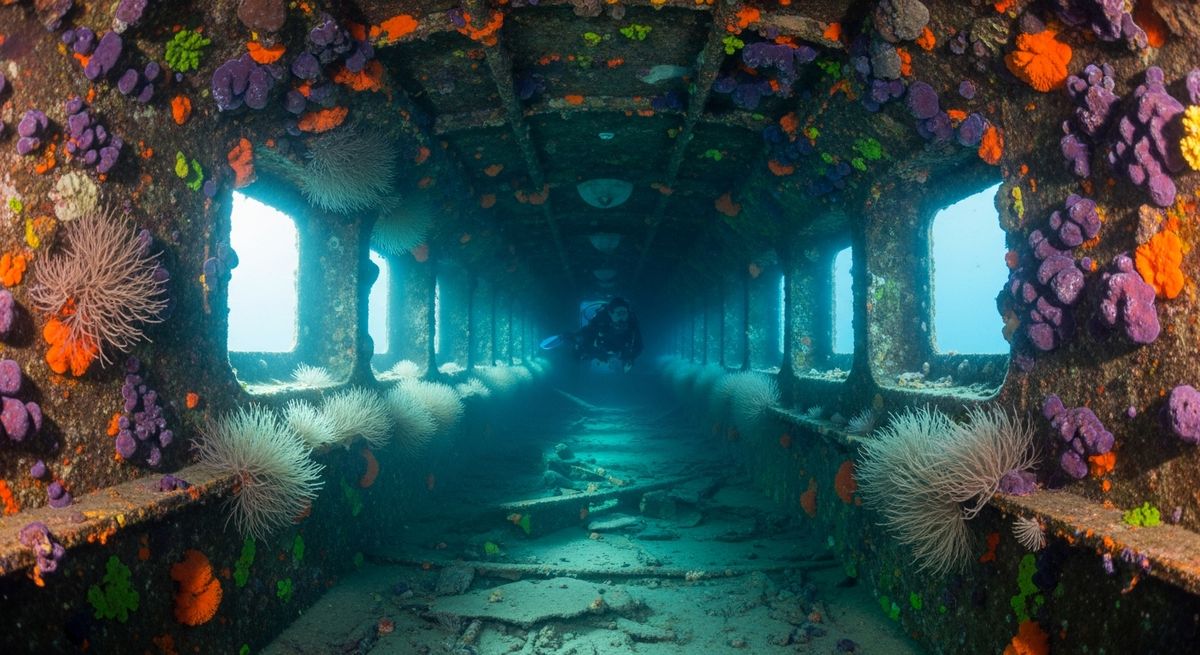
The *Alabama*, just shy of 115 metres long, is one of Scapa Flow's shallower giants, lying on her port side at a friendly 12 metres. This isn't just a jumble of twisted metal; you get a real sense of her scale here. We love exploring the stern, especially around the massive prop and rudder. The boilers are still very much in place, impressive even after all these years, and a swim-through takes you past the engine room, a tight but rewarding squeeze. What makes the *Alabama* a standout is how accessible she is, even for newer wreck divers. Visibility can be superb, letting you appreciate the sheer length of her hull, now a vibrant canvas of plumose anemones, dead man's fingers, and kelp. Look for the wolfish that often lurk in the shadowed nooks and crannies. We’d suggest diving this one on a slack tide, giving you ample time to really pick through the details without fighting a current. It’s a proper Scapa wreck, just without the deep commitments, perfect for an afternoon exploration.
Typical ALABAMA Dive Profile
Illustrative profile based on site depth and type. Actual dive profiles vary - always follow your dive computer and training.
Safety Notes
Wreck site - avoid penetration without wreck diving certification. Watch for sharp metal and entanglement hazards.
Cold water this month (avg 13°C). Drysuit or thick wetsuit (7mm+) recommended.
Always perform a 3-minute safety stop at 5m before surfacing.
ALABAMA Wreck History
Year Sunk
1904
Vessel Type
cargo ship
Cause
grounding
While Scapa Flow is world-famous for the scuttled German High Seas Fleet from World War I, it holds many other fascinating wrecks, including the much older Danish steamship, the Alabama. Built in Glasgow in 1899, this cargo vessel met its end on New Year's Eve, 1904. Caught in a fierce storm, it ran aground on the shores of the island of Burray.
The Alabama was salvaged for a time but eventually abandoned to the elements, slipping beneath the waves. Today, its scattered remains lie in just 12 meters of water, making it one of the most accessible and enjoyable shallow dives in Orkney. It's a perfect dive for beginners or a relaxing second dive of the day. Divers can easily explore the ship's impressive triple-expansion engine and two large boilers, which stand proud of the seabed and are often surrounded by kelp forests and curious fish.
Reviews for ALABAMA
Conditions
Ocean conditions, forecast and tides for ALABAMA
ALABAMA Ocean Conditions
Monthly averages for ALABAMA, sourced from Open-Meteo marine data - nearest station: Open-Meteo marine grid (58.64, -3.16) (8km away)
October Averages
Sea Temperature
13°C
55°F · Range: 11.4–13.8°C
Air Temperature
10°C
50°F
Wind Speed
9.26 m/s
18.0 knots
Atmospheric Pressure
1005.3 hPa
Based on 4 years of monitoring data · Data sources: Open-Meteo marine data
Plan & book
Ways to dive Scapa Flow, Orkney, from day trips to liveaboards.
Day trips & courses
via GetYourGuideGuided dives, courses and snorkel trips with instant booking.
Find dive trips in Scapa Flow, OrkneyPlaces to stay
via Booking.comHotels and dive resorts near Scapa Flow, Orkney.
Search stays in Scapa Flow, OrkneyDive insurance
Most travel insurance excludes or limits scuba. Check what you need before you go.
Dive insurance explainedPartner links: we may earn a commission if you book, at no extra cost to you. How we make money
Where to Stay near ALABAMA
Prices from Booking.com. We may earn a commission at no extra cost to you.