ARGYLL
Protected Area
Copinsay
Why dive here
With 140+ marine species recorded in the area - including blue whales, dolphins, dwarf minke whales, humpback whales and ocean sunfish (mola mola) - ARGYLL offers some of Scapa Flow, Orkney's richest wreck diving. Water ranges 8-14°C, warmest July, August, September.
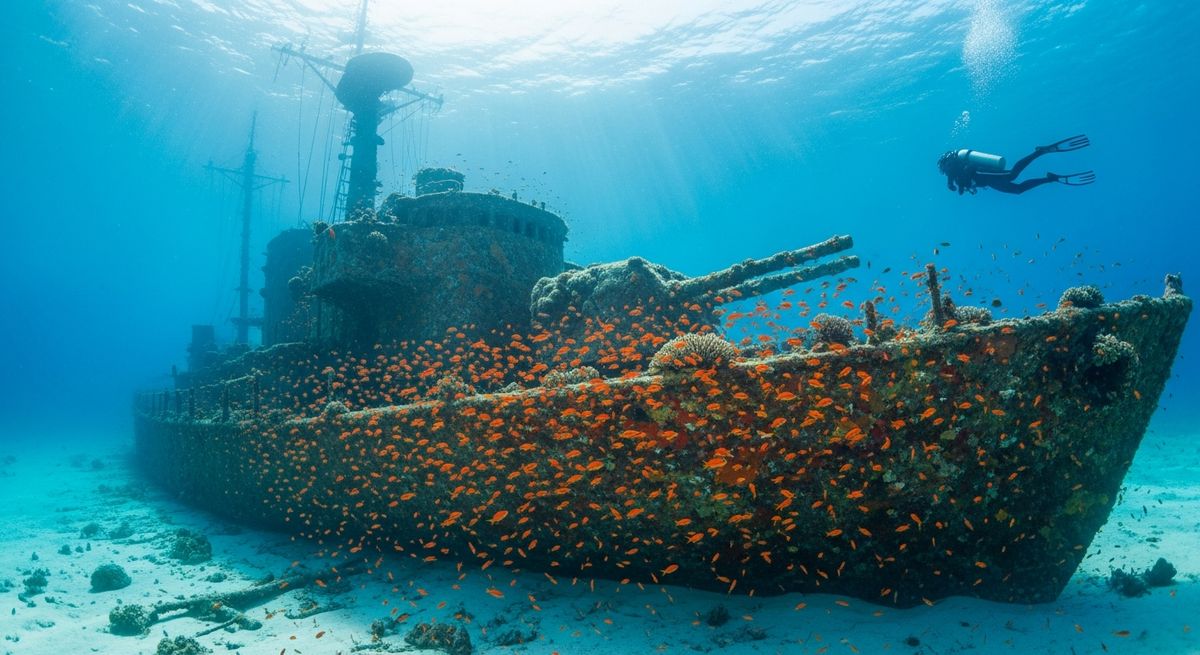
The Argyll might be shallow, just 5m down, but don't let that fool you. This isn’t a quick splash; it’s a proper Scapa Flow history lesson you can breathe in. Sunk deliberately as a blockship back in 1914, she’s an iron vessel from 1872, and time has certainly had its way with her. We love how her plates and frames are spread across the seabed, creating this fantastic, sprawling artificial reef. You’ll spend your dive weaving through fragmented hull sections, seeing the ribs of the old girl reaching up from the sand. It’s less a single intact wreck and more a field of intriguing iron structures. Look closely and you’ll find butterfish darting between the crevices, and we’ve often spotted colourful sea slugs grazing on the kelp that dances in the gentle surge. It’s an accessible wreck for almost any diver, brilliant for photographers wanting interesting light and texture, or anyone who just wants to spend an hour exploring the history that lies scattered below.
Typical ARGYLL Dive Profile
Illustrative profile based on site depth and type. Actual dive profiles vary - always follow your dive computer and training.
Safety Notes
Wreck site - avoid penetration without wreck diving certification. Watch for sharp metal and entanglement hazards.
Cold water this month (avg 13°C). Drysuit or thick wetsuit (7mm+) recommended.
ARGYLL Wreck History
Year Sunk
1914
Vessel Type
cargo ship
Cause
scuttled
Tonnage
1,029 GRT
The SS Argyll (also recorded as Argyle) is one of Scapa Flow's original blockships, a veteran from the dawn of World War I. Built in 1872, this iron-hulled, single-screw steamship had a long commercial career before being called into naval service. With the outbreak of war in 1914, the British Admiralty moved quickly to secure the vital naval anchorage of Scapa Flow from the growing threat of German U-boats.
The aging Argyll was one of several merchant vessels requisitioned for a sacrificial mission. On September 17, 1914, she was steamed into Kirk Sound, one of the vulnerable eastern entrances to the Flow, and deliberately scuttled. She and the other blockships formed the first line of a crude but effective anti-submarine barrier that would be reinforced throughout both world wars. Over the decades, the powerful Orkney tides and storms have relentlessly pounded the wreck.
Today, the remains of the Argyll lie in just 5 meters of water, making the site highly accessible to snorkelers and divers of all levels. The wreck is heavily broken and scattered, with flattened iron plates, the ship's boiler, and other machinery strewn across the seabed amidst thick kelp. It offers a fascinating glimpse into the very first layer of Scapa Flow's extensive wartime history and is a popular spot for a shallow second dive or for underwater photography.
Nearest Dive Centres to ARGYLL
Dive shops near ARGYLL
View all dive centres in Scapa Flow, OrkneyReviews for ARGYLL
Conditions
Ocean conditions, forecast and tides for ARGYLL
ARGYLL Ocean Conditions
Monthly averages for ARGYLL, sourced from Open-Meteo marine data - nearest station: Open-Meteo marine grid (58.64, -3.16) (8km away)
October Averages
Sea Temperature
13°C
55°F · Range: 11.4–13.8°C
Air Temperature
10°C
50°F
Wind Speed
9.26 m/s
18.0 knots
Atmospheric Pressure
1005.3 hPa
Based on 4 years of monitoring data · Data sources: Open-Meteo marine data
Plan & book
Ways to dive Scapa Flow, Orkney, from day trips to liveaboards.
Day trips & courses
via GetYourGuideGuided dives, courses and snorkel trips with instant booking.
Find dive trips in Scapa Flow, OrkneyPlaces to stay
via Booking.comHotels and dive resorts near Scapa Flow, Orkney.
Search stays in Scapa Flow, OrkneyDive insurance
Most travel insurance excludes or limits scuba. Check what you need before you go.
Dive insurance explainedPartner links: we may earn a commission if you book, at no extra cost to you. How we make money
Where to Stay near ARGYLL
Prices from Booking.com. We may earn a commission at no extra cost to you.