ANDALINA
Protected Area
Tong Saltings
Why dive here
With 140+ marine species recorded in the area - including blue whales, dolphins, dwarf minke whales, humpback whales and ocean sunfish (mola mola) - ANDALINA offers some of Scapa Flow, Orkney's richest wreck diving. Water ranges 8-14°C, warmest July, August, September.
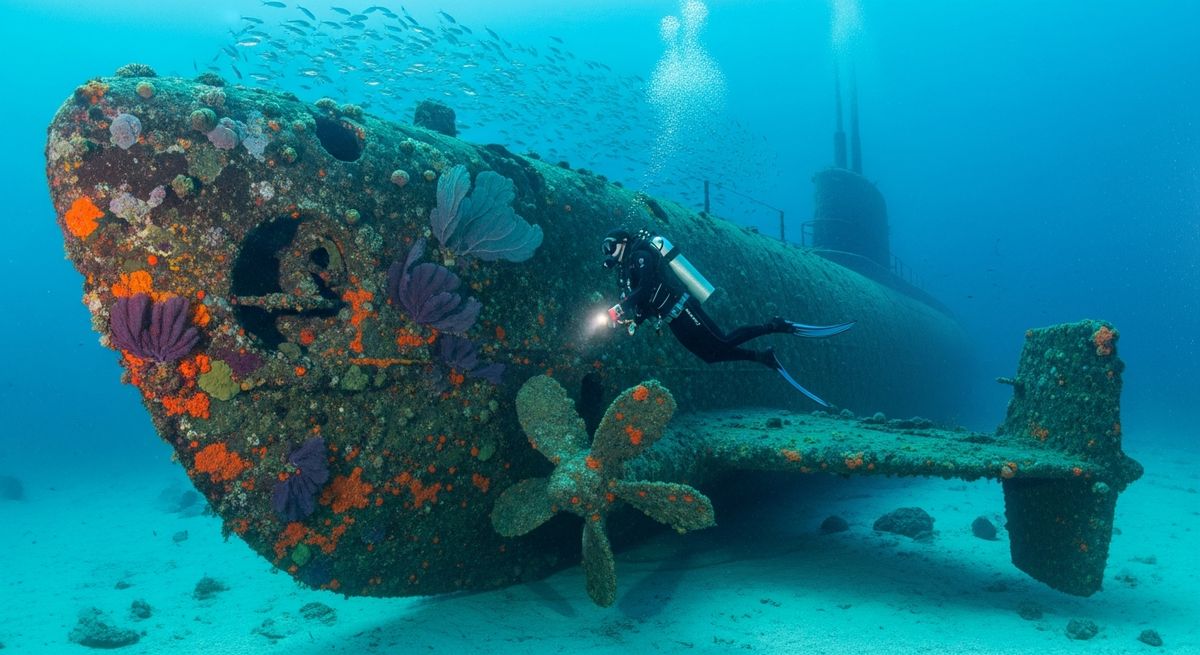
The *Andalina* is a beauty, a smaller wreck, but don't let that fool you into thinking it's not worth your time. She sits shallow, just 8 metres, which means light penetrates everywhere, even on a cloudy Orkney day. This isn't a penetration dive, not really; instead, we love just swimming over her ribs, seeing the outline of her hull. We often spot wrasse darting between the metalwork and those incredibly resilient anemones that just cling to everything. What makes *Andalina* special is that she's a fantastic second dive, a relaxed way to warm down after something deeper, or a cracking start to the day if you want to ease in. The shallow depth also means you get long bottom times, perfect for photographers or just for really soaking it all in. We often find ourselves circling her a few times, noticing new details on each pass. She's approachable, friendly, and a brilliant snapshot of Scapa's history without the demands of the bigger blockships.
Typical ANDALINA Dive Profile
Illustrative profile based on site depth and type. Actual dive profiles vary - always follow your dive computer and training.
Safety Notes
Wreck site - avoid penetration without wreck diving certification. Watch for sharp metal and entanglement hazards.
Cold water this month (avg 13°C). Drysuit or thick wetsuit (7mm+) recommended.
ANDALINA Wreck History
Year Sunk
1940
Vessel Type
cargo ship
Cause
scuttled
Tonnage
5,233 GRT
The SS Andalina was a British cargo ship built in 1913, destined for a much different fate than her builders intended. With the outbreak of World War II, the vast naval anchorage of Scapa Flow in the Orkney Islands needed protection from German U-boats. The Andalina was one of several old merchant vessels requisitioned for a critical mission: to be deliberately sunk as "blockships," forming a permanent barrier across the eastern entrances to the Flow.
On May 31, 1940, the 5,233-ton Andalina was scuttled in Kirk Sound, settling into her final resting place. Today, she lies in very shallow water, with parts of her structure breaking the surface at low tide. The wreck is heavily broken up due to the powerful tidal currents that surge through the sound, which also earned it a "Dangerous Wreck" classification. Divers should only attempt this site at slack water and with experienced local guidance.
Despite the challenging conditions, the Andalina offers a fascinating glimpse into Scapa Flow's wartime history. Her skeletal remains are spread across the seabed, with her boilers and engine block still recognizable among the twisted plates of her hull. The wreckage has transformed into a vibrant micro-ecosystem, providing shelter for crabs, lobsters, and a variety of fish that thrive in the nutrient-rich currents.
Reviews for ANDALINA
Conditions
Ocean conditions, forecast and tides for ANDALINA
ANDALINA Ocean Conditions
Monthly averages for ANDALINA, sourced from Open-Meteo marine data - nearest station: Open-Meteo marine grid (58.64, -3.16) (8km away)
October Averages
Sea Temperature
13°C
55°F · Range: 11.4–13.8°C
Air Temperature
10°C
50°F
Wind Speed
9.26 m/s
18.0 knots
Atmospheric Pressure
1005.3 hPa
Based on 4 years of monitoring data · Data sources: Open-Meteo marine data
Plan & book
Ways to dive Scapa Flow, Orkney, from day trips to liveaboards.
Day trips & courses
via GetYourGuideGuided dives, courses and snorkel trips with instant booking.
Find dive trips in Scapa Flow, OrkneyPlaces to stay
via Booking.comHotels and dive resorts near Scapa Flow, Orkney.
Search stays in Scapa Flow, OrkneyDive insurance
Most travel insurance excludes or limits scuba. Check what you need before you go.
Dive insurance explainedPartner links: we may earn a commission if you book, at no extra cost to you. How we make money
Where to Stay near ANDALINA
Prices from Booking.com. We may earn a commission at no extra cost to you.