ANDRIAS
Protected Area
Long Berry Coast
Why dive here
With 140+ marine species recorded in the area - including blue whales, dolphins, dwarf minke whales, humpback whales and ocean sunfish (mola mola) - ANDRIAS offers some of Scapa Flow, Orkney's richest wreck diving. Water ranges 8-14°C, warmest July, August, September.
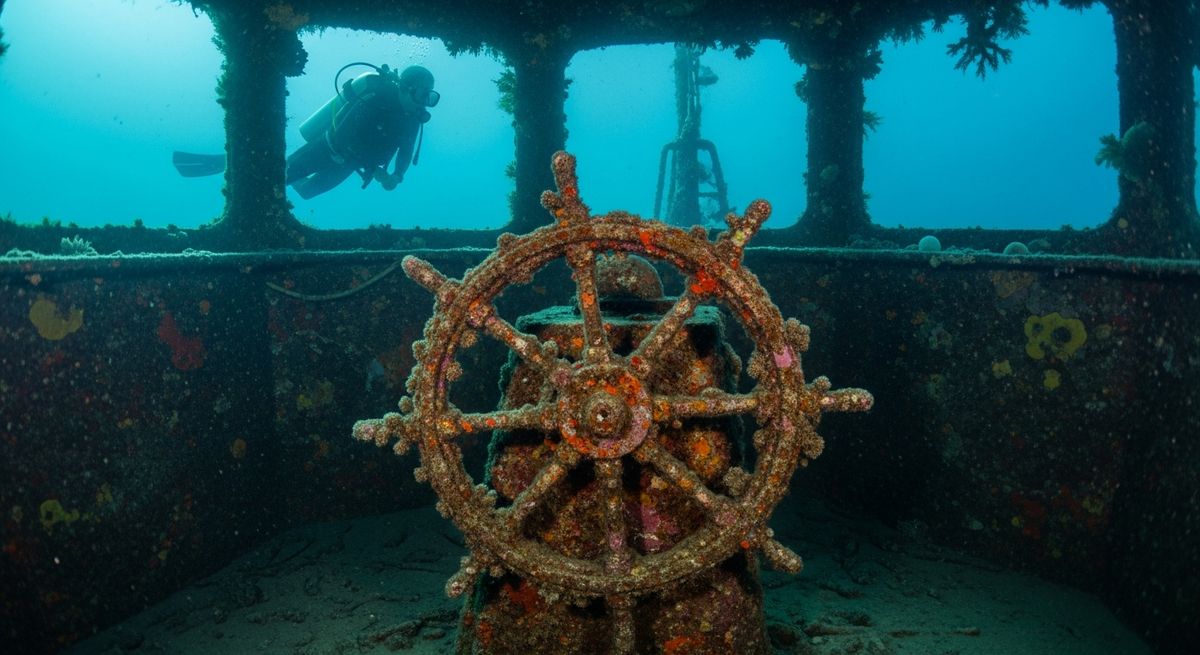
The Andrias isn’t one of the grand Scapa Flow battleships, but we think it’s a brilliant dive for something a bit different. This modern trawler ran aground and sank in 1981, and what’s left of her is now scattered across the seabed at 27 metres. We love how the stern section is still largely intact, sitting upright with its propeller clear and proud. You can peek into the engine room, often finding conger eels lurking in the shadows. What really makes the Andrias shine, though, is the sheer amount of life. Every surface of the fragmented hull is plastered with plumose anemones, their white tentacles swaying gently in the mild current. We’ve seen huge shoals of juvenile pollock darting through the wreckage, and plenty of wrasse picking at the growth. It’s a dive that shows how quickly a wreck becomes a vibrant reef. For divers who appreciate historical context but also want a living, breathing dive, the Andrias is a fantastic choice, especially if the big wrecks are busy.
Typical ANDRIAS Dive Profile
Illustrative profile based on site depth and type. Actual dive profiles vary - always follow your dive computer and training.
Safety Notes
Depth of 27m - Advanced Open Water certification recommended.
Wreck site - avoid penetration without wreck diving certification. Watch for sharp metal and entanglement hazards.
Cold water this month (avg 13°C). Drysuit or thick wetsuit (7mm+) recommended.
Always perform a 3-minute safety stop at 5m before surfacing.
ANDRIAS Wreck History
Year Sunk
1981
Vessel Type
fishing vessel
Cause
grounding
While Scapa Flow is legendary for its scuttled German High Seas Fleet from WWI, it is also home to more recent maritime casualties. The ANDRIAS is one such site, a modern fishing trawler that met its end in the historic waters of the Orkney Islands. Unlike its wartime neighbors, the ANDRIAS offers a different kind of wreck diving experience, representing the ever-present dangers of navigating this beautiful but challenging coastline.
On May 21, 1981, the ANDRIAS ran hard aground on the southeastern side of the island of Switha. The powerful tides and rocky shores of Scapa Flow proved too much for the vessel, and despite efforts to save her, she eventually sank. Fortunately, the entire crew was rescued without incident, leaving the trawler to become a new feature on the seabed.
Today, the ANDRIAS lies at a maximum depth of 27 meters. The wreck is described as consisting of distributed remains, meaning it is significantly broken up rather than being an intact vessel. This creates a fascinating debris field for divers to explore. The scattered steel plates, ribs, and machinery provide a perfect habitat for a variety of marine life, including conger eels, lobsters, and colorful anemones. It's an excellent dive for those looking to see how nature quickly reclaims a wreck, turning it into a thriving artificial reef.
Reviews for ANDRIAS
Conditions
Ocean conditions, forecast and tides for ANDRIAS
ANDRIAS Ocean Conditions
Monthly averages for ANDRIAS, sourced from Open-Meteo marine data - nearest station: Open-Meteo marine grid (58.64, -3.16) (8km away)
October Averages
Sea Temperature
13°C
55°F · Range: 11.4–13.8°C
Air Temperature
10°C
50°F
Wind Speed
9.26 m/s
18.0 knots
Atmospheric Pressure
1005.3 hPa
Based on 4 years of monitoring data · Data sources: Open-Meteo marine data
Plan & book
Ways to dive Scapa Flow, Orkney, from day trips to liveaboards.
Day trips & courses
via GetYourGuideGuided dives, courses and snorkel trips with instant booking.
Find dive trips in Scapa Flow, OrkneyPlaces to stay
via Booking.comHotels and dive resorts near Scapa Flow, Orkney.
Search stays in Scapa Flow, OrkneyDive insurance
Most travel insurance excludes or limits scuba. Check what you need before you go.
Dive insurance explainedPartner links: we may earn a commission if you book, at no extra cost to you. How we make money
Where to Stay near ANDRIAS
Prices from Booking.com. We may earn a commission at no extra cost to you.