ANVERS
Protected Area
Cairnbulg to St Combs Coast
Why dive here
With 140+ marine species recorded in the area - including blue whales, dolphins, dwarf minke whales, humpback whales and ocean sunfish (mola mola) - ANVERS offers some of Scapa Flow, Orkney's richest wreck diving. Water ranges 8-14°C, warmest July, August, September.
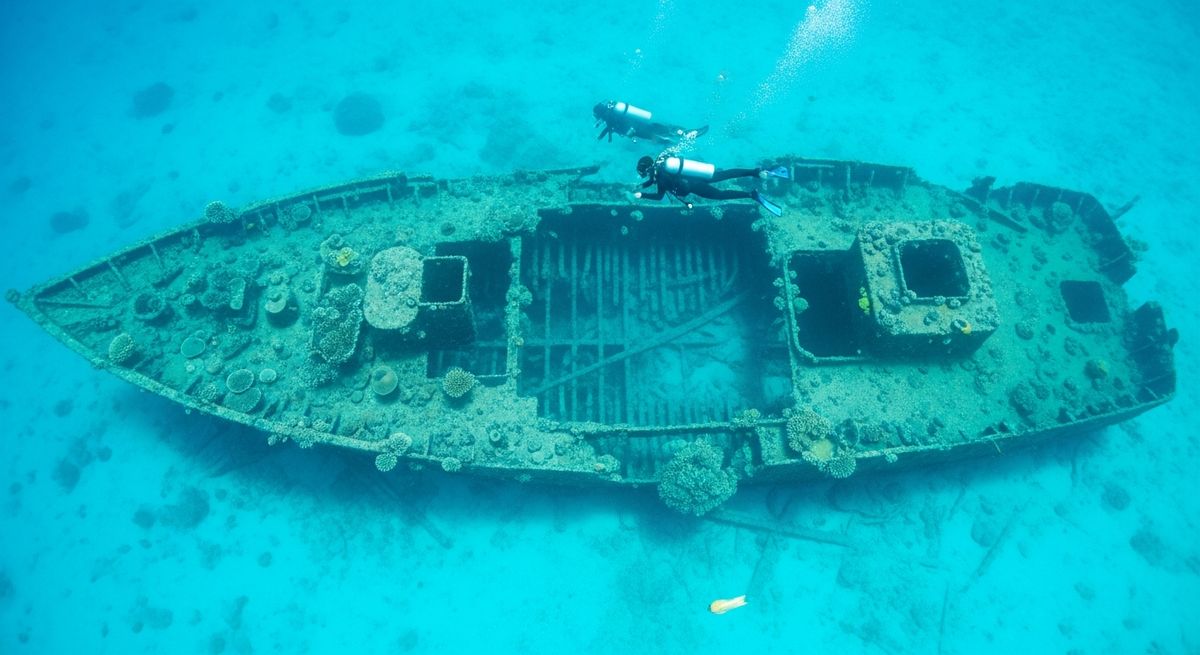
The Anvers is a proper deep dive, sitting straight up on the seabed at 52 metres. It's a World War II casualty, bombed by aircraft, and you can really feel that history when you’re down there. We love the sheer scale of her, a huge steamship at over 116 metres long, so you’re never going to see it all in one dive. What we focus on are the massive boilers and the propeller, which is often surprisingly clear, especially on a slack tide. The hull is torn in places, creating interesting swim-throughs for the experienced, but mostly we stick to the exterior, admiring the sheer bulk of it. Look out for the resident wrasse and ling; they treat this wreck like their own private apartment block. It’s a dive for those comfortable with depth and a bit of dark, silty exploration, offering a different kind of beauty to the more famous German fleet wrecks.
Typical ANVERS Dive Profile
Illustrative profile based on site depth and type. Actual dive profiles vary - always follow your dive computer and training.
Safety Notes
Maximum depth 52m exceeds recreational limits (40m). Technical diving certification and equipment required.
Wreck site - avoid penetration without wreck diving certification. Watch for sharp metal and entanglement hazards.
Cold water this month (avg 13°C). Drysuit or thick wetsuit (7mm+) recommended.
Always perform a 3-minute safety stop at 5m before surfacing.
ANVERS Wreck History
Year Sunk
1940
Vessel Type
cargo ship
Cause
war action
Tonnage
4,955 GRT
The SS Anvers was a Belgian steam cargo ship built in 1920. At the outbreak of the Second World War, she was requisitioned by the British Ministry of War Transport to aid the Allied effort. On November 13, 1940, while at anchor in the supposedly safe naval harbour of Scapa Flow, the Anvers became the target of a German air raid. A bomb found its mark, and the vessel quickly sank, settling on the seabed. Fortunately, all of her crew were rescued before she went down.
Today, the Anvers lies on its port side in 52 metres of water, making it a serious undertaking reserved for experienced technical divers. Due to its depth, the site is often dark, with visibility that can be challenging. The wreck is largely intact, a hulking shadow rising from the seabed, but its status as a designated 'Dangerous Wreck' means divers must exercise extreme caution. Exploring this deep piece of wartime history is a rewarding but demanding dive that offers a glimpse into the perils faced even within the heart of Britain's most fortified naval base.
Reviews for ANVERS
Conditions
Ocean conditions, forecast and tides for ANVERS
ANVERS Ocean Conditions
Monthly averages for ANVERS, sourced from Open-Meteo marine data - nearest station: Open-Meteo marine grid (58.64, -3.16) (8km away)
October Averages
Sea Temperature
13°C
55°F · Range: 11.4–13.8°C
Air Temperature
10°C
50°F
Wind Speed
9.26 m/s
18.0 knots
Atmospheric Pressure
1005.3 hPa
Based on 4 years of monitoring data · Data sources: Open-Meteo marine data
Plan & book
Ways to dive Scapa Flow, Orkney, from day trips to liveaboards.
Day trips & courses
via GetYourGuideGuided dives, courses and snorkel trips with instant booking.
Find dive trips in Scapa Flow, OrkneyPlaces to stay
via Booking.comHotels and dive resorts near Scapa Flow, Orkney.
Search stays in Scapa Flow, OrkneyDive insurance
Most travel insurance excludes or limits scuba. Check what you need before you go.
Dive insurance explainedPartner links: we may earn a commission if you book, at no extra cost to you. How we make money
Where to Stay near ANVERS
Prices from Booking.com. We may earn a commission at no extra cost to you.