ARCADIA
Protected Area
Scourie Coast
Why dive here
With 140+ marine species recorded in the area - including blue whales, dolphins, dwarf minke whales, humpback whales and ocean sunfish (mola mola) - ARCADIA offers some of Scapa Flow, Orkney's richest wreck diving. Water ranges 8-14°C, warmest July, August, September.
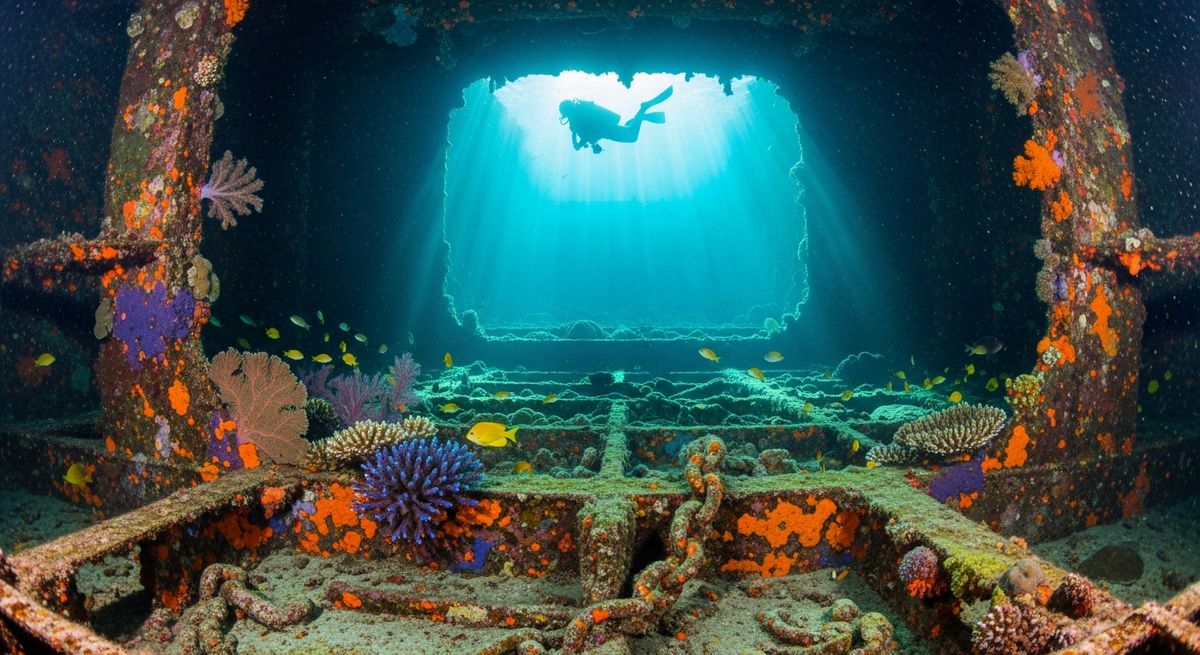
The Arcadia is a real Scapa Flow favourite of ours, and it’s not because it’s a massive historical wreck. This 19-metre fishing vessel went down in 1983, a much more recent addition to the seabed, but she’s settled perfectly upright at 30 metres, practically inviting you inside. We love dropping down onto her deck, where the wheelhouse is still largely intact. You can fin around the bridge, imagining the scramble to abandon ship as she went down. Inside, her hold is open, a dark maw where we’ve often seen conger eels lurking in the shadows. Look closely at the deck plating and bulkheads; the metal is completely covered in a thick carpet of plumose anemones, their white tentacles swaying with the gentle surge. It’s a striking contrast to the darker, more industrial feel of the bigger warships. Visibility here is typically good, often 15 metres or more, making her easy to navigate. The Arcadia is a fantastic second dive after a deeper session, or a cracking standalone for those who appreciate modern maritime history and seeing how quickly life reclaims a lost vessel.
Typical ARCADIA Dive Profile
Illustrative profile based on site depth and type. Actual dive profiles vary - always follow your dive computer and training.
Safety Notes
Depth of 30m - Advanced Open Water certification recommended.
Wreck site - avoid penetration without wreck diving certification. Watch for sharp metal and entanglement hazards.
Cold water this month (avg 13°C). Drysuit or thick wetsuit (7mm+) recommended.
Always perform a 3-minute safety stop at 5m before surfacing.
ARCADIA Wreck History
Year Sunk
1983
Vessel Type
fishing vessel
Cause
grounding
The FV Arcadia (K310) was a Kirkwall-registered fishing vessel, a familiar sight in the waters around Orkney. At just under 19 metres long, she was a workhorse of the local fishing fleet, crewed by men who knew these challenging seas intimately.
On the night of June 15, 1983, the Arcadia was caught in a severe storm. While attempting to navigate the treacherous waters, she struck the skerries off Papa Stronsay and was quickly overwhelmed. The sinking was a profound tragedy for the tight-knit Orkney community, as five of the six crew members were lost to the sea. A single survivor was rescued from the water, but the event left a lasting scar on the islands.
Today, the Arcadia rests at a depth of 30 metres. It is a sombre and poignant dive, serving as a memorial to the men who were lost. The wreck is small but largely intact, sitting upright on the seabed. Divers can explore the vessel's structure, now draped in anemones and home to shoals of fish, but are reminded to approach this site with the utmost respect for its tragic history.
Reviews for ARCADIA
Conditions
Ocean conditions, forecast and tides for ARCADIA
ARCADIA Ocean Conditions
Monthly averages for ARCADIA, sourced from Open-Meteo marine data - nearest station: Open-Meteo marine grid (58.64, -3.16) (8km away)
October Averages
Sea Temperature
13°C
55°F · Range: 11.4–13.8°C
Air Temperature
10°C
50°F
Wind Speed
9.26 m/s
18.0 knots
Atmospheric Pressure
1005.3 hPa
Based on 4 years of monitoring data · Data sources: Open-Meteo marine data
Plan & book
Ways to dive Scapa Flow, Orkney, from day trips to liveaboards.
Day trips & courses
via GetYourGuideGuided dives, courses and snorkel trips with instant booking.
Find dive trips in Scapa Flow, OrkneyPlaces to stay
via Booking.comHotels and dive resorts near Scapa Flow, Orkney.
Search stays in Scapa Flow, OrkneyDive insurance
Most travel insurance excludes or limits scuba. Check what you need before you go.
Dive insurance explainedPartner links: we may earn a commission if you book, at no extra cost to you. How we make money
Where to Stay near ARCADIA
Prices from Booking.com. We may earn a commission at no extra cost to you.