ARNISDALE
Protected Area
Sandside Bay
Why dive here
With 140+ marine species recorded in the area - including blue whales, dolphins, dwarf minke whales, humpback whales and ocean sunfish (mola mola) - ARNISDALE offers some of Scapa Flow, Orkney's richest wreck diving. Water ranges 8-14°C, warmest July, August, September.
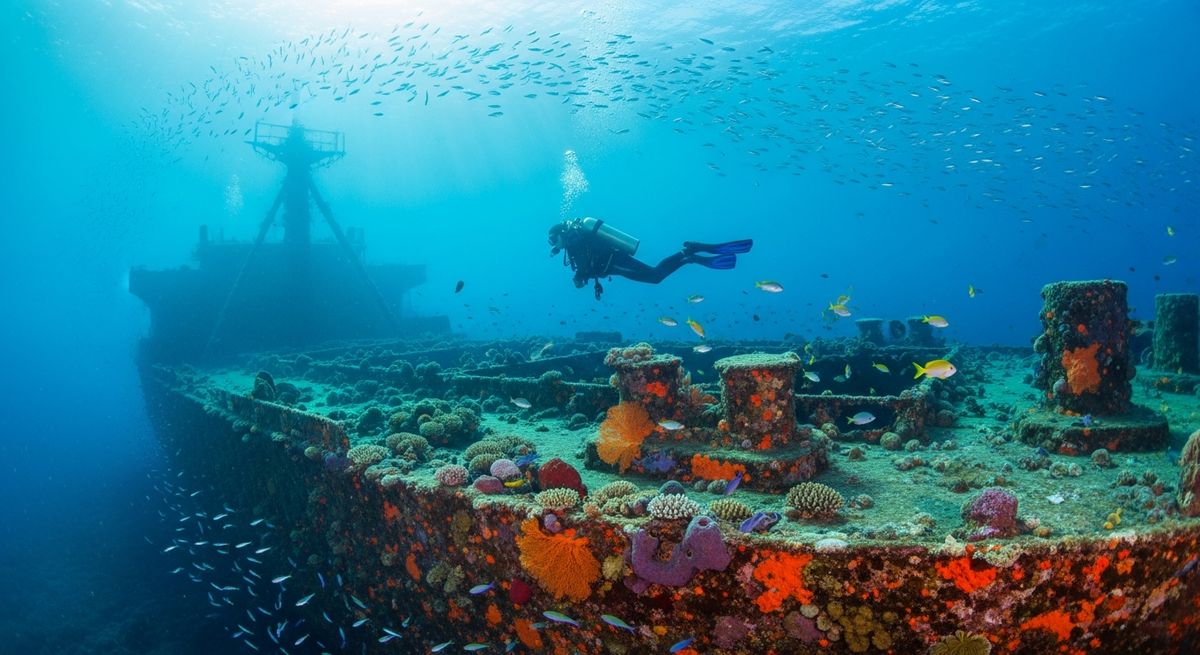
The Arnisdale isn’t your classic Scapa Flow behemoth. Instead of a German warship, we’re talking about a fishing vessel that went aground in 1994, breaking up in the shallows near Rysa Little. It’s a distributed wreck, meaning you’ll find sections of hull, engine parts, and twisted metal spread across the seabed, starting in depths you could almost snorkel. We love Arnisdale for a couple of reasons. First, it’s a brilliant shallow dive for shaking off the rust or extending your bottom time without deep deco. Second, the way the wreck is scattered creates a fantastic artificial reef. You’ll drift over sections of plated steel, finding wrasse picking through the nooks, and a surprising amount of anemones clinging on. Our favourite part is navigating through the debris field, imagining the force that ripped her apart, while keeping an eye out for curious dogfish that often patrol the area. It's not a grand penetration, but a fascinating exploration of a modern wreck that’s rapidly being reclaimed by the sea.
Safety Notes
Wreck site - avoid penetration without wreck diving certification. Watch for sharp metal and entanglement hazards.
Cold water this month (avg 13°C). Drysuit or thick wetsuit (7mm+) recommended.
ARNISDALE Wreck History
Year Sunk
1994
Vessel Type
fishing vessel
Cause
grounding
A relatively modern loss, the fishing vessel Arnisdale met its end in the historic waters of Scapa Flow in April 1994. The vessel ran aground and was subsequently broken apart by the sea. Fortunately, the entire crew was rescued before the ship was lost. The wreck itself lies at the surface, with a depth listed as 0 metres, meaning its remains are scattered in the intertidal zone.
For divers and snorkelers, the Arnisdale represents a very accessible and unusual site. Rather than a deep, intact vessel, it is a field of debris distributed across the shallow seabed. Exploring the remains offers a different kind of challenge, involving spotting recognisable sections of the vessel amidst the kelp. Its shallow nature makes it a perfect site for a relaxed snorkel or a very shallow introductory dive, providing a tangible connection to a more recent piece of Orkney's maritime history.
Reviews for ARNISDALE
Conditions
Ocean conditions, forecast and tides for ARNISDALE
ARNISDALE Ocean Conditions
Monthly averages for ARNISDALE, sourced from Open-Meteo marine data - nearest station: Open-Meteo marine grid (58.64, -3.16) (8km away)
October Averages
Sea Temperature
13°C
55°F · Range: 11.4–13.8°C
Air Temperature
10°C
50°F
Wind Speed
9.26 m/s
18.0 knots
Atmospheric Pressure
1005.3 hPa
Based on 4 years of monitoring data · Data sources: Open-Meteo marine data
Plan & book
Ways to dive Scapa Flow, Orkney, from day trips to liveaboards.
Day trips & courses
via GetYourGuideGuided dives, courses and snorkel trips with instant booking.
Find dive trips in Scapa Flow, OrkneyPlaces to stay
via Booking.comHotels and dive resorts near Scapa Flow, Orkney.
Search stays in Scapa Flow, OrkneyDive insurance
Most travel insurance excludes or limits scuba. Check what you need before you go.
Dive insurance explainedPartner links: we may earn a commission if you book, at no extra cost to you. How we make money
Where to Stay near ARNISDALE
Prices from Booking.com. We may earn a commission at no extra cost to you.