ARNISH
Protected Area
Tong Saltings
Why dive here
With 140+ marine species recorded in the area - including blue whales, dolphins, dwarf minke whales, humpback whales and ocean sunfish (mola mola) - ARNISH offers some of Scapa Flow, Orkney's richest wreck diving. Water ranges 8-14°C, warmest July, August, September.
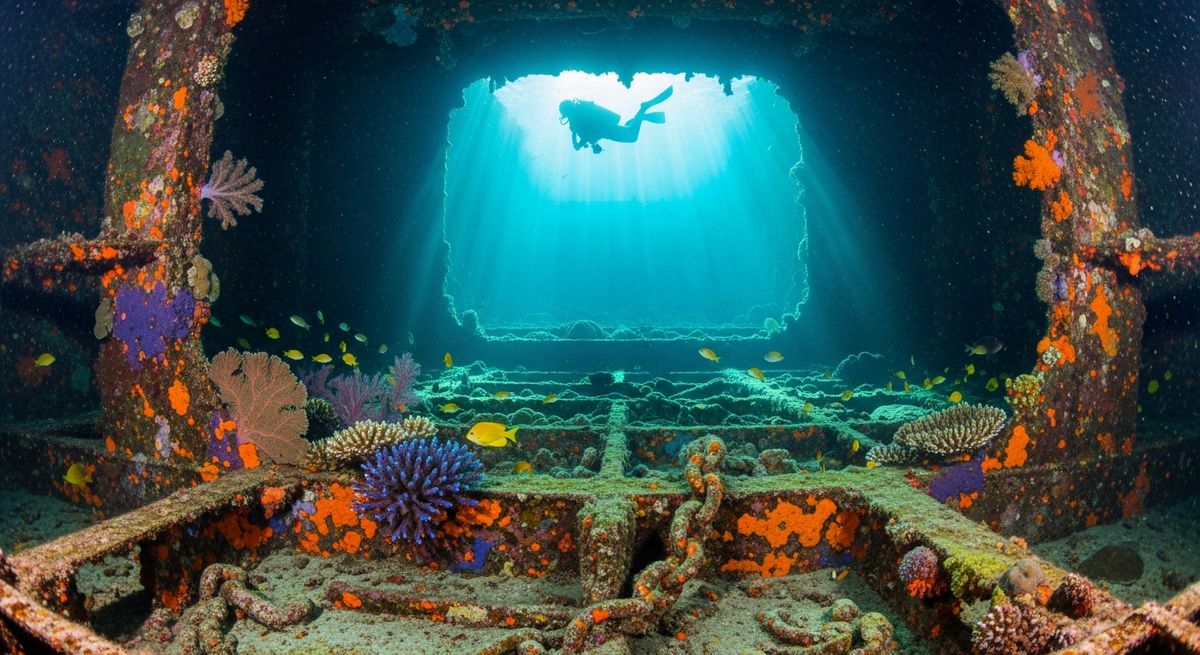
Arguably our favourite dive on the Churchill Barriers, the *Arinish* is a cracker, especially if you’re into the smaller, more personal wrecks. At just 9 metres, it’s a brilliant second dive or a relaxed long soak. We love that it’s right next to the barrier, meaning shore access is straightforward – just park up and kit up. You’re looking at a 37-meter steamship, the ex-Dagmar, built in 1869 and sunk in ’23. She’s surprisingly intact for her age, with that single boiler and compound engine still very much evident, giving the wreck a real sense of its working life. What you get here is a proper shallow historical wreck dive. We’d suggest heading out at high tide for the best visibility, but even with a bit of a ripple, the details are clear. You can trace her length easily, spotting the machinery and the shape of the hull. The wreck has become a home for so much life: you’ll find plump wrasse nosing around the plates, spider crabs tucked into crevices, and sometimes a cheeky conger eel peering out from under a beam. It’s a great site for photographers who want to get up close with both the history and the resident marine life without fighting currents or depth.
Typical ARNISH Dive Profile
Illustrative profile based on site depth and type. Actual dive profiles vary - always follow your dive computer and training.
Safety Notes
Wreck site - avoid penetration without wreck diving certification. Watch for sharp metal and entanglement hazards.
Cold water this month (avg 13°C). Drysuit or thick wetsuit (7mm+) recommended.
ARNISH Wreck History
Year Sunk
1923
Vessel Type
cargo ship
Cause
unknown
Resting in the famed wreck-diving haven of Scapa Flow, the Arnis is a relic from the golden age of steam. Built in 1869 as the Dagmar, this hardy steamship served for over 50 years before sinking in October 1923. The specific circumstances of its loss are not well-documented, adding a layer of mystery to its story. It lies in just 9 metres of water, making it an excellent and accessible dive for all levels of experience.
Diving the Arnis is like stepping back in time. Despite over a century beneath the waves, its key features are often still recognisable. Divers can expect to find the single boiler and the remains of its 35-horsepower compound steam engine, the very heart of this Victorian-era vessel. The shallow depth allows for long, relaxed bottom times and excellent light on clear days, illuminating the hull sections and machinery now colonised by the vibrant marine life of the Orkney Isles.
Reviews for ARNISH
Conditions
Ocean conditions, forecast and tides for ARNISH
ARNISH Ocean Conditions
Monthly averages for ARNISH, sourced from Open-Meteo marine data - nearest station: Open-Meteo marine grid (58.64, -3.16) (8km away)
October Averages
Sea Temperature
13°C
55°F · Range: 11.4–13.8°C
Air Temperature
10°C
50°F
Wind Speed
9.26 m/s
18.0 knots
Atmospheric Pressure
1005.3 hPa
Based on 4 years of monitoring data · Data sources: Open-Meteo marine data
Plan & book
Ways to dive Scapa Flow, Orkney, from day trips to liveaboards.
Day trips & courses
via GetYourGuideGuided dives, courses and snorkel trips with instant booking.
Find dive trips in Scapa Flow, OrkneyPlaces to stay
via Booking.comHotels and dive resorts near Scapa Flow, Orkney.
Search stays in Scapa Flow, OrkneyDive insurance
Most travel insurance excludes or limits scuba. Check what you need before you go.
Dive insurance explainedPartner links: we may earn a commission if you book, at no extra cost to you. How we make money
Where to Stay near ARNISH
Prices from Booking.com. We may earn a commission at no extra cost to you.