B 109 (PART)
Protected Area
Switha
Why dive here
With 140+ marine species recorded in the area - including blue whales, dolphins, dwarf minke whales, humpback whales and ocean sunfish (mola mola) - B 109 (PART) offers some of Scapa Flow, Orkney's richest wreck diving. Water ranges 8-14°C, warmest July, August, September.
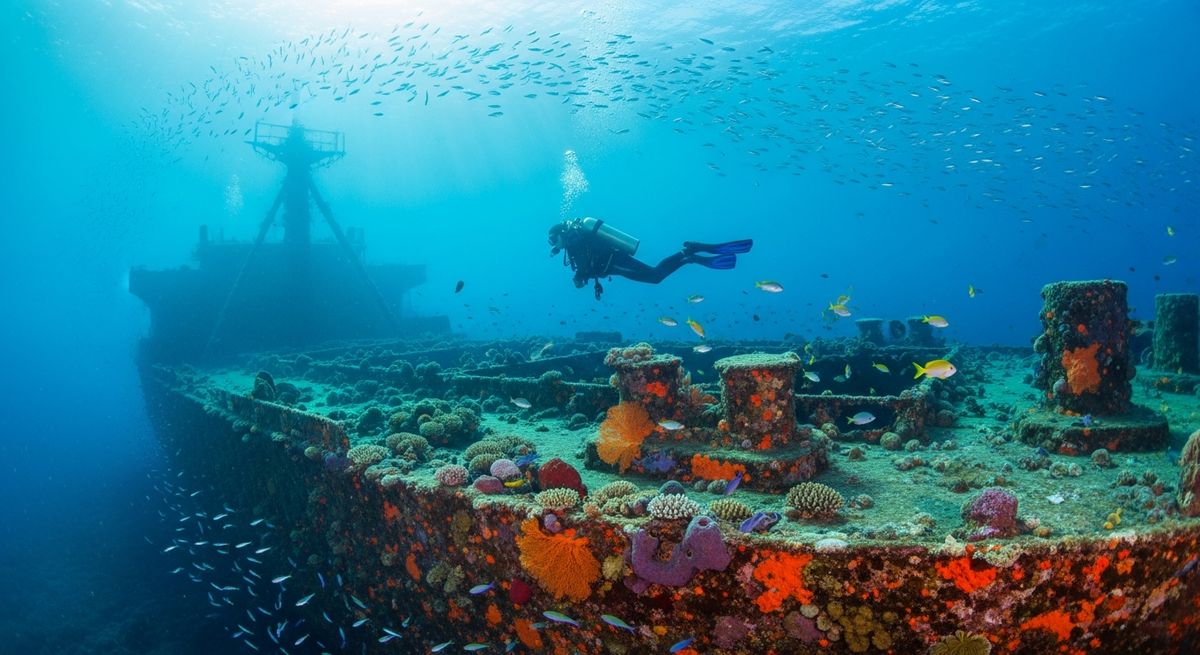
There’s something about the partial wrecks of Scapa Flow that really gets us, and the B 109 is a prime example. This isn't your intact battleship, she’s been salvaged, leaving a fascinating, jumbled footprint on the seabed at just 12 metres. We love how the remaining plates and skeletal frames create a warren of swim-throughs, perfect for a long, relaxed dive. You’ll find walls of plumose anemones, their white tentacles swaying gently in the mild currents, and plenty of wrasse darting between the metalwork. Our favourite part has to be tracing the line of what was once a destroyer, imagining her full form while exploring the nooks and crannies that now shelter crabs and inquisitive blennies. This site is fantastic for photographers looking for intricate shots of invertebrate life against a stark, historical backdrop, or for newer wreck divers wanting to experience Scapa without the daunting depths of some of the bigger ships.
Typical B 109 (PART) Dive Profile
Illustrative profile based on site depth and type. Actual dive profiles vary - always follow your dive computer and training.
Safety Notes
Wreck site - avoid penetration without wreck diving certification. Watch for sharp metal and entanglement hazards.
Cold water this month (avg 13°C). Drysuit or thick wetsuit (7mm+) recommended.
Always perform a 3-minute safety stop at 5m before surfacing.
B 109 (PART) Wreck History
Year Sunk
1919
Vessel Type
warship
Cause
scuttled
The B 109 was a destroyer in the German High Seas Fleet, interned at Scapa Flow following the end of World War I. On June 21, 1919, in a final act of defiance, Rear Admiral Ludwig von Reuter gave the order to scuttle the entire fleet to prevent the ships from falling into British hands. Along with over 50 other warships, the B 109 was deliberately sunk by its own crew, settling on the seabed of the famous naval anchorage.
Unlike many of the larger ships that remain almost intact, the B 109 was subject to extensive salvage operations. The destroyer was raised in 1926 and partially scrapped, with the remaining sections being returned to the seabed. Today, what's left of the B 109 lies in just 12 meters of water. While heavily broken, divers can still identify key features of the destroyer's structure. Its shallow depth makes it an excellent second dive or a training site, offering a tangible connection to one of the most dramatic events in naval history.
Nearest Dive Centres to B 109 (PART)
Dive shops near B 109 (PART)
View all dive centres in Scapa Flow, OrkneyReviews for B 109 (PART)
Conditions
Ocean conditions, forecast and tides for B 109 (PART)
B 109 (PART) Ocean Conditions
Monthly averages for B 109 (PART), sourced from Open-Meteo marine data - nearest station: Open-Meteo marine grid (58.64, -3.16) (8km away)
October Averages
Sea Temperature
13°C
55°F · Range: 11.4–13.8°C
Air Temperature
10°C
50°F
Wind Speed
9.26 m/s
18.0 knots
Atmospheric Pressure
1005.3 hPa
Based on 4 years of monitoring data · Data sources: Open-Meteo marine data
Plan & book
Ways to dive Scapa Flow, Orkney, from day trips to liveaboards.
Day trips & courses
via GetYourGuideGuided dives, courses and snorkel trips with instant booking.
Find dive trips in Scapa Flow, OrkneyPlaces to stay
via Booking.comHotels and dive resorts near Scapa Flow, Orkney.
Search stays in Scapa Flow, OrkneyDive insurance
Most travel insurance excludes or limits scuba. Check what you need before you go.
Dive insurance explainedPartner links: we may earn a commission if you book, at no extra cost to you. How we make money
Where to Stay near B 109 (PART)
Prices from Booking.com. We may earn a commission at no extra cost to you.