BETTINA DANICA
Protected Area
John o' Groats
Why dive here
With 140+ marine species recorded in the area - including blue whales, dolphins, dwarf minke whales, humpback whales and ocean sunfish (mola mola) - BETTINA DANICA offers some of Scapa Flow, Orkney's richest wreck diving. Water ranges 8-14°C, warmest July, August, September.
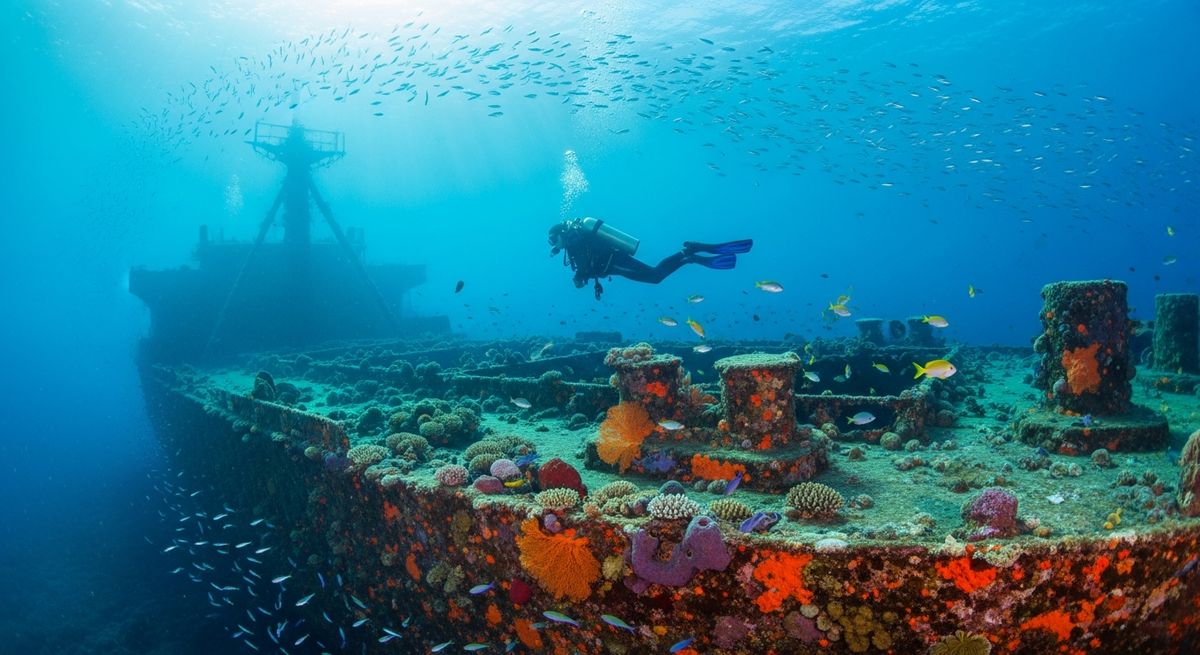
The Bettina Danica isn't a dive site for the faint of heart, or for those who like their wrecks intact. This motor vessel went aground on Stroma Island in 1993, and while salvage attempts failed, the unforgiving North Atlantic hasn't. What you find now is a largely broken-up wreck, scattered across the rocky seabed, but that's precisely why we love it. We've spent hours here, tracing the remains of the hull, the huge propeller, and various chunks of machinery that are now firmly part of the rockscape. There’s a raw, untamed feel to it. Visibility can swing wildly, but when it’s good, the light plays through the kelp forests that have taken root on the twisted metal. We often spot inquisitive cuckoo wrasse darting between the plates and shore crabs scuttling over the rust. It’s a site that suits divers who enjoy piecing together a story from fragments, who appreciate the power of the sea, and who don’t mind a bit of a scramble. Go at slack tide, and take your time. You’ll be surprised what you find.
Typical BETTINA DANICA Dive Profile
Illustrative profile based on site depth and type. Actual dive profiles vary - always follow your dive computer and training.
Safety Notes
Wreck site - avoid penetration without wreck diving certification. Watch for sharp metal and entanglement hazards.
Cold water this month (avg 13°C). Drysuit or thick wetsuit (7mm+) recommended.
BETTINA DANICA Wreck History
Year Sunk
1993
Vessel Type
cargo ship
Cause
grounding
The M.V. Bettina Danica was a 70-metre motor vessel on passage from Greenore to Oslo when she met her fate in the notorious Pentland Firth. On February 13th, 1993, despite good weather conditions, the vessel ran hard aground on the rocks on the west side of Stroma Island. The island, whose name means 'island in the stream' in Old Norse, is infamous for its ferociously strong tides and currents, which have claimed many ships over the centuries. Several salvage attempts were made to pull the Bettina Danica free, but they ultimately proved unsuccessful, and the ship was declared a total loss.
Lying at a depth of just one metre, the wreck is now heavily broken up by the relentless power of the sea. It is not a traditional scuba dive, but rather an interesting site for snorkelers or kayakers to explore when conditions are calm. The remains of the vessel serve as a stark reminder of the navigational challenges posed by the Pentland Firth, where even in good weather, the powerful currents can prove treacherous.
Nearest Dive Centres to BETTINA DANICA
Dive shops near BETTINA DANICA
View all dive centres in Scapa Flow, OrkneyReviews for BETTINA DANICA
Conditions
Ocean conditions, forecast and tides for BETTINA DANICA
BETTINA DANICA Ocean Conditions
Monthly averages for BETTINA DANICA, sourced from Open-Meteo marine data - nearest station: Open-Meteo marine grid (58.64, -3.16) (8km away)
October Averages
Sea Temperature
13°C
55°F · Range: 11.4–13.8°C
Air Temperature
10°C
50°F
Wind Speed
9.26 m/s
18.0 knots
Atmospheric Pressure
1005.3 hPa
Based on 4 years of monitoring data · Data sources: Open-Meteo marine data
Plan & book
Ways to dive Scapa Flow, Orkney, from day trips to liveaboards.
Day trips & courses
via GetYourGuideGuided dives, courses and snorkel trips with instant booking.
Find dive trips in Scapa Flow, OrkneyPlaces to stay
via Booking.comHotels and dive resorts near Scapa Flow, Orkney.
Search stays in Scapa Flow, OrkneyDive insurance
Most travel insurance excludes or limits scuba. Check what you need before you go.
Dive insurance explainedPartner links: we may earn a commission if you book, at no extra cost to you. How we make money
Where to Stay near BETTINA DANICA
Prices from Booking.com. We may earn a commission at no extra cost to you.