BON AMI
Protected Area
Oldshoremore and Sandwood
Why dive here
With 140+ marine species recorded in the area - including blue whales, dolphins, dwarf minke whales, humpback whales and ocean sunfish (mola mola) - BON AMI offers some of Scapa Flow, Orkney's richest wreck diving. Water ranges 8-14°C, warmest July, August, September.
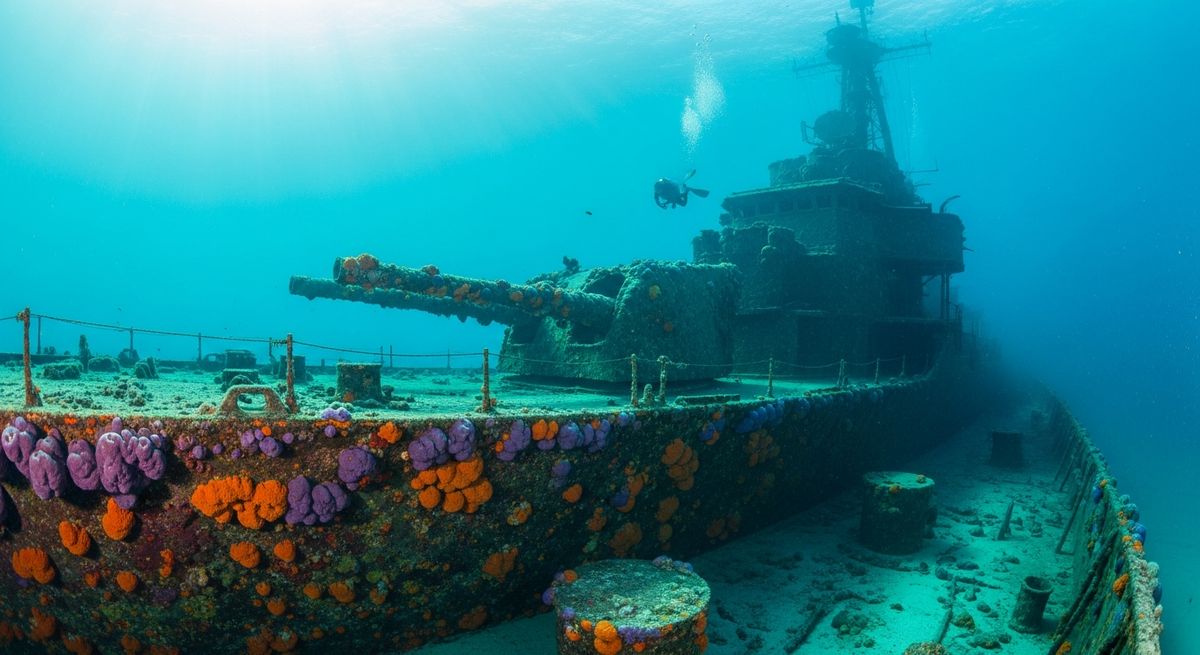
Alright, Scapa Flow. It’s mostly about the German High Seas Fleet, right? But sometimes you want something a bit different, a bit more… intimate. That’s where the *Bon Ami* comes in. We love this site for its sheer accessibility and how it feels like a proper, working fishing vessel that just decided to take a nap on the seabed. She went down in a gale in '85, striking rocks near Loch Inchard, and you can really feel that history when you’re down there. The wreck itself, at only 20 metres long, is completely broken up, scattered across the seafloor. It's less a wreck to penetrate and more an archaeological site to drift over, poking around the debris. Think twisted metal plates, sections of hull, and the kind of industrial clutter you'd expect from a trawler. Visibility here can be excellent, especially on a calm day, letting you really appreciate the scale of the destruction. Despite its shallow depth, the *Bon Ami* is surprisingly full of life. It’s not about pelagics here; it's about the little things – the critters that have made this metal graveyard their home. We often find plump dogfish tucked into crevices, their sandpaper skin surprisingly rough under a gloved hand if you're gentle. Look closely and you’ll spot nudibranchs, often some vibrant orange or purple numbers, inching their way across the barnacle-encrusted plates. The site feels much older than it is, completely overgrown with anemones and sponges. It’s a gentle dive, perfect for photographers wanting to get close-up macro shots or for divers who appreciate the quiet dignity of a wreck reclaiming its place in the ecosystem. It's a proper Scapa warm-up or cool-down dive, a pleasant contrast to the gargantuan battleships nearby.
Safety Notes
Wreck site - avoid penetration without wreck diving certification. Watch for sharp metal and entanglement hazards.
Cold water this month (avg 13°C). Drysuit or thick wetsuit (7mm+) recommended.
BON AMI Wreck History
Year Sunk
1985
Vessel Type
fishing vessel
Cause
grounding
The MFV Bon Ami was a 20-metre fishing vessel that met its end in a dramatic battle with the elements on December 20, 1985. Caught in a fierce gale, the vessel was driven onto the rocks at the mouth of Loch Inchard on the rugged northwest coast of Scotland. The power of the sea was overwhelming, and the Bon Ami was quickly broken apart by the relentless waves, its working life cut short in a matter of moments.
Today, the remains of the Bon Ami lie in the shallows, with a charted depth of 0 metres, meaning parts of the wreck are often visible at low tide. This is not a deep, penetrating dive, but rather a shallow exploration or even a snorkel in a scenic and wild location. Divers can explore the scattered wreckage, a testament to the unforgiving nature of the Scottish coastline. The site serves as a poignant reminder of the dangers faced by fishermen and offers a glimpse into a modern maritime tragedy.
Reviews for BON AMI
Conditions
Ocean conditions, forecast and tides for BON AMI
BON AMI Ocean Conditions
Monthly averages for BON AMI, sourced from Open-Meteo marine data - nearest station: Open-Meteo marine grid (58.64, -3.16) (8km away)
October Averages
Sea Temperature
13°C
55°F · Range: 11.4–13.8°C
Air Temperature
10°C
50°F
Wind Speed
9.26 m/s
18.0 knots
Atmospheric Pressure
1005.3 hPa
Based on 4 years of monitoring data · Data sources: Open-Meteo marine data
Plan & book
Ways to dive Scapa Flow, Orkney, from day trips to liveaboards.
Day trips & courses
via GetYourGuideGuided dives, courses and snorkel trips with instant booking.
Find dive trips in Scapa Flow, OrkneyPlaces to stay
via Booking.comHotels and dive resorts near Scapa Flow, Orkney.
Search stays in Scapa Flow, OrkneyDive insurance
Most travel insurance excludes or limits scuba. Check what you need before you go.
Dive insurance explainedPartner links: we may earn a commission if you book, at no extra cost to you. How we make money
Where to Stay near BON AMI
Prices from Booking.com. We may earn a commission at no extra cost to you.