BOSTON STIRLING
Protected Area
Rubha Dunan
Why dive here
With 140+ marine species recorded in the area - including blue whales, dolphins, dwarf minke whales, humpback whales and ocean sunfish (mola mola) - BOSTON STIRLING offers some of Scapa Flow, Orkney's richest wreck diving. Water ranges 8-14°C, warmest July, August, September.
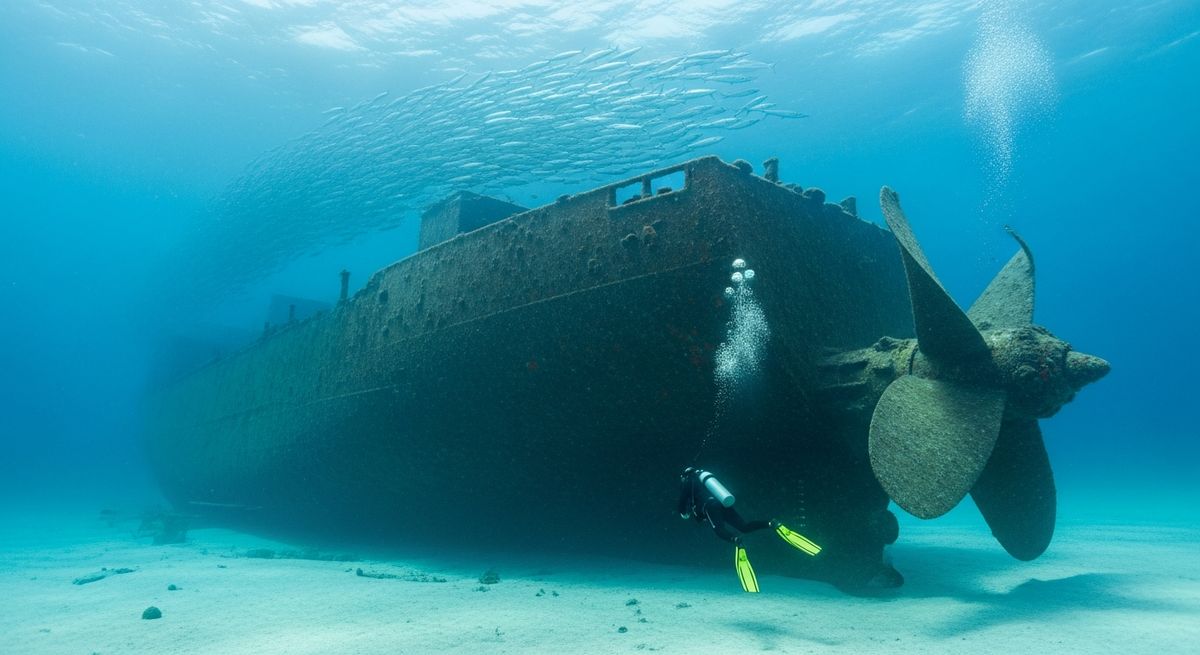
The *Boston Stirling* is a fantastic shallow wreck, perfect for when the weather turns a bit too spicy for Scapa Flow's deeper giants. We love it for its accessibility and the sheer volume of life it holds. This stern trawler ran aground back in '85 when her skipper dozed off. Now, she lies on her port side, well broken but still offering plenty of penetration for properly trained divers. You’ll find the engine room surprisingly open, a real highlight, and the stern section holds a lot of detail. The *Boston Stirling* is absolutely smothered in plumose anemones, creating these incredible white, feathery blankets over the metalwork. We’ve seen blennies peering out from every crevice, and the odd inquisitive conger eel making a home in the darker corners. Visibility can vary, but generally, it's pretty decent, and at only 7m, you get a good long bottom time. It’s our pick for a relaxing second dive, or for less experienced wreck divers looking to get some quality time on a proper Scapa wreck without the depth.
Typical BOSTON STIRLING Dive Profile
Illustrative profile based on site depth and type. Actual dive profiles vary - always follow your dive computer and training.
Safety Notes
Wreck site - avoid penetration without wreck diving certification. Watch for sharp metal and entanglement hazards.
Cold water this month (avg 13°C). Drysuit or thick wetsuit (7mm+) recommended.
BOSTON STIRLING Wreck History
Year Sunk
1985
Vessel Type
fishing vessel
Cause
grounding
While Scapa Flow is world-famous for the scuttled German High Seas Fleet of World War I, it is also home to more modern tragedies. The Boston Stirling, a stern trawler, is one such wreck. Its story is not one of naval conflict but of simple human error. On Halloween night, October 31, 1985, the vessel was en route from Ullapool to the fishing grounds when the skipper, alone on the bridge, fell asleep at the helm. The ship ran hard aground on the shore of Hoy, and despite efforts to save her, the engine room flooded. A subsequent fire sealed her fate, and the trawler capsized and sank, thankfully after all nine crew members were safely recovered.
Today, the Boston Stirling lies upside down in just 7 meters of water, making it one of the most accessible wrecks in the Orkney Islands. Its shallow depth makes it a perfect dive for beginners, photographers, or as a relaxed second dive of the day. The upturned hull is the most prominent feature, with its propeller and rudder clearly visible. Exploring the wreckage offers a stark contrast to the historic warships nearby and serves as a poignant reminder that the sea remains a formidable and unpredictable force even in modern times.
Reviews for BOSTON STIRLING
Conditions
Ocean conditions, forecast and tides for BOSTON STIRLING
BOSTON STIRLING Ocean Conditions
Monthly averages for BOSTON STIRLING, sourced from Open-Meteo marine data - nearest station: Open-Meteo marine grid (58.64, -3.16) (8km away)
October Averages
Sea Temperature
13°C
55°F · Range: 11.4–13.8°C
Air Temperature
10°C
50°F
Wind Speed
9.26 m/s
18.0 knots
Atmospheric Pressure
1005.3 hPa
Based on 4 years of monitoring data · Data sources: Open-Meteo marine data
Plan & book
Ways to dive Scapa Flow, Orkney, from day trips to liveaboards.
Day trips & courses
via GetYourGuideGuided dives, courses and snorkel trips with instant booking.
Find dive trips in Scapa Flow, OrkneyPlaces to stay
via Booking.comHotels and dive resorts near Scapa Flow, Orkney.
Search stays in Scapa Flow, OrkneyDive insurance
Most travel insurance excludes or limits scuba. Check what you need before you go.
Dive insurance explainedPartner links: we may earn a commission if you book, at no extra cost to you. How we make money
Where to Stay near BOSTON STIRLING
Prices from Booking.com. We may earn a commission at no extra cost to you.