BOY LESLIE
Protected Area
Wester Ross
Why dive here
With 140+ marine species recorded in the area - including blue whales, dolphins, dwarf minke whales, humpback whales and ocean sunfish (mola mola) - BOY LESLIE offers some of Scapa Flow, Orkney's richest wreck diving. Water ranges 8-14°C, warmest July, August, September.
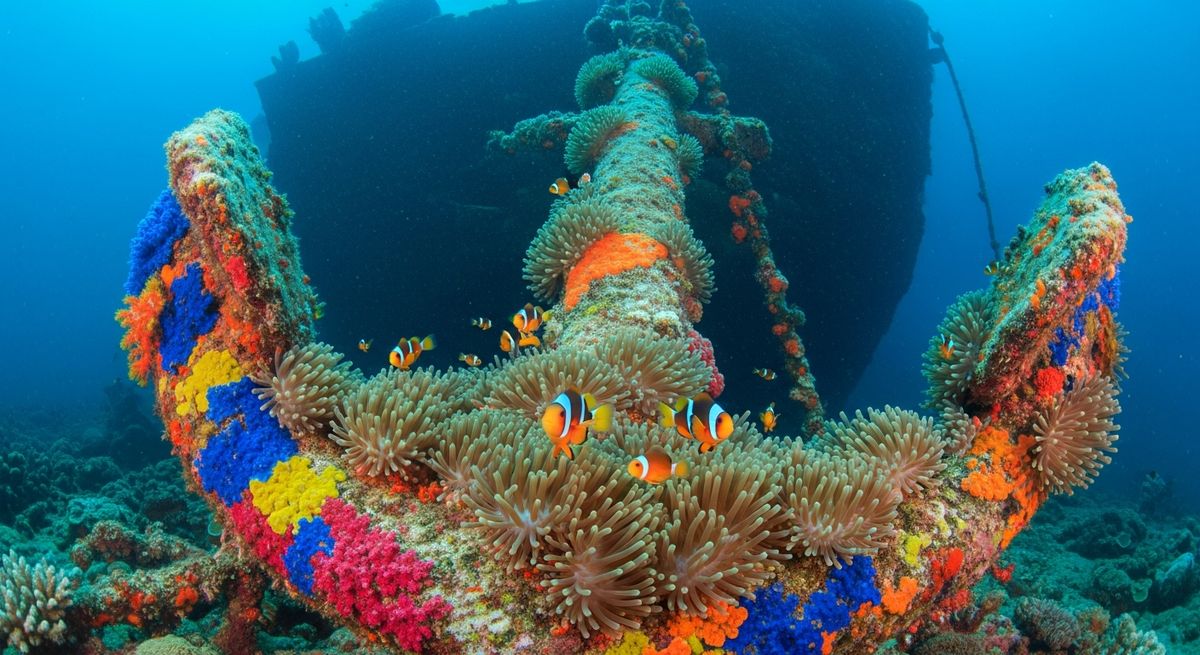
The *Boy Leslie* is one of those Scapa wrecks we always make time for, even if it is a bit of a departure from the German High Seas Fleet. She’s a timber trawler, beached and broken on the rocks, and offers something completely different. We love how the wreck lies scattered, a jigsaw puzzle of planks and machinery. It’s less about penetration here and more about exploring the jumble, picking through the engine block, and seeing how nature reclaims things. You’ll find schools of cod and pollock hanging around the more intact sections, almost like they’re guarding the old girl. Our favourite part is spotting the colourful anemones and sponges that have plastered themselves across the wooden beams. It’s a site that really comes alive in good visibility, often best on an incoming tide when things get a bit clearer. Perfect for photographers who appreciate texture and the interplay of light and shadow, or anyone who enjoys a rummage through history without the deep decompression stops. Just remember, it can get a bit surgey if there's any swell.
Safety Notes
Wreck site - avoid penetration without wreck diving certification. Watch for sharp metal and entanglement hazards.
Cold water this month (avg 13°C). Drysuit or thick wetsuit (7mm+) recommended.
BOY LESLIE Wreck History
Year Sunk
2000
Vessel Type
fishing vessel
Cause
grounding
The Boy Leslie met its end on a very memorable date: the first day of the new millennium. On January 1st, 2000, the wooden trawler, built in 1978, suffered a complete loss of power while navigating the waters of Scapa Flow. Helpless, the vessel drifted at the mercy of the wind and tide until it was cast upon the rocks, where it began to break apart.
With a depth of 0 meters, the Boy Leslie is not a dive site but a coastal wreck. Its classification as "showing any portion of hull" means its remains are visible from the surface, likely scattered in the intertidal zone. For coastal explorers, kayakers, and snorkelers, the wreck provides a stark and recent reminder of the sea's unforgiving nature, even in a harbour as famous as Scapa Flow. It stands as a monument to a terrible start to the 21st century for one unlucky vessel.
Reviews for BOY LESLIE
Conditions
Ocean conditions, forecast and tides for BOY LESLIE
BOY LESLIE Ocean Conditions
Monthly averages for BOY LESLIE, sourced from Open-Meteo marine data - nearest station: Open-Meteo marine grid (58.64, -3.16) (8km away)
October Averages
Sea Temperature
13°C
55°F · Range: 11.4–13.8°C
Air Temperature
10°C
50°F
Wind Speed
9.26 m/s
18.0 knots
Atmospheric Pressure
1005.3 hPa
Based on 4 years of monitoring data · Data sources: Open-Meteo marine data
Plan & book
Ways to dive Scapa Flow, Orkney, from day trips to liveaboards.
Day trips & courses
via GetYourGuideGuided dives, courses and snorkel trips with instant booking.
Find dive trips in Scapa Flow, OrkneyPlaces to stay
via Booking.comHotels and dive resorts near Scapa Flow, Orkney.
Search stays in Scapa Flow, OrkneyDive insurance
Most travel insurance excludes or limits scuba. Check what you need before you go.
Dive insurance explainedPartner links: we may earn a commission if you book, at no extra cost to you. How we make money
Where to Stay near BOY LESLIE
Prices from Booking.com. We may earn a commission at no extra cost to you.