BUDRIE
Protected Area
Hoy and West Mainland
Why dive here
With 140+ marine species recorded in the area - including blue whales, dolphins, dwarf minke whales, humpback whales and ocean sunfish (mola mola) - BUDRIE offers some of Scapa Flow, Orkney's richest wreck diving. Water ranges 8-14°C, warmest July, August, September.
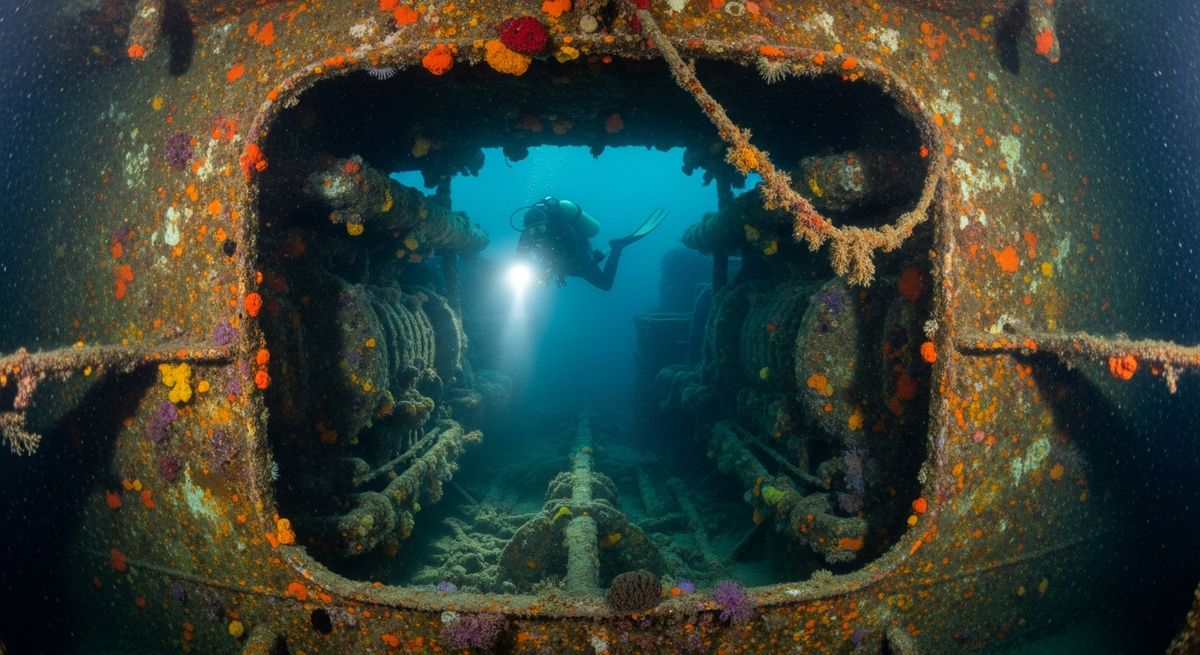
The Budrie isn't about deep dives or pelagics. It’s about history you can touch, plain and simple. Sunk as a blockship in 1915, this steamship lies shallow, barely 8m deep, making it accessible to just about anyone comfortable diving in cooler water. We love the way the light filters through the kelp, dappling the deck plating and the skeletal remains of her superstructure. You’ll find walls of plumose anemones clinging to the metal, and inquisitive wrasse darting in and out of the shadows. Our favourite time to dive the Budrie is on a calm, sunny day, ideally at slack water around low tide for the best visibility. The stern is particularly photogenic, with the rudder and propeller still largely intact, now completely encrusted. There’s a quietness here, a real sense of being part of Scapa Flow’s story, a feeling you don't always get on the deeper, grander wrecks. It’s a gentle exploration, perfect for photographers or those looking to connect with the past without the pressures of depth or current.
Typical BUDRIE Dive Profile
Illustrative profile based on site depth and type. Actual dive profiles vary - always follow your dive computer and training.
Safety Notes
Wreck site - avoid penetration without wreck diving certification. Watch for sharp metal and entanglement hazards.
Cold water this month (avg 13°C). Drysuit or thick wetsuit (7mm+) recommended.
BUDRIE Wreck History
Year Sunk
1915
Vessel Type
cargo ship
Cause
scuttled
Tonnage
2,130 GRT
The SS Budrie was a steamship that earned its place in history not through a long career of trade, but by making the ultimate sacrifice. During the height of World War I, the vast naval anchorage of Scapa Flow was a critical asset for the British Royal Navy, and protecting it from German U-boat incursions was a top priority. To block the smaller, more vulnerable eastern channels, the Admiralty requisitioned a number of old merchant ships to be deliberately sunk as 'blockships'.
On October 3, 1915, the SS Budrie fulfilled its final duty. The old steamer was carefully positioned in Kirk Sound and scuttled, settling onto the shallow seabed to create an impenetrable barrier. Decades later, during WWII, the 'Churchill Barriers' were built, creating permanent causeways that incorporated the now-aging blockships. Today, the Budrie lies in just 8 meters of water, making it a fantastic and easily accessible dive. Its hull is broken but the boilers and machinery are still recognizable, offering a fascinating glimpse into naval history and providing a thriving habitat for the marine life of the Orkney Islands.
Nearest Dive Centres to BUDRIE
Dive shops near BUDRIE
View all dive centres in Scapa Flow, OrkneyReviews for BUDRIE
Conditions
Ocean conditions, forecast and tides for BUDRIE
BUDRIE Ocean Conditions
Monthly averages for BUDRIE, sourced from Open-Meteo marine data - nearest station: Open-Meteo marine grid (58.64, -3.16) (8km away)
October Averages
Sea Temperature
13°C
55°F · Range: 11.4–13.8°C
Air Temperature
10°C
50°F
Wind Speed
9.26 m/s
18.0 knots
Atmospheric Pressure
1005.3 hPa
Based on 4 years of monitoring data · Data sources: Open-Meteo marine data
Plan & book
Ways to dive Scapa Flow, Orkney, from day trips to liveaboards.
Day trips & courses
via GetYourGuideGuided dives, courses and snorkel trips with instant booking.
Find dive trips in Scapa Flow, OrkneyPlaces to stay
via Booking.comHotels and dive resorts near Scapa Flow, Orkney.
Search stays in Scapa Flow, OrkneyDive insurance
Most travel insurance excludes or limits scuba. Check what you need before you go.
Dive insurance explainedPartner links: we may earn a commission if you book, at no extra cost to you. How we make money
Where to Stay near BUDRIE
Prices from Booking.com. We may earn a commission at no extra cost to you.