BURRAY NESS
Protected Area
Long Berry Coast
Why dive here
With 140+ marine species recorded in the area - including blue whales, dolphins, dwarf minke whales, humpback whales and ocean sunfish (mola mola) - BURRAY NESS offers some of Scapa Flow, Orkney's richest wreck diving. Water ranges 8-14°C, warmest July, August, September.
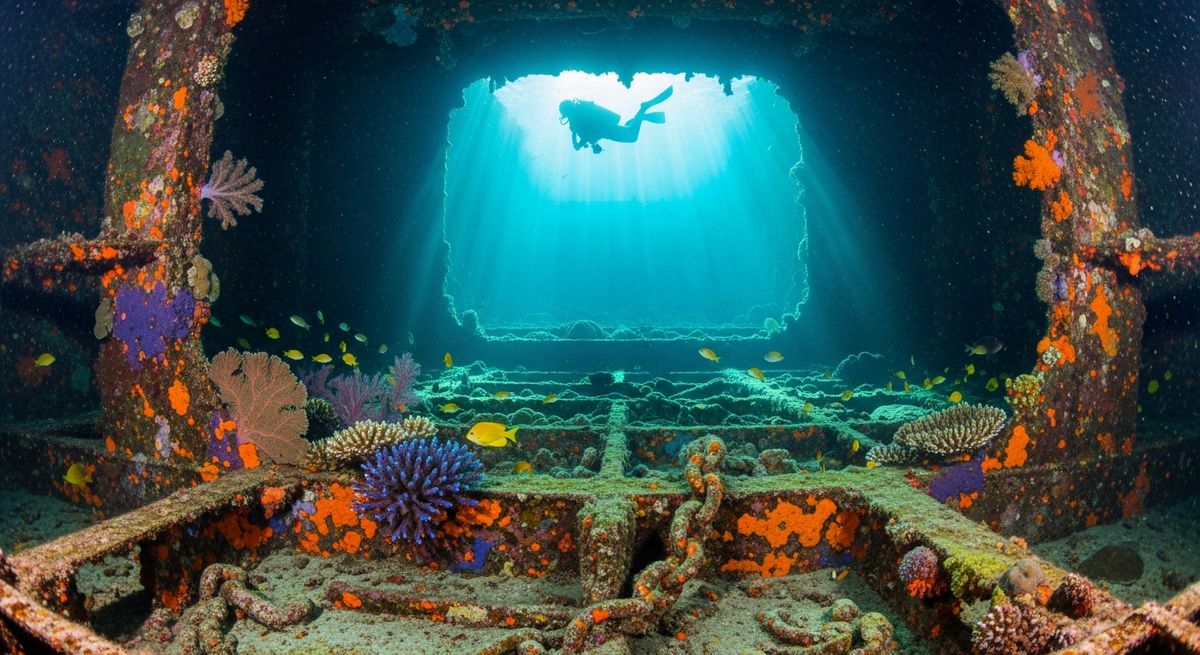
Burray Ness isn’t your typical Scapa Flow wreck dive, and that’s precisely why we love it. Instead of the deep German Fleet, here you’re exploring the remains of an old motor vessel, broken up and scattered across a shallow seabed at a maximum of 10 metres. It’s an exposed site, so pick your weather window – a flat calm day with good sun makes all the difference, transforming the silty bottom into something genuinely atmospheric. What you get is a dive that feels more like an archaeological dig. Hull plates lie twisted, ribs poke out of the sand, and the engine block is still largely intact, a hulking mass colonised by anemones and plumose anemones. Visibility can be hit or miss; on a good day, you’ll have 10 metres, allowing you to appreciate the scale of the debris field. Look for the resident wrasse darting between the metalwork and the occasional crab scuttling for cover. It’s a site that rewards a slow, deliberate exploration, perfect for photographers wanting to capture the textures of history and nature entwined, or for those just looking for a relaxed bimble away from the deeper, darker wrecks. Don’t expect soaring superstructures, but do expect a surprisingly engaging dive.
Typical BURRAY NESS Dive Profile
Illustrative profile based on site depth and type. Actual dive profiles vary - always follow your dive computer and training.
Safety Notes
Wreck site - avoid penetration without wreck diving certification. Watch for sharp metal and entanglement hazards.
Cold water this month (avg 13°C). Drysuit or thick wetsuit (7mm+) recommended.
BURRAY NESS Wreck History
Vessel Type
cargo ship
Cause
scuttled
Located in the legendary waters of Scapa Flow, the Burray Ness wreck is not a casualty of war in the traditional sense, but a key part of the area's strategic defense. Following the sinking of the battleship HMS Royal Oak by a German U-boat in 1939, Prime Minister Winston Churchill ordered the eastern approaches to the naval base permanently sealed. This wreck is one of several old merchant ships that were intentionally scuttled to form the foundations of the famous Churchill Barriers, causeways built to block any future submarine incursions.
Resting in just 10 meters of water, this blockship is an ideal dive for all experience levels, often enjoyed as a relaxed second dive or for training purposes. Its shallow depth ensures great natural light and long bottom times. The vessel is heavily broken up, but its scattered plates, ribs, and machinery create a fascinating underwater landscape to explore. Now a thriving artificial reef, the wreckage is covered in colorful anemones and kelp, providing a haven for crustaceans, wrasse, and other curious marine life. It's an accessible and tangible piece of Scapa Flow's WWII history.
Reviews for BURRAY NESS
Conditions
Ocean conditions, forecast and tides for BURRAY NESS
BURRAY NESS Ocean Conditions
Monthly averages for BURRAY NESS, sourced from Open-Meteo marine data - nearest station: Open-Meteo marine grid (58.64, -3.16) (8km away)
October Averages
Sea Temperature
13°C
55°F · Range: 11.4–13.8°C
Air Temperature
10°C
50°F
Wind Speed
9.26 m/s
18.0 knots
Atmospheric Pressure
1005.3 hPa
Based on 4 years of monitoring data · Data sources: Open-Meteo marine data
Plan & book
Ways to dive Scapa Flow, Orkney, from day trips to liveaboards.
Day trips & courses
via GetYourGuideGuided dives, courses and snorkel trips with instant booking.
Find dive trips in Scapa Flow, OrkneyPlaces to stay
via Booking.comHotels and dive resorts near Scapa Flow, Orkney.
Search stays in Scapa Flow, OrkneyDive insurance
Most travel insurance excludes or limits scuba. Check what you need before you go.
Dive insurance explainedPartner links: we may earn a commission if you book, at no extra cost to you. How we make money
Where to Stay near BURRAY NESS
Prices from Booking.com. We may earn a commission at no extra cost to you.