CAIRNMONA
Protected Area
Loch of Strathbeg
Why dive here
With 140+ marine species recorded in the area - including blue whales, dolphins, dwarf minke whales, humpback whales and ocean sunfish (mola mola) - CAIRNMONA offers some of Scapa Flow, Orkney's richest wreck diving. Water ranges 8-14°C, warmest July, August, September.
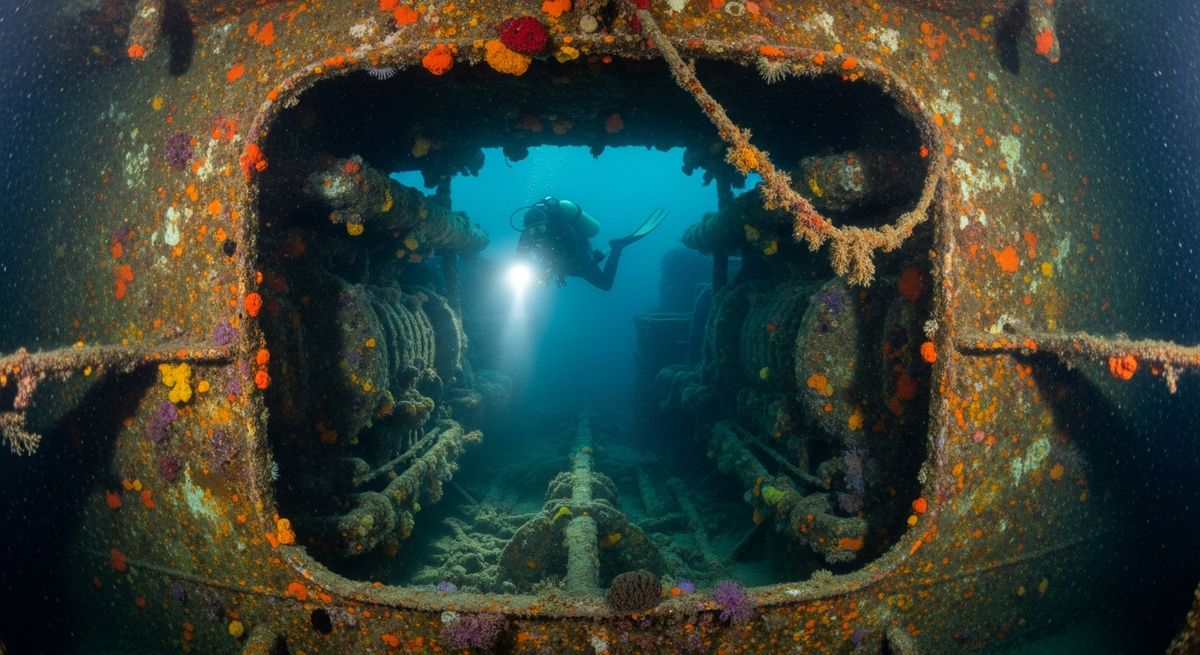
The Cairnmona sits upright, broken into three main sections, a casualty of a U-boat torpedo in 1939. We love how accessible this wreck feels despite its 50-meter depth, making it a proper technical dive without the usual faff of an overturned or completely flattened vessel. Dropping down onto her bow, you’re greeted by the sheer scale of it, and we always make a point to explore the intact forward holds. The midsection is where she took the hit, and it’s a chaotic but fascinating jumble of twisted metal, home to a surprising amount of invertebrate life – we’ve seen some huge plumose anemones here. Our favourite part has to be the stern, relatively intact with the propeller still in place, often obscured by schools of saithe that swirl in the low light. The engine room is penetrable, a dark, silty delve for the properly trained, but even from the outside, the triple-expansion engine is a grand sight. Visibility in Scapa can vary wildly, but on a good day, the silhouette of the Cairnmona against the green gloom is genuinely evocative. It’s a cold dive, so drysuits are essential, and we’d suggest opting for a late summer or early autumn trip for the calmer surface conditions. This wreck suits experienced technical divers keen on exploring a significant piece of wartime history, a place where the past feels tangible.
Typical CAIRNMONA Dive Profile
Illustrative profile based on site depth and type. Actual dive profiles vary - always follow your dive computer and training.
Safety Notes
Maximum depth 50m exceeds recreational limits (40m). Technical diving certification and equipment required.
Wreck site - avoid penetration without wreck diving certification. Watch for sharp metal and entanglement hazards.
Cold water this month (avg 13°C). Drysuit or thick wetsuit (7mm+) recommended.
Always perform a 3-minute safety stop at 5m before surfacing.
CAIRNMONA Wreck History
Year Sunk
1939
Vessel Type
cargo ship
Cause
torpedo
Built in 1918 towards the end of the First World War, the SS Cairnmona was a classic steamship powered by a triple-expansion engine. Owned by the Cairn Line, she served as a merchant vessel for two decades before being called into service at the dawn of the Second World War. Her story is deeply intertwined with the strategic importance of Scapa Flow, the Royal Navy's primary base in the north.
On October 30, 1939, just weeks after the war began, the Cairnmona's fate was sealed. While in the waters of Scapa Flow, she was targeted by the German submarine U-13. A torpedo strike sent the vessel to the bottom, making her one of the early merchant casualties in these historic and heavily defended waters. Her sinking was a stark reminder of the U-boat peril that lurked just outside the main naval anchorage.
Today, the Cairnmona rests at a depth of 50 meters, placing her firmly in the realm of technical diving. This is a challenging dive for experienced, properly equipped divers. The cold, dark waters have preserved her structure remarkably well, though the explosive torpedo damage is evident. Exploring this WWI-era vessel offers a poignant and atmospheric connection to the opening salvos of the Battle of the Atlantic.
Reviews for CAIRNMONA
Conditions
Ocean conditions, forecast and tides for CAIRNMONA
CAIRNMONA Ocean Conditions
Monthly averages for CAIRNMONA, sourced from Open-Meteo marine data - nearest station: Open-Meteo marine grid (58.64, -3.16) (8km away)
October Averages
Sea Temperature
13°C
55°F · Range: 11.4–13.8°C
Air Temperature
10°C
50°F
Wind Speed
9.26 m/s
18.0 knots
Atmospheric Pressure
1005.3 hPa
Based on 4 years of monitoring data · Data sources: Open-Meteo marine data
Plan & book
Ways to dive Scapa Flow, Orkney, from day trips to liveaboards.
Day trips & courses
via GetYourGuideGuided dives, courses and snorkel trips with instant booking.
Find dive trips in Scapa Flow, OrkneyPlaces to stay
via Booking.comHotels and dive resorts near Scapa Flow, Orkney.
Search stays in Scapa Flow, OrkneyDive insurance
Most travel insurance excludes or limits scuba. Check what you need before you go.
Dive insurance explainedPartner links: we may earn a commission if you book, at no extra cost to you. How we make money
Where to Stay near CAIRNMONA
Prices from Booking.com. We may earn a commission at no extra cost to you.