CALEDONIA
Protected Area
Rosemarkie to Shandwick Coast
Why dive here
With 140+ marine species recorded in the area - including blue whales, dolphins, dwarf minke whales, humpback whales and ocean sunfish (mola mola) - CALEDONIA offers some of Scapa Flow, Orkney's richest wreck diving. Water ranges 8-14°C, warmest July, August, September.
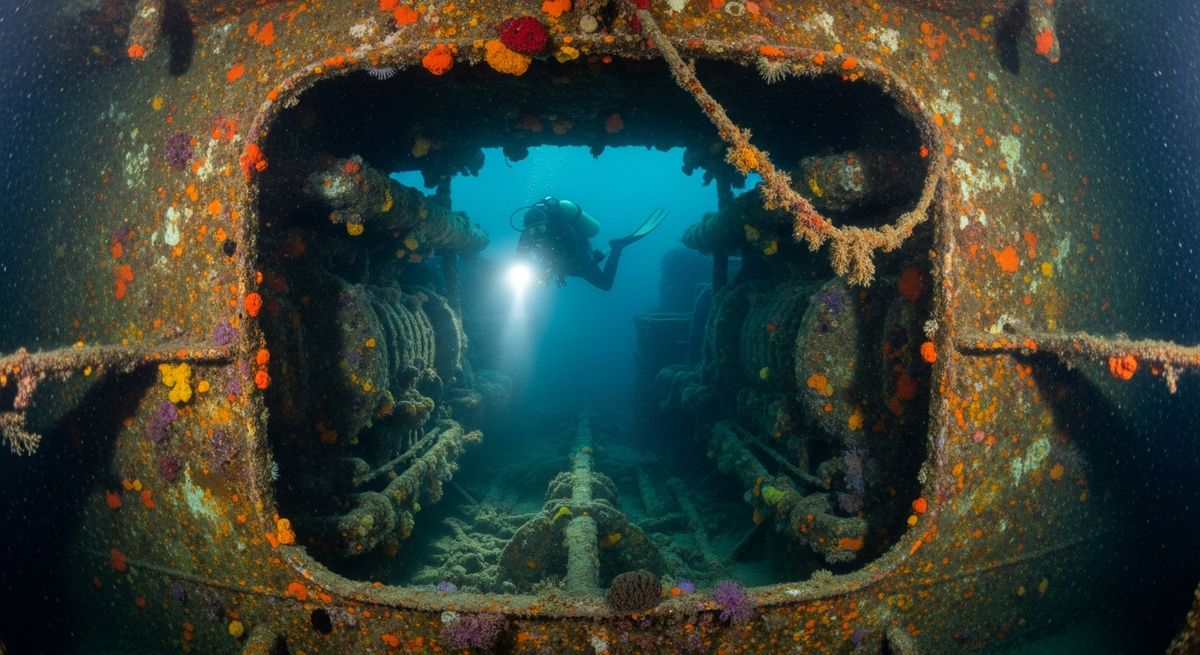
The Caledonia, now this is a proper Scapa Flow wreck, and our pick for an easier dive that still delivers that incredible sense of history. She’s shallow, only 13 meters, which means plenty of bottom time and ambient light filtering down, even on a cloudy Orkney day. We love how her plates are well broken, creating these swim-throughs and alcoves that are just begging to be explored. You can feel the cold eddying as you poke around the engine room, imagining the forces that tore her apart back in '23. For something so shallow, the Caledonia is surprisingly atmospheric. Giant plumose anemones cling to every surface, their white tentacles swaying like ghostly dancers in the slight current. You’ll spot wrasse darting between the girders and sometimes a curious grey seal will pop by for a look. This is a brilliant dive for newer wreck enthusiasts or those looking for a relaxed second dive, allowing you to really soak in the wreck's character without the pressure of depth or complex navigation. Just remember your drysuit, it's still Orkney!
Typical CALEDONIA Dive Profile
Illustrative profile based on site depth and type. Actual dive profiles vary - always follow your dive computer and training.
Safety Notes
Wreck site - avoid penetration without wreck diving certification. Watch for sharp metal and entanglement hazards.
Cold water this month (avg 13°C). Drysuit or thick wetsuit (7mm+) recommended.
Always perform a 3-minute safety stop at 5m before surfacing.
CALEDONIA Wreck History
Year Sunk
1923
Vessel Type
warship
Cause
unknown
Tonnage
9,223 GRT
The wreck known as the HMS Caledonia began her life as the SS Caledonia, a luxurious passenger liner for the Anchor Line launched in 1904. With the outbreak of World War I, she was requisitioned by the Royal Navy and converted into an armed merchant cruiser, patrolling the North Atlantic. After the war, she served as a depot and accommodation ship in various naval bases, her elegant civilian life a distant memory.
Her final journey was to the breakers' yard in Scapa Flow. In August 1923, during the scrapping process, the vessel foundered and sank. The exact circumstances are murky, but the grand old liner met her end not in battle, but in the quiet waters where the German High Seas Fleet had been scuttled just a few years earlier. She was later dispersed with explosives as she posed a hazard to navigation.
Today, the Caledonia rests in just 13 metres of water. Due to the dispersal, the wreck is a scattered collection of steel plates, ribs, and machinery spread across the seabed. While not an intact vessel, it's an excellent and accessible dive for novices in Scapa Flow. Divers can explore the flattened remains, which have become a thriving habitat for crabs, lobsters, and a variety of fish seeking shelter among the wreckage.
Reviews for CALEDONIA
Conditions
Ocean conditions, forecast and tides for CALEDONIA
CALEDONIA Ocean Conditions
Monthly averages for CALEDONIA, sourced from Open-Meteo marine data - nearest station: Open-Meteo marine grid (58.64, -3.16) (8km away)
October Averages
Sea Temperature
13°C
55°F · Range: 11.4–13.8°C
Air Temperature
10°C
50°F
Wind Speed
9.26 m/s
18.0 knots
Atmospheric Pressure
1005.3 hPa
Based on 4 years of monitoring data · Data sources: Open-Meteo marine data
Plan & book
Ways to dive Scapa Flow, Orkney, from day trips to liveaboards.
Day trips & courses
via GetYourGuideGuided dives, courses and snorkel trips with instant booking.
Find dive trips in Scapa Flow, OrkneyPlaces to stay
via Booking.comHotels and dive resorts near Scapa Flow, Orkney.
Search stays in Scapa Flow, OrkneyDive insurance
Most travel insurance excludes or limits scuba. Check what you need before you go.
Dive insurance explainedPartner links: we may earn a commission if you book, at no extra cost to you. How we make money
Where to Stay near CALEDONIA
Prices from Booking.com. We may earn a commission at no extra cost to you.