CAROLINA THORNDEN
Protected Area
Switha
Why dive here
With 140+ marine species recorded in the area - including blue whales, dolphins, dwarf minke whales, humpback whales and ocean sunfish (mola mola) - CAROLINA THORNDEN offers some of Scapa Flow, Orkney's richest wreck diving. Water ranges 8-14°C, warmest July, August, September.
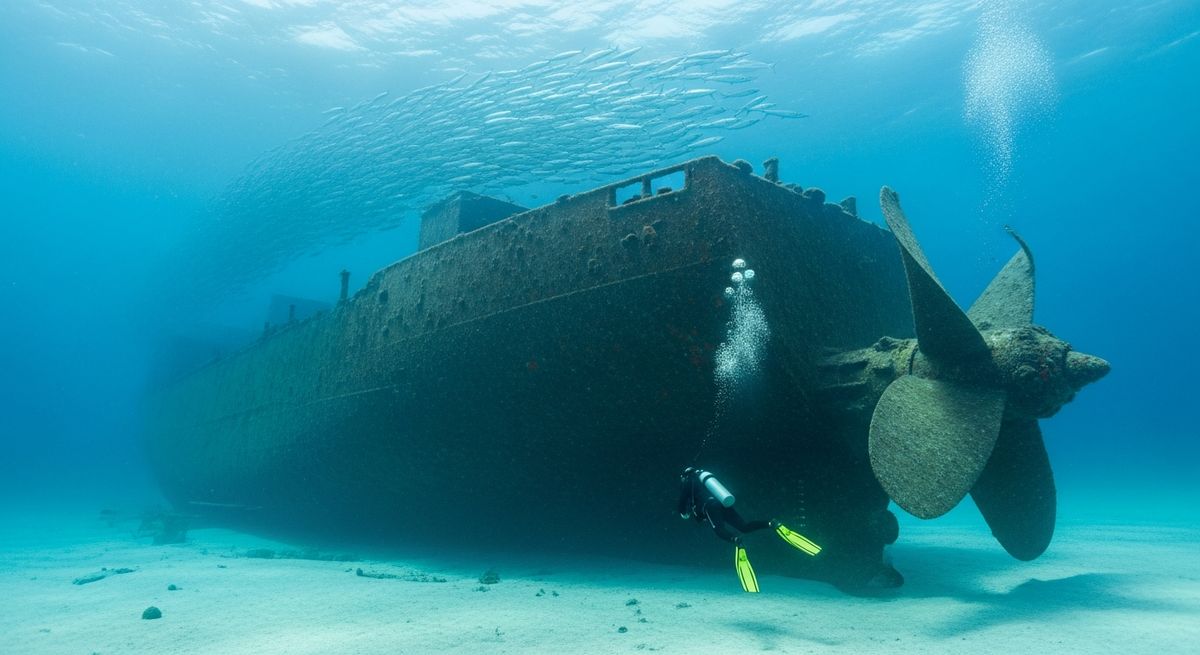
The *Carolina Thornden* is a blockship, deliberately sunk in 1940 to protect Scapa Flow. It’s a shallow dive, barely 2m deep, making it an excellent option for newer divers or those looking for an extended shallow exploration. We love how accessible it is, sitting upright and mostly intact on the seabed, practically inviting you to swim through its cavernous holds. We usually jump in at high slack water to avoid any surface chop, and often take our time simply finning along the deck, peering into the exposed engine room. You'll find a surprising amount of soft coral growing on the bulkheads, and often schools of juvenile coalfish darting between the frames. It’s a great spot for macro photography too; we've found nudibranchs and squat lobsters tucked away in crevices. This isn't a dive for big pelagics, but for an intimate look at a piece of wartime history reclaimed by the sea, it’s a brilliant choice.
Typical CAROLINA THORNDEN Dive Profile
Illustrative profile based on site depth and type. Actual dive profiles vary - always follow your dive computer and training.
Safety Notes
Wreck site - avoid penetration without wreck diving certification. Watch for sharp metal and entanglement hazards.
Cold water this month (avg 13°C). Drysuit or thick wetsuit (7mm+) recommended.
CAROLINA THORNDEN Wreck History
Year Sunk
1942
Vessel Type
tanker
Cause
scuttled
The Carolina Thorden has a history intrinsically linked to the defence of Great Britain during World War II. A steel single-screw motor tanker built in 1938, she was requisitioned for a critical purpose. On April 8, 1942, she was deliberately sunk as a blockship in Scapa Flow, the Royal Navy's primary wartime anchorage in the Orkney Islands. Her role was to obstruct one of the eastern channels, strengthening the formidable defences designed to prevent enemy submarines from entering the Flow.
Resting in just 2 metres of water, the Carolina Thorden is an ideal site for snorkelers and trainee divers. While over 80 years of North Sea storms have taken their toll, her immense steel hull is still clearly visible, broken and scattered across the seabed. Exploring the wreckage provides a tangible connection to the past, a reminder of the strategic importance of Scapa Flow. Divers can trace the vessel's remains and appreciate its final, silent duty in one of the world's most historic naval harbours.
Nearest Dive Centres to CAROLINA THORNDEN
Dive shops near CAROLINA THORNDEN
View all dive centres in Scapa Flow, OrkneyReviews for CAROLINA THORNDEN
Conditions
Ocean conditions, forecast and tides for CAROLINA THORNDEN
CAROLINA THORNDEN Ocean Conditions
Monthly averages for CAROLINA THORNDEN, sourced from Open-Meteo marine data - nearest station: Open-Meteo marine grid (58.64, -3.16) (8km away)
October Averages
Sea Temperature
13°C
55°F · Range: 11.4–13.8°C
Air Temperature
10°C
50°F
Wind Speed
9.26 m/s
18.0 knots
Atmospheric Pressure
1005.3 hPa
Based on 4 years of monitoring data · Data sources: Open-Meteo marine data
Plan & book
Ways to dive Scapa Flow, Orkney, from day trips to liveaboards.
Day trips & courses
via GetYourGuideGuided dives, courses and snorkel trips with instant booking.
Find dive trips in Scapa Flow, OrkneyPlaces to stay
via Booking.comHotels and dive resorts near Scapa Flow, Orkney.
Search stays in Scapa Flow, OrkneyDive insurance
Most travel insurance excludes or limits scuba. Check what you need before you go.
Dive insurance explainedPartner links: we may earn a commission if you book, at no extra cost to you. How we make money
Where to Stay near CAROLINA THORNDEN
Prices from Booking.com. We may earn a commission at no extra cost to you.