CARRON
Protected Area
Switha
Why dive here
With 140+ marine species recorded in the area - including blue whales, dolphins, dwarf minke whales, humpback whales and ocean sunfish (mola mola) - CARRON offers some of Scapa Flow, Orkney's richest wreck diving. Water ranges 8-14°C, warmest July, August, September.
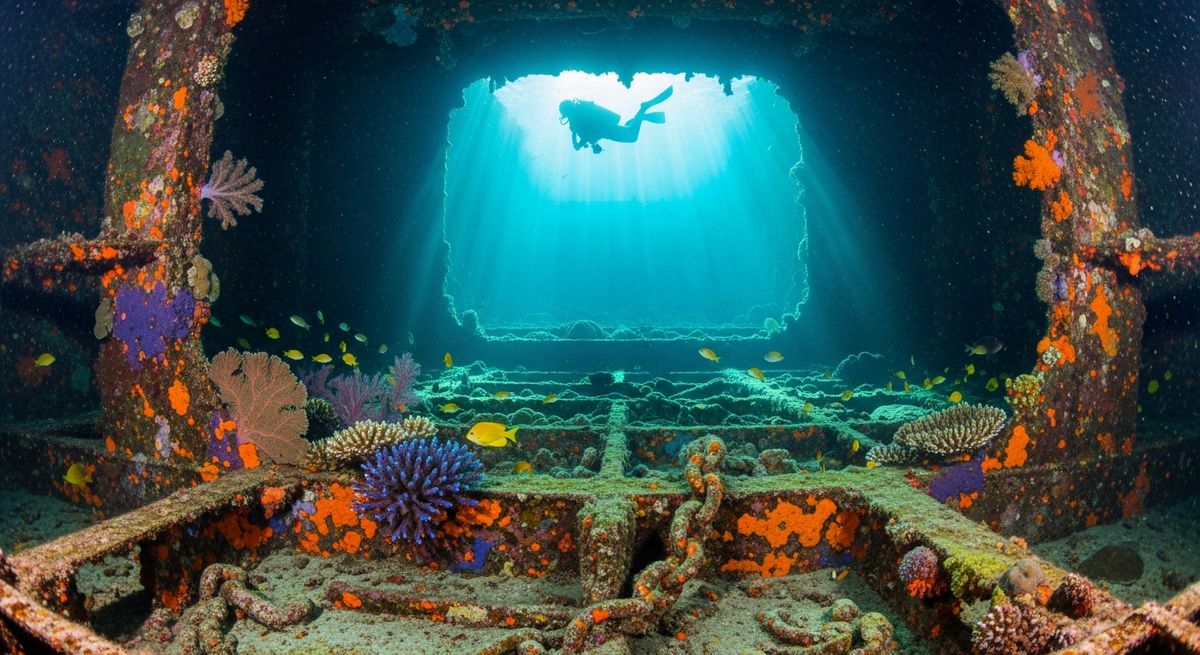
Forget what you think you know about Scapa Flow. The *Carron* isn't one of the German giants, and that’s precisely why we love it. This blockship sits right near the shore, so shallow you can almost touch it from the surface. We’re talking about a wreck dive where your fins are often still breaking the surface. What you get is history you can literally reach out and touch. The plates are still largely intact, draped in kelp and sea squirts. Sunlight filters through the water, illuminating schools of saithe that dart through the hull. It’s an almost meditative experience, floating above the deck, spotting crabs scuttling amongst the frames, or catching a curious seal popping its head up for a look. Our favourite way to dive the *Carron* is on a calm, sunny day when the visibility stretches, and you can really appreciate the ship's lines. It’s perfect for snorkelers, freedivers, or divers looking for a relaxed, shallow exploration after a deeper dive, offering a unique perspective on Scapa Flow’s wartime legacy.
Typical CARRON Dive Profile
Illustrative profile based on site depth and type. Actual dive profiles vary - always follow your dive computer and training.
Safety Notes
Wreck site - avoid penetration without wreck diving certification. Watch for sharp metal and entanglement hazards.
Cold water this month (avg 13°C). Drysuit or thick wetsuit (7mm+) recommended.
CARRON Wreck History
Year Sunk
1940
Vessel Type
cargo ship
Cause
scuttled
The SS Carron was a steel steamship built in 1894 that served for nearly half a century before being called into service for a final, vital mission. In the early days of World War II, the vast naval anchorage of Scapa Flow was vulnerable to submarine attack, a fact tragically proven by the sinking of HMS Royal Oak in 1939. To bolster the defenses, the British Admiralty began a program of sinking old merchant ships, known as blockships, in the narrow channels leading into the Flow.
On March 3rd, 1940, the Carron's time came. She was strategically positioned and intentionally scuttled to create an underwater barrier. Today, she rests in just one meter of water, a permanent part of Scapa Flow's wartime history. The wreck is extremely shallow and heavily broken, with parts often visible above the surface at low tide. While classified as a 'Dangerous Wreck' due to its location in a tidal channel, it offers a fascinating snorkel or shallow dive, allowing visitors to get up close with a piece of WWII history and witness how nature has reclaimed this artificial reef.
Nearest Dive Centres to CARRON
Dive shops near CARRON
View all dive centres in Scapa Flow, OrkneyReviews for CARRON
Conditions
Ocean conditions, forecast and tides for CARRON
CARRON Ocean Conditions
Monthly averages for CARRON, sourced from Open-Meteo marine data - nearest station: Open-Meteo marine grid (58.64, -3.16) (8km away)
October Averages
Sea Temperature
13°C
55°F · Range: 11.4–13.8°C
Air Temperature
10°C
50°F
Wind Speed
9.26 m/s
18.0 knots
Atmospheric Pressure
1005.3 hPa
Based on 4 years of monitoring data · Data sources: Open-Meteo marine data
Plan & book
Ways to dive Scapa Flow, Orkney, from day trips to liveaboards.
Day trips & courses
via GetYourGuideGuided dives, courses and snorkel trips with instant booking.
Find dive trips in Scapa Flow, OrkneyPlaces to stay
via Booking.comHotels and dive resorts near Scapa Flow, Orkney.
Search stays in Scapa Flow, OrkneyDive insurance
Most travel insurance excludes or limits scuba. Check what you need before you go.
Dive insurance explainedPartner links: we may earn a commission if you book, at no extra cost to you. How we make money
Where to Stay near CARRON
Prices from Booking.com. We may earn a commission at no extra cost to you.