GRAYFISH
Protected Area
Mousa
Why dive here
With 140+ marine species recorded in the area - including blue whales, dolphins, dwarf minke whales, humpback whales and ocean sunfish (mola mola) - GRAYFISH offers some of Scapa Flow, Orkney's richest wreck diving. Water ranges 8-14°C, warmest July, August, September.
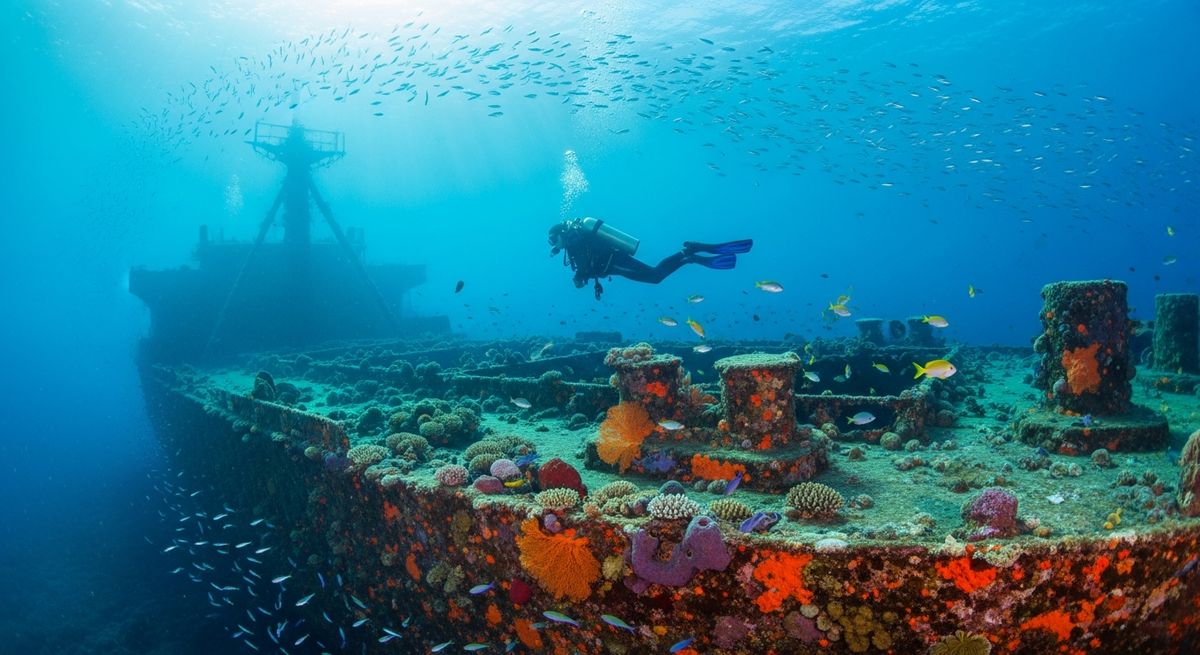
The trawler *Grayfish* is one of Scapa Flow's lesser-dived wrecks, often overlooked for the big German fleet, but we think that’s a mistake. Sunk in 1973, she sits upright in about 25 metres, and the visibility here can be surprisingly good, especially on a settled day. What we love about *Grayfish* is her intactness. You can still see the trawl gallows, the winch, and the wheelhouse structure. Swimming through the hold, you’ll often find conger eels tucked into corners, their thick bodies camouflaged against the rust. Keep an eye out for inquisitive wrasse darting in and out of the plating and the sheer number of squat lobsters clinging to every surface. It’s a proper wreck, one where you get a real sense of its working life before it went down. This site is perfect for anyone looking for a relaxed dive on a solid, explorable wreck, away from the bigger crowds.
Typical GRAYFISH Dive Profile
Illustrative profile based on site depth and type. Actual dive profiles vary - always follow your dive computer and training.
Safety Notes
Depth of 25m - Advanced Open Water certification recommended.
Wreck site - avoid penetration without wreck diving certification. Watch for sharp metal and entanglement hazards.
Cold water this month (avg 13°C). Drysuit or thick wetsuit (7mm+) recommended.
Always perform a 3-minute safety stop at 5m before surfacing.
Reviews for GRAYFISH
Conditions
Ocean conditions, forecast and tides for GRAYFISH
GRAYFISH Ocean Conditions
Monthly averages for GRAYFISH, sourced from Open-Meteo marine data - nearest station: Open-Meteo marine grid (58.64, -3.16) (8km away)
October Averages
Sea Temperature
13°C
55°F · Range: 11.4–13.8°C
Air Temperature
10°C
50°F
Wind Speed
9.26 m/s
18.0 knots
Atmospheric Pressure
1005.3 hPa
Based on 4 years of monitoring data · Data sources: Open-Meteo marine data
Plan & book
Ways to dive Scapa Flow, Orkney, from day trips to liveaboards.
Day trips & courses
via GetYourGuideGuided dives, courses and snorkel trips with instant booking.
Find dive trips in Scapa Flow, OrkneyPlaces to stay
via Booking.comHotels and dive resorts near Scapa Flow, Orkney.
Search stays in Scapa Flow, OrkneyDive insurance
Most travel insurance excludes or limits scuba. Check what you need before you go.
Dive insurance explainedPartner links: we may earn a commission if you book, at no extra cost to you. How we make money
Where to Stay near GRAYFISH
Prices from Booking.com. We may earn a commission at no extra cost to you.