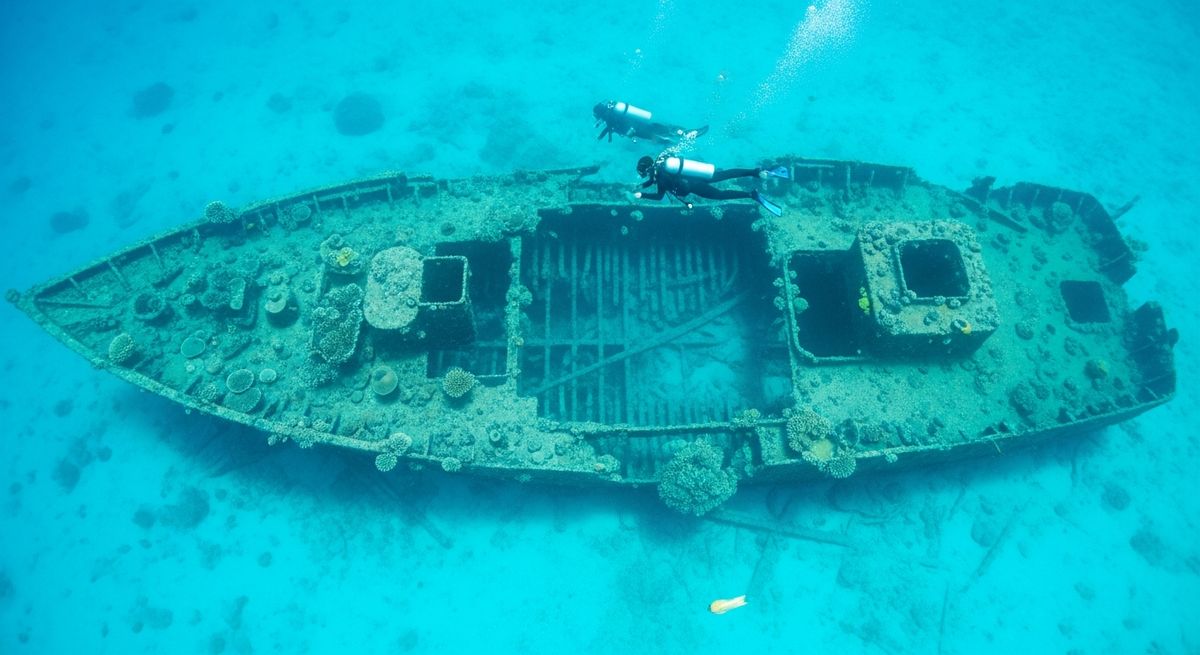
HMS OCEANIC
Protected Area
Foula Coast
Why dive here
With 140+ marine species recorded in the area - including blue whales, dolphins, dwarf minke whales, humpback whales and ocean sunfish (mola mola) - HMS OCEANIC offers some of Scapa Flow, Orkney's richest wreck diving. Water ranges 8-14°C, warmest July, August, September.
The HMS Oceanic, for us, is one of Scapa Flow’s unsung heroes. Not one of the German High Seas Fleet, no, but a White Star Line ocean liner, sister ship to the *Titanic* and *Britannic*, pressed into service as an armed merchant cruiser and sunk in 1914. It’s shallow, just 8 metres deep, but don't let that fool you. This isn’t a rummage through rusty plates. What you get here is a massive, broken-up debris field, spread across the seabed. Think huge sections of hull, steam engines, massive boilers, all coated in thick kelp and anemones. We love picking our way through the scattered remains, seeing how the light filters down through the swaying kelp. You’ll spot plenty of wrasse darting between the metalwork, and often a curious seal will pop by for a look. It's a dive that tells a story of an earlier era, of conversion and wartime service, then a swift end on the rocks. This site suits divers who appreciate history and enjoy exploring a sprawling, rather than intact, wreck. It's a fantastic spot for photographers too, especially on a bright day when the kelp forests are really glowing. We always suggest taking your time, letting your eyes adjust, and looking for the smaller details that bring this old liner to life.
Typical HMS OCEANIC Dive Profile
Illustrative profile based on site depth and type. Actual dive profiles vary - always follow your dive computer and training.
Safety Notes
Wreck site - avoid penetration without wreck diving certification. Watch for sharp metal and entanglement hazards.
Cold water this month (avg 13°C). Drysuit or thick wetsuit (7mm+) recommended.
Reviews for HMS OCEANIC
Conditions
Ocean conditions, forecast and tides for HMS OCEANIC
HMS OCEANIC Ocean Conditions
Monthly averages for HMS OCEANIC, sourced from Open-Meteo marine data - nearest station: Open-Meteo marine grid (58.64, -3.16) (8km away)
October Averages
Sea Temperature
13°C
55°F · Range: 11.4–13.8°C
Air Temperature
10°C
50°F
Wind Speed
9.26 m/s
18.0 knots
Atmospheric Pressure
1005.3 hPa
Based on 4 years of monitoring data · Data sources: Open-Meteo marine data
Plan & book
Ways to dive Scapa Flow, Orkney, from day trips to liveaboards.
Day trips & courses
via GetYourGuideGuided dives, courses and snorkel trips with instant booking.
Find dive trips in Scapa Flow, OrkneyPlaces to stay
via Booking.comHotels and dive resorts near Scapa Flow, Orkney.
Search stays in Scapa Flow, OrkneyDive insurance
Most travel insurance excludes or limits scuba. Check what you need before you go.
Dive insurance explainedPartner links: we may earn a commission if you book, at no extra cost to you. How we make money
Where to Stay near HMS OCEANIC
Prices from Booking.com. We may earn a commission at no extra cost to you.