SEA REEFER - Scapa Flow, Orkney

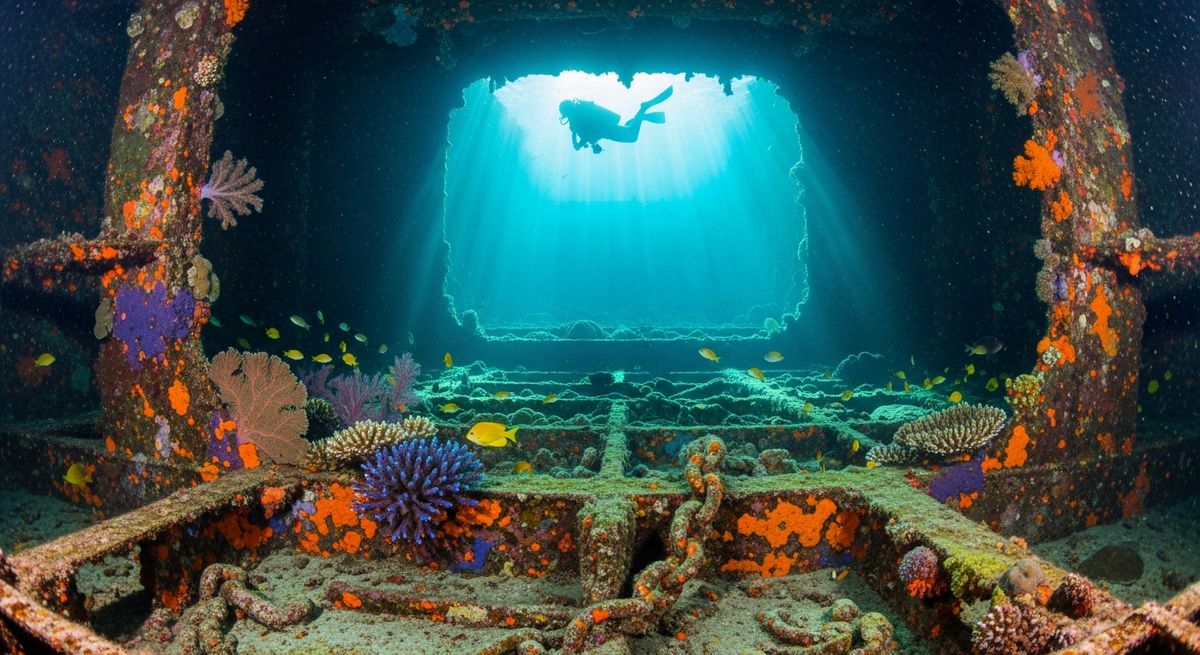
The Sea Reefer, a carrier vessel sunk in 1992, sits upright in Scapa Flow. It’s a good, solid dive for those who appreciate more modern wrecks. We found the stern particularly interesting, with the propeller and rudder still largely intact. Entry points are plentiful, making for some nice swim-throughs into the cargo holds – just watch your buoyancy in there, silt can be an issue. You’ll spot the usual suspects making a home here: plenty of wrasse darting about, and we’ve seen some decent-sized crabs tucked into crevices. It’s not the dramatic history of the German High Seas Fleet, but it’s a very satisfying dive nonetheless.

Location
Scapa Flow, Orkney, United Kingdom, Mediterranean & Europe
Coordinates
57.502266, -1.764482
Type
wreck
Maximum Depth
0m

Marine Protected Area: Bullers of Buchan Coast

Best Time to Dive in Scapa Flow, Orkney

The warmest water temperatures in Scapa Flow, Orkney occur in January, averaging 8.4°C. The coolest conditions are in December at 8.4°C.

Monthly Water Temperatures

  • January: 8.4°C (air: 5.5°C)
  • February: 8.4°C (air: 5.3°C)
  • March: 8.4°C (air: 5.9°C)
  • April: 8.4°C (air: 6.8°C)
  • May: 8.4°C (air: 9.7°C)
  • June: 8.4°C (air: 12.4°C)
  • July: 8.4°C (air: 13.2°C)
  • August: 8.4°C (air: 13.7°C)
  • September: 8.4°C (air: 12.7°C)
  • October: 8.4°C (air: 10.2°C)
  • November: 8.4°C (air: 8.0°C)
  • December: 8.4°C (air: 5.8°C)

Nearby Dive Sites in Scapa Flow, Orkney

Nearest Dive Centres to SEA REEFER

Marine Life in Scapa Flow, Orkney

Home to 155 recorded species including 63 reef fish, 17 whales & dolphins, 12 sharks & rays, 11 crabs & lobsters, 11 other, 10 seagrass & algae.

Notable Species

Recommended Packing List for SEA REEFER

Based on average water temperature of 8.4°C.

  • Drysuit - water at 8°C demands a drysuit with thermal undergarments
  • Hood & Gloves (7mm+) - critical to prevent heat loss
  • Mask - essential for every dive
  • Fins
  • BCD - buoyancy compensator
  • Regulator - your most safety-critical piece of gear
  • Dive Computer - tracks depth, time, and NDL
  • Surface Marker Buoy (SMB) - essential for boat pickups
  • Dive Torch - useful for crevices and colour at depth
  • Underwater Camera - capture your diving memories

Frequently Asked Questions

What is the maximum depth and average depth for diving at the SEA REEFER dive site?
Based on the provided data for the SEA REEFER dive site, only a depth of 0m is listed. Unfortunately, specific maximum and average depths for diving at this wreck are not available in the current information. Divers should consult local dive operators for precise depth profiles.
What marine life and unique underwater features can divers expect to see at SEA REEFER?
The primary underwater feature at the SEA REEFER dive site is the wreck of a carrier vessel, measuring 95.7m x 14.5m. Sunk on August 22, 1992, this substantial wreck offers an intriguing exploration opportunity, with portions of its hull and superstructure still visible. Details regarding specific marine life encounters at this site are not provided in the current data.
How would you rate the difficulty of diving at SEA REEFER, and is it suitable for beginners or only experienced divers?
Diving at the SEA REEFER is rated as intermediate difficulty. This suggests the site is best suited for divers who have some experience beyond basic certification. While not exclusively for highly experienced divers, beginners may find the conditions or the nature of wreck diving challenging.
What is the best time of year or season to dive at SEA REEFER for optimal conditions and marine encounters?
The provided data for the SEA REEFER dive site does not specify the best time of year or season for optimal conditions or marine encounters. To plan your trip, you might consult general resources on when to dive in the Scapa Flow area for typical seasonal conditions.
Are there any specific diving certifications or experience levels required to dive at SEA REEFER?
Given the intermediate difficulty rating for the SEA REEFER, divers should possess at least an advanced open water certification or equivalent experience. This ensures you have the necessary skills and comfort level for navigating wreck dives and potentially more challenging conditions. It is always recommended to dive within your training and experience limits.
What are the typical current conditions and visibility like at the SEA REEFER dive site?
The current data for the SEA REEFER dive site does not provide specific details regarding typical current conditions or visibility. Divers planning a trip to Scapa Flow should consult local dive operators for up-to-date information on these environmental factors.