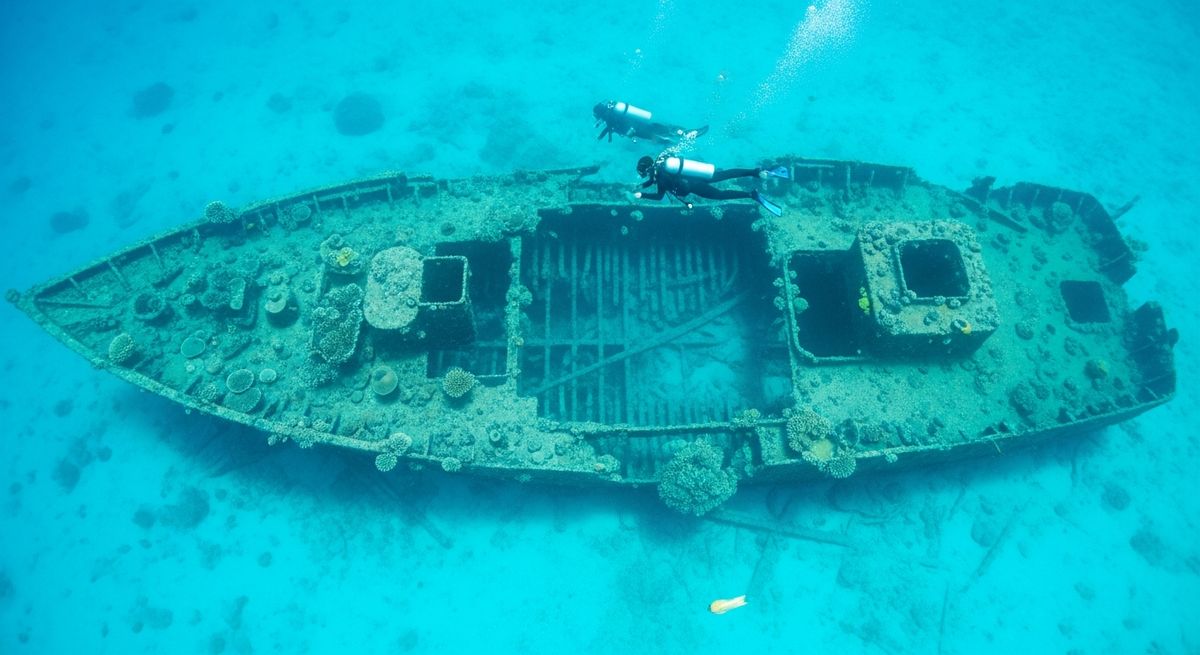
WILLIAM H WELCH (FWD SECTION)
Protected Area
Wester Ross
Why dive here
With 140+ marine species recorded in the area - including blue whales, dolphins, dwarf minke whales, humpback whales and ocean sunfish (mola mola) - WILLIAM H WELCH (FWD SECTION) offers some of Scapa Flow, Orkney's richest wreck diving. Water ranges 8-14°C, warmest July, August, September.
The *William H Welch* bow section in Scapa Flow, honestly, is one of our favourites for a quick, shallow dip with a big punch of history. It’s barely a metre deep at high tide, sometimes even poking out of the water, which makes it perfect for snorkelers or photographers who want to spend ages getting the shot right without rushing. You don't need a boat to get to it, just a decent pair of boots for the walk across the foreshore at low tide to where it rests on the sand. What we love is how it's become this accidental art installation. The steel plates, crusted with barnacles and seaweed, ripple in the gentle currents, a stark contrast to the blue-grey Orkney sky. Look closely among the rusted frames, and you’ll spot small crabs scuttling, sometimes a butterfish darting between the girders. It’s a completely different wreck experience – more about the quiet observation of history and nature reclaiming something, less about penetration. We'd suggest going on a calm, bright day to really appreciate the clarity and the way the light plays on the structure. Just remember your drysuit – it's still Orkney!
Typical WILLIAM H WELCH (FWD SECTION) Dive Profile
Illustrative profile based on site depth and type. Actual dive profiles vary - always follow your dive computer and training.
Safety Notes
Wreck site - avoid penetration without wreck diving certification. Watch for sharp metal and entanglement hazards.
Cold water this month (avg 13°C). Drysuit or thick wetsuit (7mm+) recommended.
Reviews for WILLIAM H WELCH (FWD SECTION)
Conditions
Ocean conditions, forecast and tides for WILLIAM H WELCH (FWD SECTION)
WILLIAM H WELCH (FWD SECTION) Ocean Conditions
Monthly averages for WILLIAM H WELCH (FWD SECTION), sourced from Open-Meteo marine data - nearest station: Open-Meteo marine grid (58.64, -3.16) (8km away)
October Averages
Sea Temperature
13°C
55°F · Range: 11.4–13.8°C
Air Temperature
10°C
50°F
Wind Speed
9.26 m/s
18.0 knots
Atmospheric Pressure
1005.3 hPa
Based on 4 years of monitoring data · Data sources: Open-Meteo marine data
Plan & book
Ways to dive Scapa Flow, Orkney, from day trips to liveaboards.
Day trips & courses
via GetYourGuideGuided dives, courses and snorkel trips with instant booking.
Find dive trips in Scapa Flow, OrkneyPlaces to stay
via Booking.comHotels and dive resorts near Scapa Flow, Orkney.
Search stays in Scapa Flow, OrkneyDive insurance
Most travel insurance excludes or limits scuba. Check what you need before you go.
Dive insurance explainedPartner links: we may earn a commission if you book, at no extra cost to you. How we make money
Where to Stay near WILLIAM H WELCH (FWD SECTION)
Prices from Booking.com. We may earn a commission at no extra cost to you.